Feature 02 · The Deep
ΠλέωPléō
I sail. The first-person of a verb the Greeks used for the whole of it — the setting out, the passage, the not arriving.
Essay and illustrations by Zach BarkinAbout fifteen minutes
“As welcome as the land to swimmers, when Poseidon wrecks their ship at sea and breaks it with great waves and driving winds…”The Odyssey, Homer · translated by Emily Wilson
κοίλη νηῦςthe hollow ship
ΑBurrowed Hull
Drawn · Plate I woven
Burrowed Hull
The Draken Harald Hårfagre was commissioned for construction in 2010 by the Norwegian oil-and-gas entrepreneur Sigurd Aase. The boat is built in the clinker style. Thick oak timber overlaps to form a hull secured by seventeen thousand iron rivets. The ship spans 35 meters with a 24-meter-tall mast and a 260-square-meter silk sail. It is a true replica of a Viking longboat, tested hard in heavy seas first in 2014 when it successfully made the crossing from Norway to England, and then in 2016 when it crossed the 2,800-nautical-mile span of the North Atlantic.
Then in 2025 the Draken Harald Hårfagre found an unlikely second life appearing in Christopher Nolan’s epic, the Odyssey, released in July 2026. The longboat plays the part of an ancient ship well. The deep brown timber sets the scene: the crew diligently working sail and oar, adrift in the frothy viridian seascapes. Amongst scenes of giants, cyclopes and shades the boat is a refuge for character and viewer alike as it meanders through the mythology of the ancient Mediterranean.
Plate I · the two passages run through the headland
Draken Harald Hårfagre · launched 2012 · 35 m LOA · 260 m² sail · clinker oak on oak · c. 17,000 iron rivets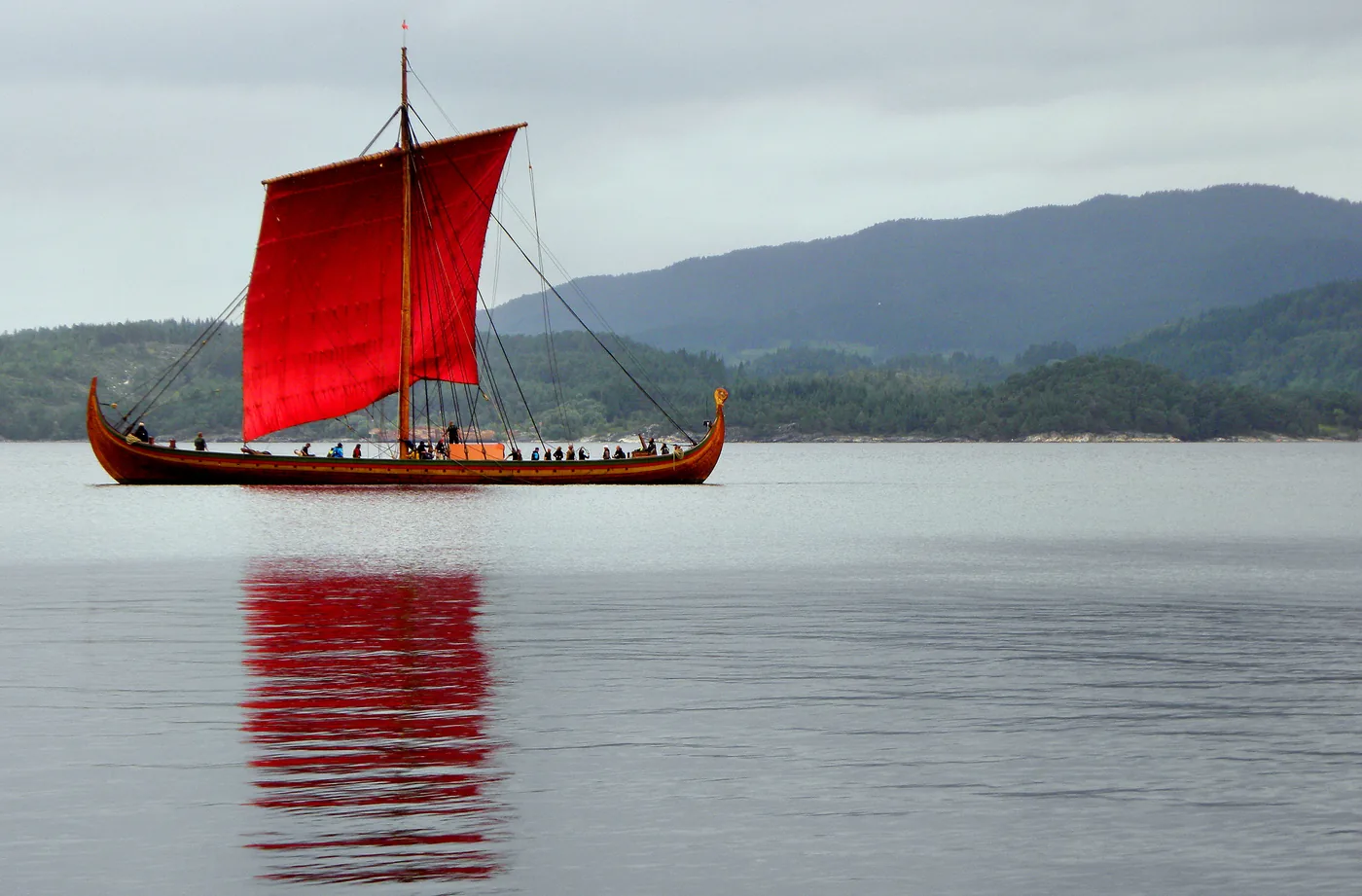 Draken Harald HårfagreBetween Fjellskålnes and Eidsnes, Osterfjorden · 5 August 2013Photograph — Odd Roar Aalborg · own work · 60° 34′ 25″ N, 5° 27′ 08″ E
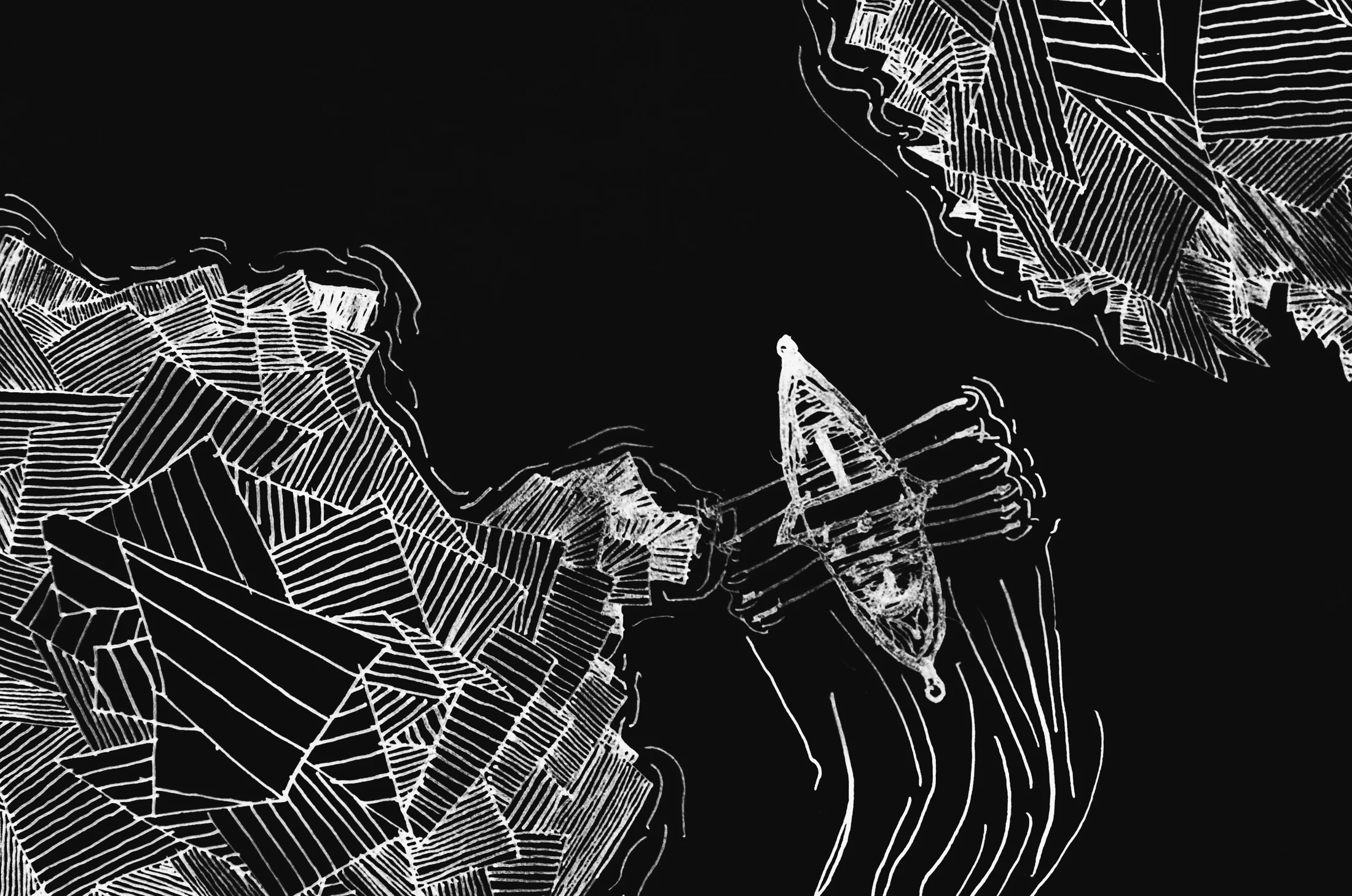
- Medium
- Scratchboard
- Year
- 2026
- Dimensions
- 2547 × 1688 px
- Bearing
- Sailmaker
This theme is an echo of the Homeric poem. For all the danger, the Odyssey is a story about returning home. From book one, it is prophesied that the hero and king of Ithaca will survive his quest. Odysseus ventures out from Troy into unknown waters, his choices only of consequence to the men beneath him, his deliverance already a certainty.
To take to sea in Bronze Age Greece was anything but certain. A boat was not held together with iron rivets but rather wood-pegged mortise-and-tenon edge joinery. The threat of unknown variables from storms to reefs to pirates hung over the thoughts and superstitions of every sailor in the ancient world. The technology of the time left those brave people truly at the mercy of the elements. In defiance of these risks ancient seamen of the Mediterranean fed their people and forged an intricate trade network that elevated their kingdoms and region beyond anything ever before seen in the history of the world.
νῆες ἐΐσαιthe balanced ships
ΒThe Overlap
Drawn · Plate II live
The Overlap
Clinker-built construction was developed by shipwrights of Norse tradition around 300 AD to further reinforce the hull in rough northern seas. The planks of the hull overlap and are fastened by rivets across the lower planks. This overlap provides extra stability across the join between the two planks and a tighter seal once fastened. Critically, the overlap also allows the wood to expand and contract as temperature and water alter the size and stiffness of the wood. This ancient hull design was truly seaworthy and was the engine for the eventual Norse expansion to Great Britain, Iceland and eventually across the entire North Atlantic to Newfoundland.
Even by Viking standards the shipwrights of Mycenaean Greece were ancient, and the clinker style would not appear for another 1,500 years. Ship hull records are scarce from the Mycenaean world; however, several wrecks offer clues as to the approach these craftsmen would have taken.
The Uluburun shipwreck was discovered off southeast Turkey and it offers a glimpse into the shipbuilding practices likely in place in the time of the Iliad and the Odyssey. A Canaanite ship and merchant vessel, it held cargo from ten different civilizations, though this ship likely differed from those that harbored soldiers or kings. It shares its construction with another vessel, the Cape Gelidonya wreck, smaller than the Uluburun but more in line with the estimated timing of Homer’s epics. Both wrecks provide critical insight into common shipbuilding practices of the age. The hull of the ship is a curved banana shape similar to what is often seen in early Minoan depictions of ships, and though we cannot be sure, it is likely that Mycenaean ships mimicked similar forms. This particular wreck was built of Lebanese cedar using a technique modern scholars call the Phoenician joint, a pegged mortise-and-tenon joinery, and it is the oldest known record of such a hull.
Uluburun · c. 1320 BC · off Uluburun, Kaş, Türkiye · Lebanese cedar · pegged mortise-and-tenon · cargo of ten civilisations
Cape Gelidonya · c. 1200 BC · smaller, later, nearer the epics
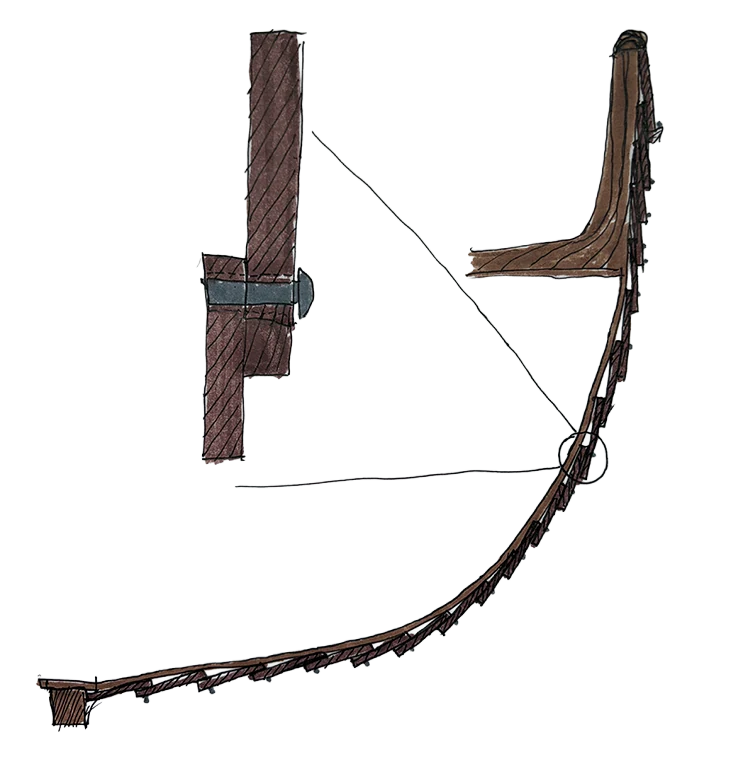
Hover a mark — the line finds its name
The Riveted Land
SailmakerInk and wash on paper · digital · hand-drawn, labeled
The overlap is not a compromise for want of a better seam. It is the seam that lets the boat move.
- Year
- 2026
- Dimensions
- 750 × 779 px
εὐεργὴς νηῦςthe well-wrought ship
ΓThe Joint
Drawn · Plate III live
The Joint
Pegged mortise-and-tenon construction is an art of precision. A mortise is a slot carved into the plank with a chisel. Two mortises of the same size were cut in a parallel position. A piece of wood the size of the mortise was inserted into the slot in one of the planks. This is called the tenon. The two planks with the mortises are attached with the tenon restricting their horizontal movement. It was essential for the planks to be planed flat to create as tight a seal as possible. From there, holes are drilled into the planks at the location of the tenon. Wooden pegs are hammered into the holes restricting any vertical movement. Ancient shipwrights built the planking of the hull before any framing was inserted, a methodology that held in the Mediterranean until the Middle Ages.
When done properly, pegged mortise-and-tenon creates a very rigid join. This does the wood a disservice when it continuously expands and contracts. The tenon itself is made of wood and it receives the majority of its load against the grain, eventually causing the peg to potentially shear or loosen, leaving the vessel vulnerable to leaks, rot or shipworm. The primary advantage of a clinker-built hull when compared to mortise-and-tenon is, counterintuitively, flexibility. The boat is much more flexible and can therefore better withstand the forces of heavy seas.
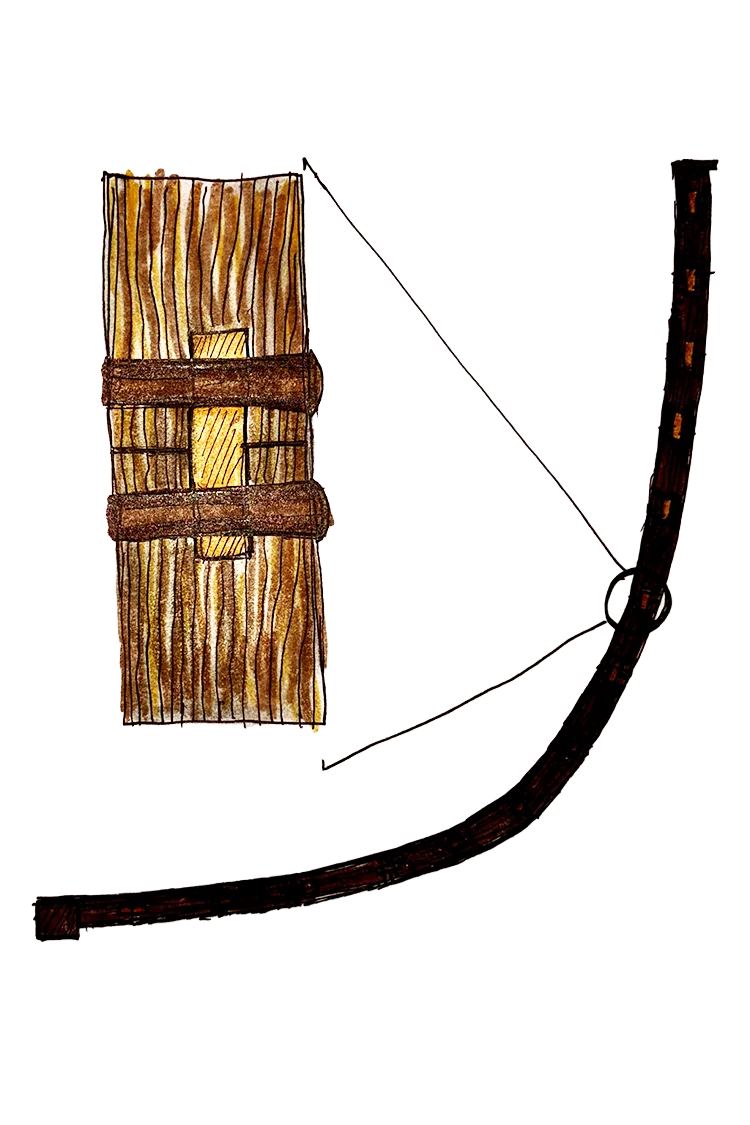
Drag — the joint is made in order
Plane the faces
Two planks brought flat and true, edge to edge. Everything after depends on this: a seam only seals if the faces already touch along their whole length.
The Phoenician Joint
SailmakerInk and wash on paper · digital · hand-drawn, scrubbable
Precision as a substitute for iron. The joint is only as good as the hand that planed the face beneath it.
- Year
- 2026
- Dimensions
- 750 × 1125 px
“There were fifty fast melainai nēes (μέλαιναι νῆες, black ships) that bore his troops when Achilles dear to Zeus sailed east for Troy.”The Iliad, Homer · Book 16 · translated by Robert Fagles
μέλαιναι νῆεςthe black ships
ΔThe Black Hulls
Drawn · Plates IV–VI
The Black Hulls
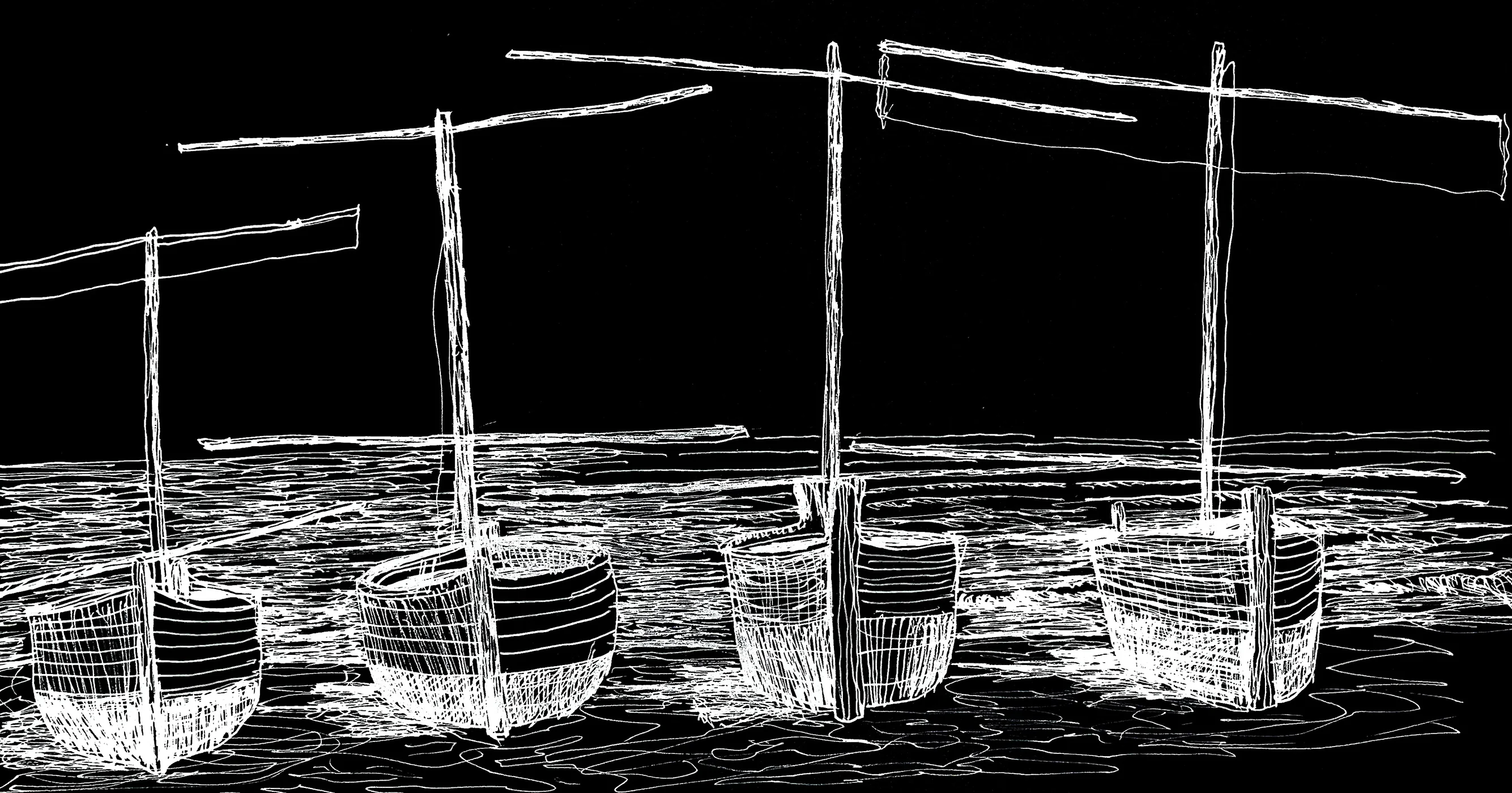
- Medium
- Ink on black
- Year
- 2026
- Bearing
- Sailmaker
To further enhance the seal and protect it from Teredo or shipworm, ancient shipwrights used a method that would remain standard for two thousand years. An eyewitness account written by the ancient botanist and philosopher Theophrastus describes a Macedonian process around a thousand years after the events of the Iliad. Pitch was collected from piles of "fatwood," or resin-saturated heartwood and stumps of pitch pine. The wood was split, stacked close and sealed under earth so it would heat without burning. If flame broke through, the tar was spoiled. A slow kiln fire ran up to two days under continuous supervision, men climbing to smother any escaping smoke with soil and carrying out sacrifices for tar "abundant and beautiful." What ran out through a channel into a collecting pit was πίσσα, pitch, the product of the wood breaking down at around 300–400°C in the absence of oxygen. Similar resin was found among the cargo of the Uluburun, though as cargo rather than coating; the wreck is not confirmed to have used this method. The pitch was painted under the waterline, leaving the μέλας (melas), meaning darkness or depth, the color of the boats that haunts the Homeric epics.
The result is a firm watertight join between the two planks and a seaworthy vessel. This remained the predominant process of naval construction throughout classical antiquity, and pine tar remains a method of sealant on classic wooden boats.
The melas of the ships is a persistent theme in Homer as the backdrop to the Iliad and a symbol of the Greeks’ entrapment within the camp at Troy. Their way home taunts them for the ten years in which they, in the words of Nolan’s script, "rot on the beach." Yet their pride and desire for honor — or, in the case of Achilles, revenge — prevent them from simply boarding the black hulls and returning to a life of peace and love. Odysseus, in movie and story, returns to his black hull time and time again, yet it is fragile and held together by organic matter susceptible to the elements and fate alike.
“East and South Winds clashed and the raging West and North, sprung from the heavens, roiled heaving breakers up—and Odysseus’ knees quaked, his spirit too”The Odyssey, Homer · Book 5 · translated by Robert Fagles
Though Odysseus is prophesied to survive, his fate is ultimately out of his control. A juxtaposition to the scheming king of the Iliad, whose cleverness wins the Trojan War, he is now solely at the mercy of the gods. The journey home from Troy meanders through the Aegean and the Greek Archipelago, until they reach open sea. The island of Ithaca is wedged into the western coast of the Greek mainland. They should bear north around the peninsula, but the storms and great winds of Poseidon sweep them off course and he entraps them.
In Nolan’s film, Odysseus only has to prevent his men from eating the cattle of Helios, god of the sun, on the island of Thrinacia and their lives are spared. The winds blow favorably and they sail right to the beach. That favorable wind persists, however, and Odysseus and his men are unable to leave the island. For months they linger until their food is spent. The men, starving and desperate, eat the cattle and the wind acquiesces at once, allowing them to leave the island. Their thievery enrages Zeus, who sinks the ship, their final refuge, with a thunderbolt, leaving only Odysseus alive.
Greek rigging put sailors at the time truly at the mercy of the wind, and it is for good reason Poseidon is probably the most revered deity of the time. The drama and pettiness of Greek gods and Titans allegorically connect the people of the Ancient World to the forces of the natural world they cannot understand. Shelter, boat, food could all inexplicably vanish in an instant, yet they still set out to navigate these waters.
There are few metaphors more apt to describe man’s reliance on the elements than the sail, and the Odyssey is truly a story in which humanity is at the mercy of the wind.
The μελτέμια, or meltemi, is a real natural phenomenon in which a consistent northerly wind blows down across the Aegean through the summer months. This appears to be the speculated path of Odysseus and his crew, and the myth very much somehow becomes rooted in plausibility. The Mycenaean sailor would be impacted greatly by the meltemi, or a fore-facing wind on the island of Thrinacia.
Unlike most winds of the Mediterranean that would wane in the evening, the meltemi — or, as the Greeks called it, the Etesian wind — persisted at night, and it is capable of blowing strong. This presents the ancient sailor a considerable challenge in navigating the treacherous straits and channels of the Aegean. The wind is capable of elevating waves and currents, so the crude steering of these vessels, particularly at sail, became considerably more challenging.
It is largely believed that the boom-footed square rig, a large square sail bent to an upper yard along its head and laced or attached to a second rigid spar or boom at the lower yard, was the predominant rigging in late Bronze Age Greece. This enclosed the sail between the two spars. The spars made it easy to manage the sail: lines would run up the mast and the crew could easily hoist it. There are several disadvantages of the rigging. The rigidity of the boom made the rigging unable to easily spill wind by easing the sheet. The boom itself was essentially fixed, so sailors would have no means of clawing against the wind, as would be necessary both to navigate northward out of the meltemi to Ithaca and to escape their fate on the island of Thrinacia. Lastly, a fixed boom provided a literal hazard in the wrong conditions, becoming an uncontrollable lever that was compounded by the shallow-draft hulls of the boats.
The boom-footed rig is never described in Homer. At the time of writing, the predominant rigging would have been the loose-footed square rig. The large square sail would be laced in and ropes would push the top spar up the mast, allowing sailors some maneuverability. They never reference a boom, implying a brailed system, meaning that the bottom of the sail was secured by rope, or brail, which runs through the sail in rings. This allowed much more flexibility in maneuvering the sail position in a variety of conditions. Homer describes the rigging of his own era, not the one he is writing about.
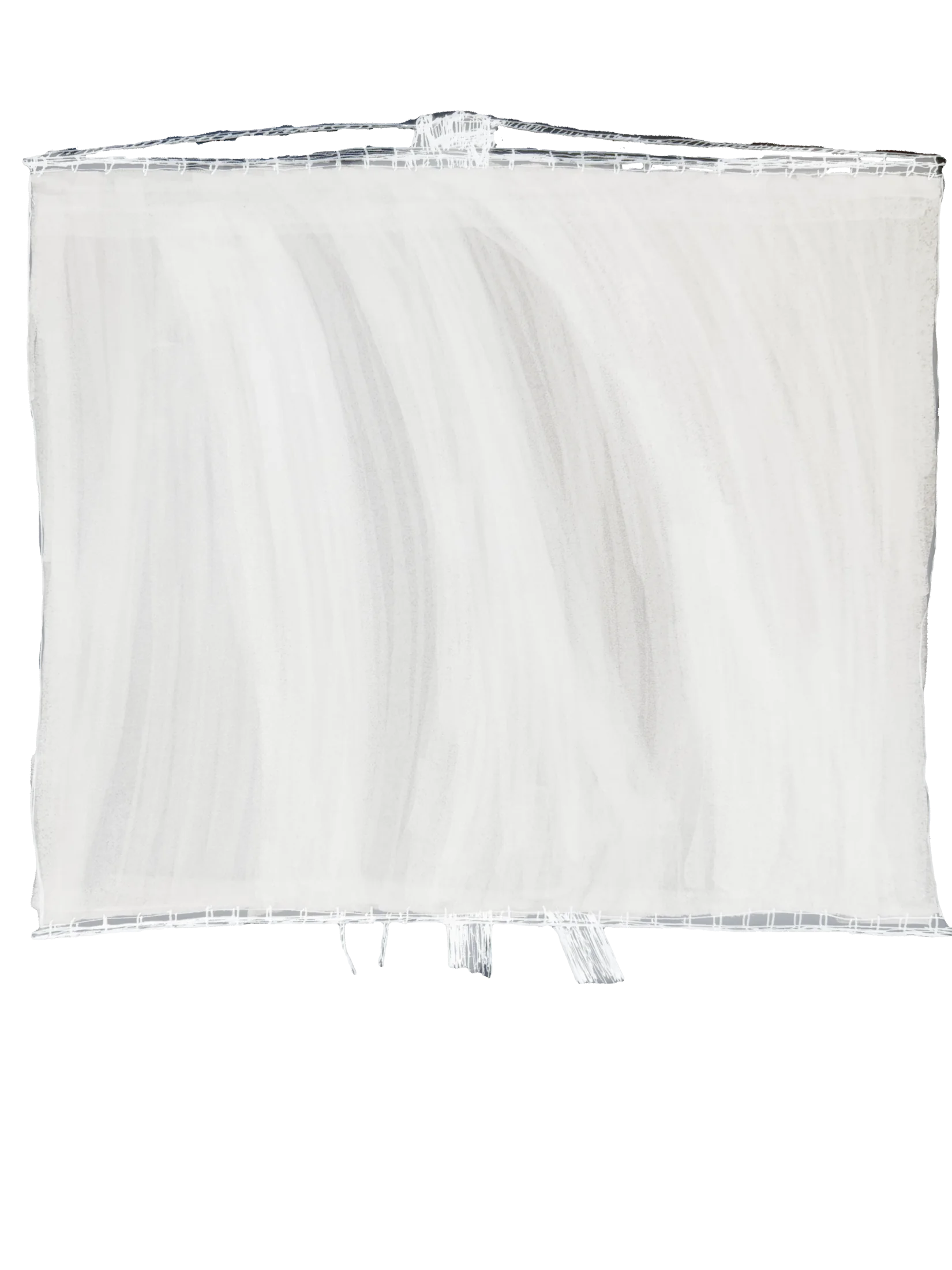
Hover a mark — the line finds its name
One Sail, One Yard
SailmakerWash and line · digital · hand-drawn, labeled
A rig that can run and little more. The wind is not trimmed for — it is obeyed.
- Year
- 2026
- Dimensions
- 4284 × 5712 px
The physical limitations visible in the archeological record do in fact lend some credence to the epic. It would not have been particularly challenging for one ship of a massive army leaving Troy to get blown so off course it inspired a tale told generation after generation, until being penned within the Odyssey.
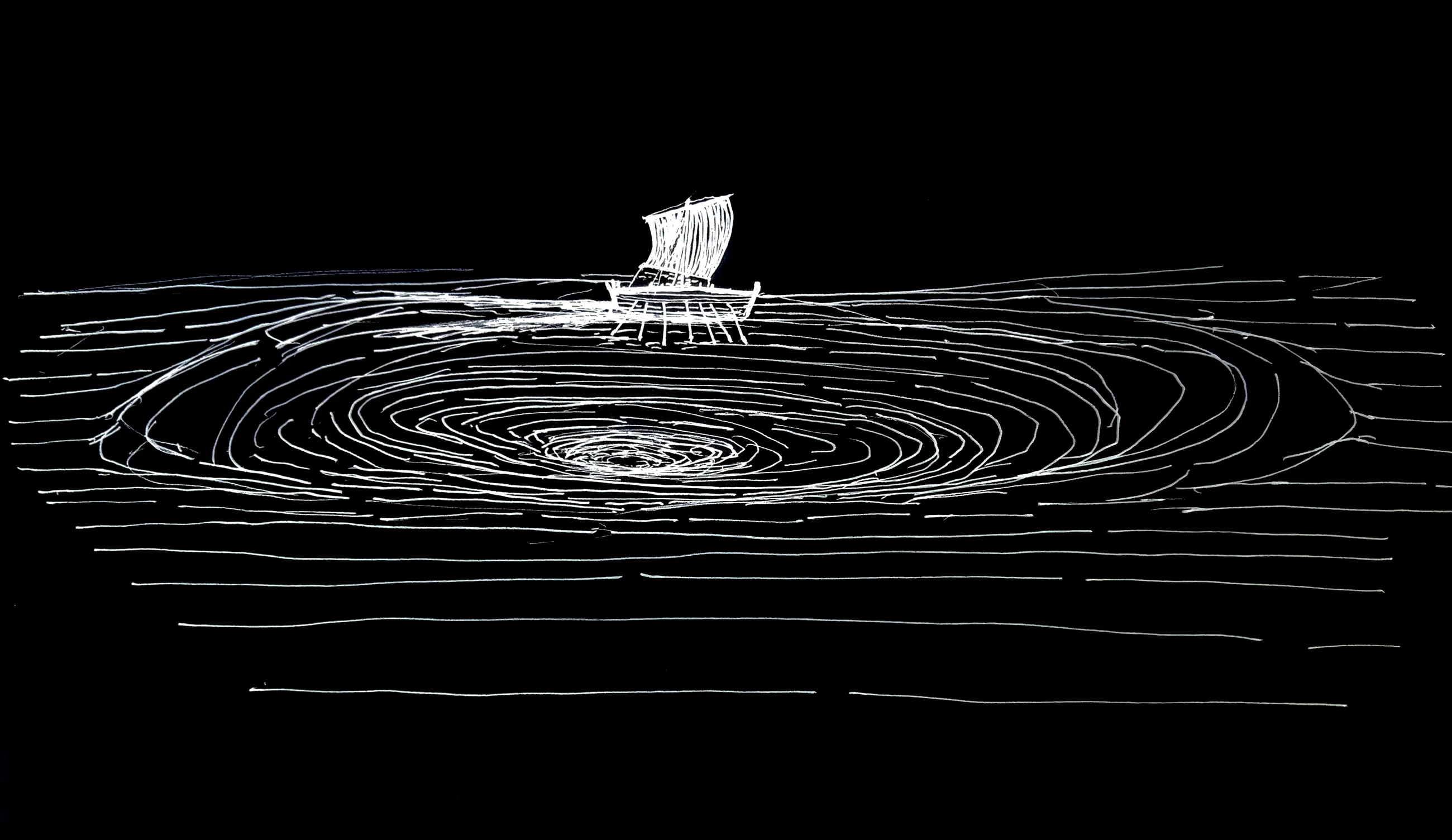 Plate VIHover for the plate
- Medium
- Ink on black
- Year
- 2026
- Dimensions
- 5408 × 3129 px
- Bearing
- Sailmaker
ἐρίηρες ἑταῖροιthe trusty companions
ΕSea Peoples
Drawn · Plate VII
Sea Peoples
Homer writes about grand men. Crew and common soldiers appear primarily as vehicles to power the heroes’ war and ships. Women are described as prizes of war, traded and used. These accessories are often devices that allow the heroes to show their virtues. In the Iliad the commoner Thersites speaks up for the Greek soldiers, insulting Agamemnon and pleading for home. Odysseus ruthlessly mocks and threatens to beat him, calling Thersites an ugly, disorderly man despised by all, enforcing the authority of the ruling class. In Nolan’s Odyssey, Odysseus is painted as a benevolent ruler trying and failing to protect his men from their fate.
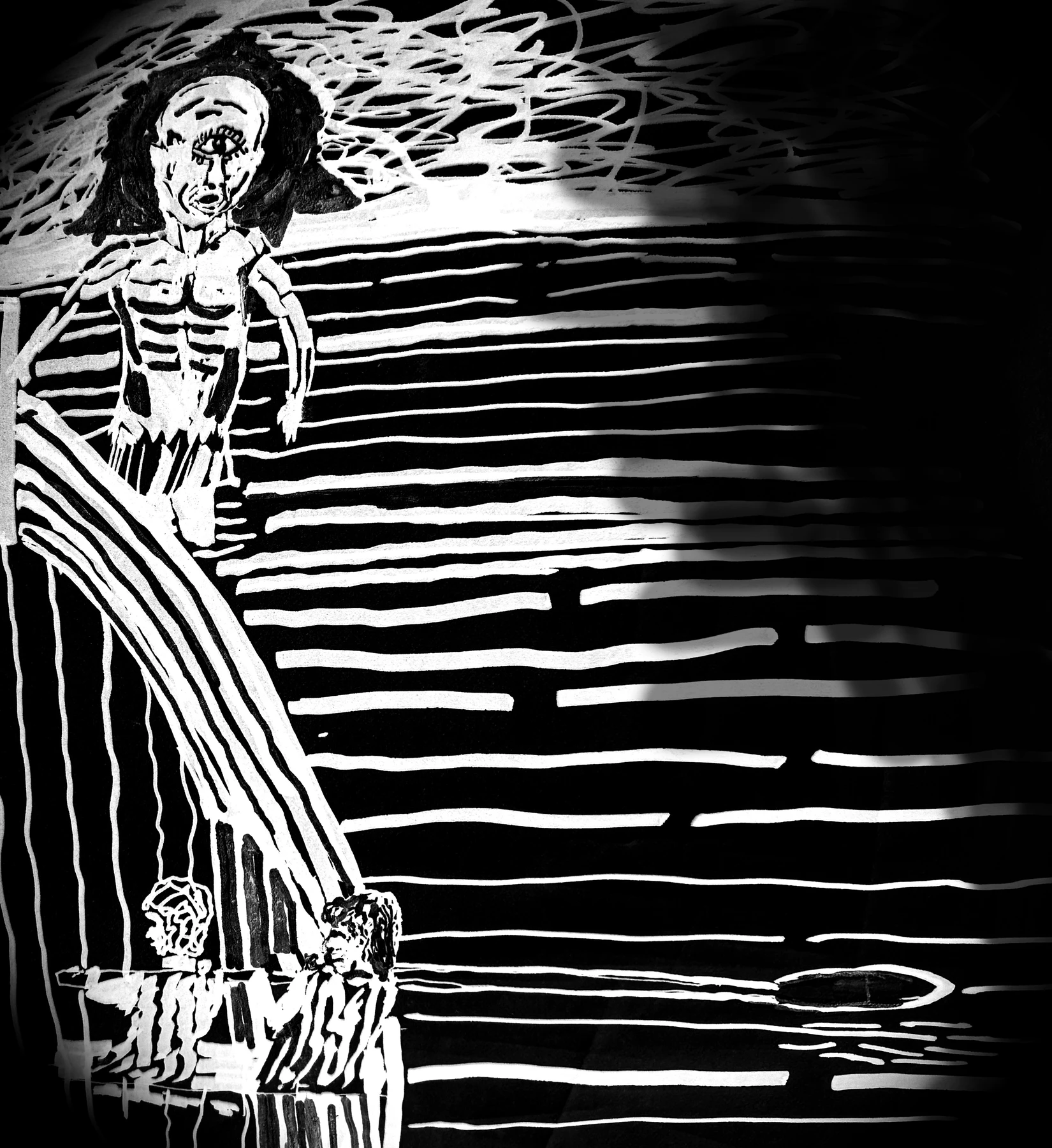 Plate VIIHover for the plate
- Medium
- Ink on black
- Year
- 2026
- Bearing
- Sailmaker
All aboard were at the mercy of the elements, but life for the common sailor was difficult. The sun beat down on them day after day and the relief of night’s chill would offer little comfort as the spray and salt would relentlessly coat them as they tried to sleep on the open deck. The salt cracked their skin as they tried to work the sails and oars day in and day out for months at a time. Their clothes would be soaked through and unwashed. When the time came to row, their legs, backs, shoulders and arms would burn with the exertion of the effort. All of this would need to be endured to survive the conditions and captains.
The sailors of the ancient Mediterranean accomplished a great deal, and the labor of these men created an intricate trade network linking the entire Mediterranean. Driven by tin and its necessity in the forging of bronze, the great weapons of war used by Greeks, Trojans, Egypt and others, the kingdoms of the time cooperated and specialized, resulting in rapid technological advancements. This specialization and robust economy also left the kings vulnerable to unknown attack.
Throughout Nolan’s Odyssey the Sea Peoples remain an invisible but highly present threat. Historically this great bronze trade network will collapse — whether via the Sea Peoples or some other catastrophe, we do not have a definitive answer. What is in the historic record is a consistent fall of the great Egyptian dynasties, the Mycenaean and Greek bronze golden age. Greece will enter a period of illiteracy for centuries until the time of Homer. The Odyssey to Nolan is the end of the mythological canon of ancient Greece. The gods have ceased to guide the acts of men, and the Greeks are left to the mercy of other men.