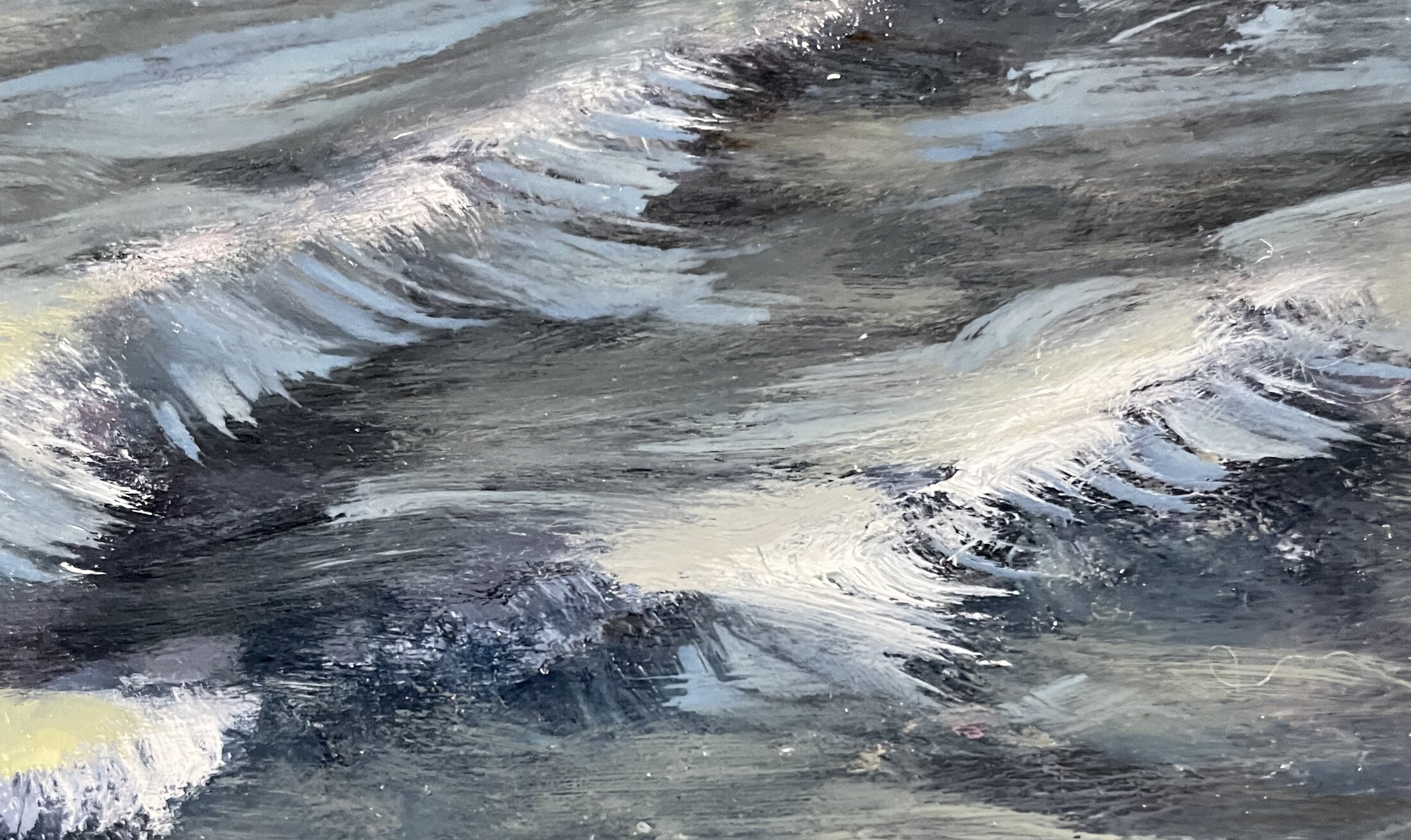
Breaking water painted in oil — a detail from the author's own work
VOL I · CH I · APR–DEC 2026

The Sailmaker

Wind, spray & cloth. An exploration of the art of sailing and the craft that makes it possible.

Oil on panel · detail

Bearing

Sailmaker

Season

Phase I — Launch

Tide

—

Welcome

Drawn to the salt, spray, canvas and wind, the Sailmaker endures the elements. Stitch by stitch, the yards of canvas and cord come together and draw us to the sea, across the globe, and to one another. The sail carried humanity into civilization, and to this day it continues to inspire adventure, calm, creativity and connection.

This Bearing explores both the craft of the sail and the skill required to harness it. Begin with the basics; as you delve deeper, so will the content.

A sailor is an artist whose medium is the wind.

— Webb Chiles
A Letter from the First Hand

Break the seal — the letter opens below

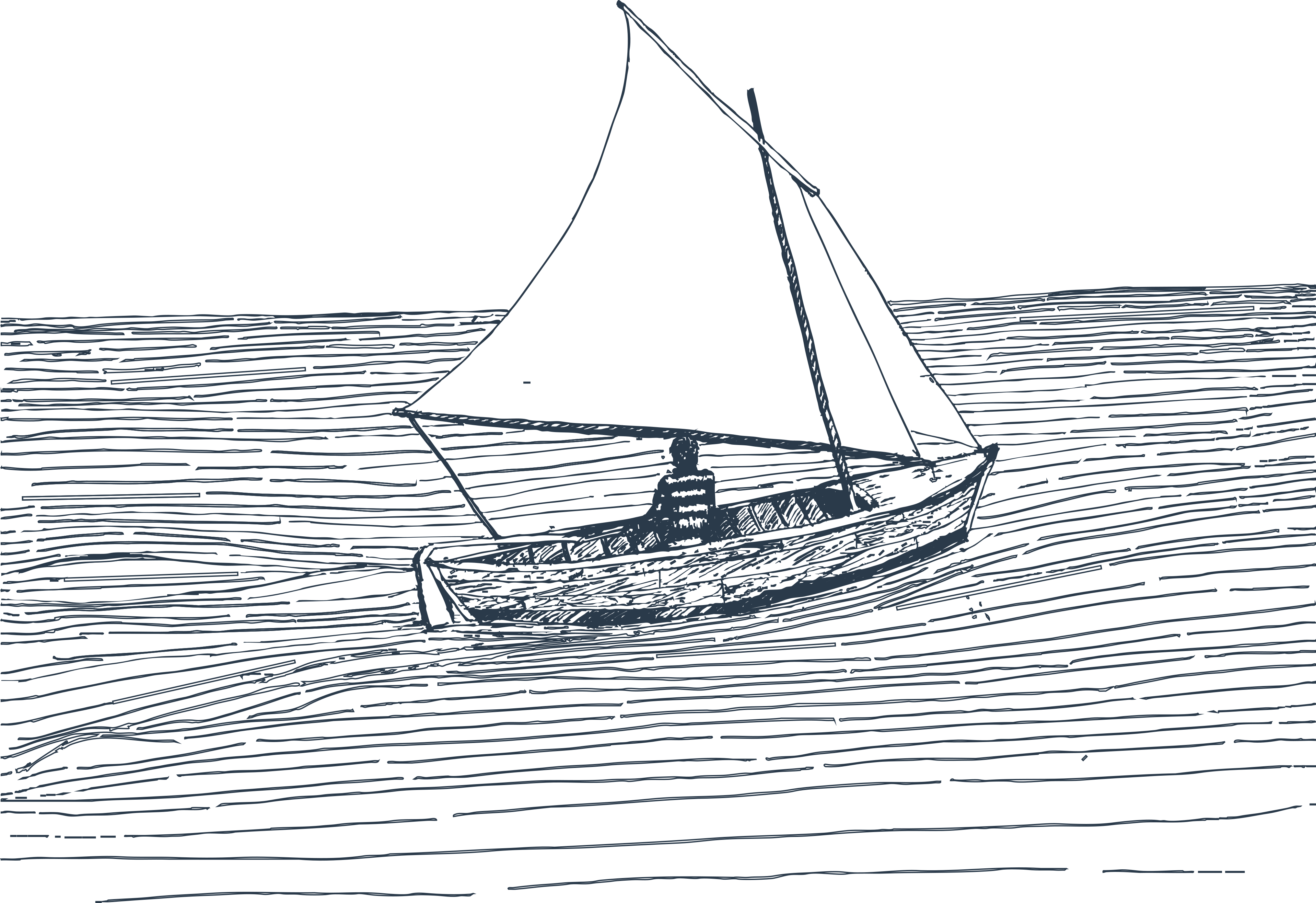
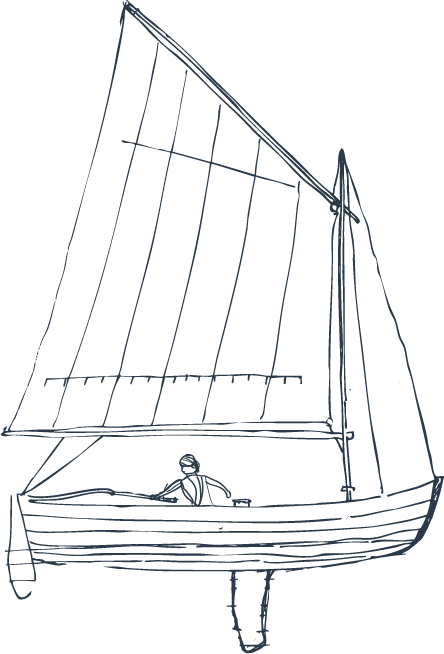
Pen-and-ink drawing of a small boat under a single sail, one sailor at the tiller on open water
The logbook · Arctelia

A log has been a critical tool to the sailor forever. It is no accident that written language evolved in part due to the marking of trade routes. Your experience within the Sailmaker can be recorded as well. Start your first passage in the logbook.

Sailmaker 1

Pen & ink (edited in Adobe InDesign)


GuideReference

A beginner’s reference to sailing

Harnessing the power of wind and water is a complex art. There is a distinct language to the craft, one built on thousands of years of maritime tradition. Click the guide to build your literacy within the world of the Sailmaker.

PL. 01

Marblehead Dinghies

Oil on canvas

Closed — click to open
Smoke leaves the stack and lies over.The pennant streams away from the wind.Her sail is full, and she leans away from it.Dark ruffles crawl downwind over the smooth.

With the wind astern the sail is a bag. Air enters, the cloth stops it, and the boat is pushed forward at a speed less than the wind. Bring the sail across the wind and it becomes a curved wing: the air bends around it rather than piling into it, and it pulls.

PushedPOINT OF SAIL
Wind astern 180°Beam reach 90°
Angle 180° · Pull ×1.0

Downwind the sail is a bag. Across the wind it is a wing, and a wing pulls harder than a push.

PlateInteractive

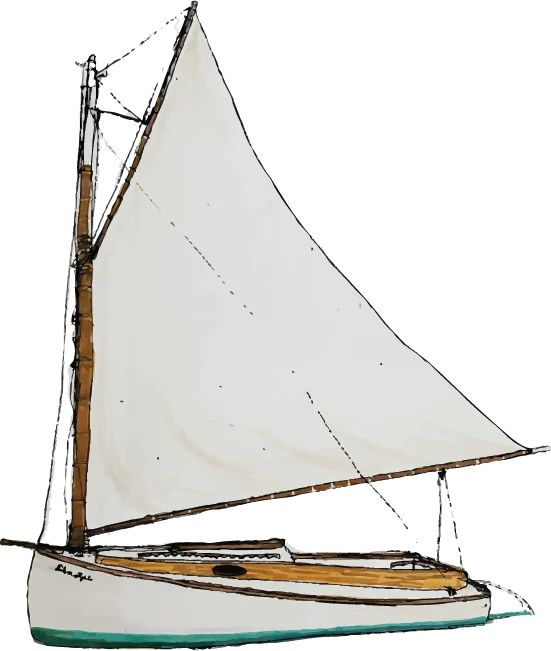
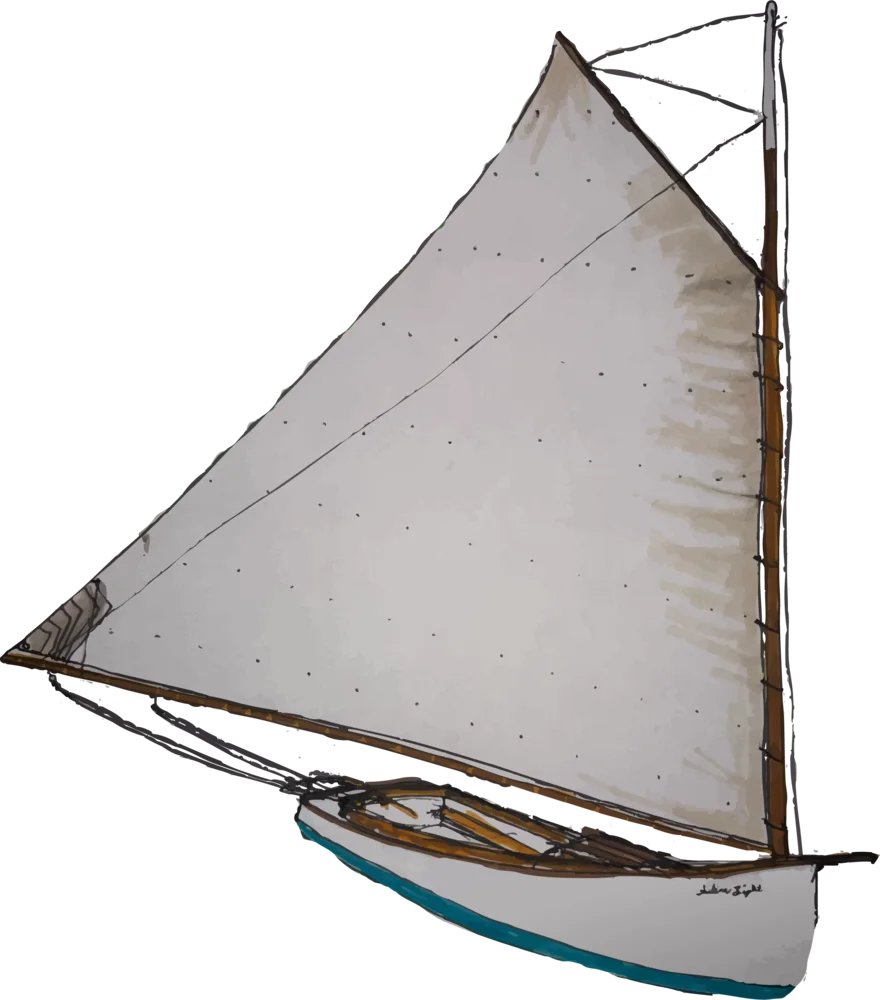
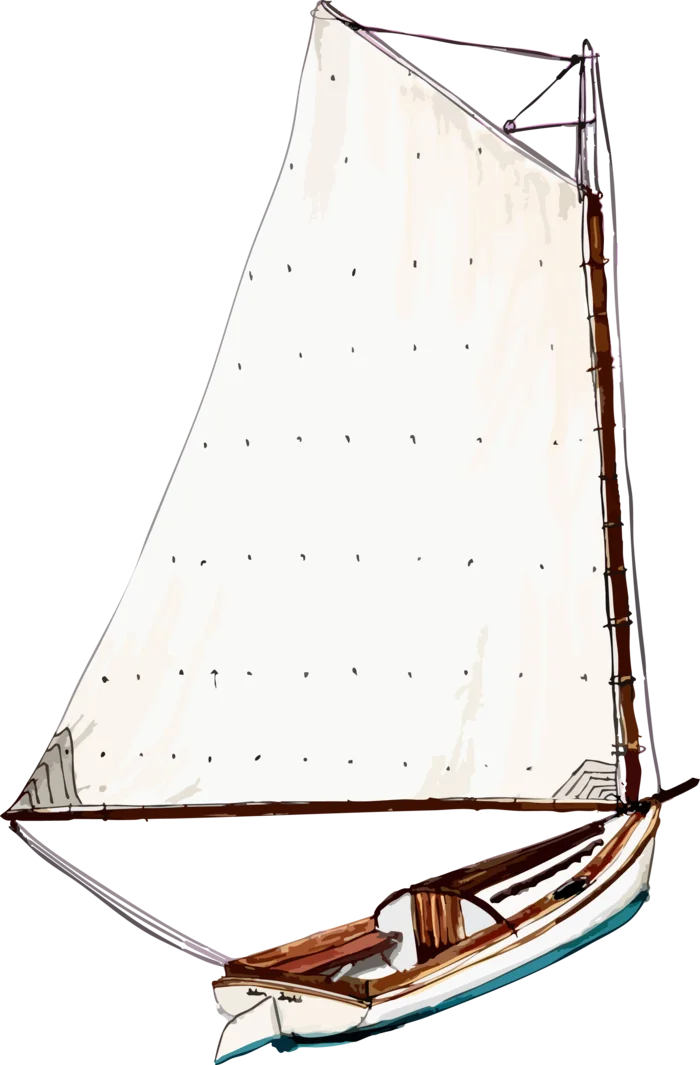
Plate I · The Lug Daysailer, Rigged

Even a small lug (a traditional sailboat with a four-cornered lug sail) is a mechanism of many moving parts. Learning these components is fundamental to understanding how to sail. Hover over any one to name it; click for the full note and what it is made fast to.

Open the plate full-screen →

The mainsheet controls how the sail meets the wind. Let it out too far and the sail shakes: that is luffing. Pull in until it stops and you will feel the boat push forward. Pull further and she stalls — the sail is full but the flow over it has broken. Watch the wake, not the cloth.

WINDWARD TELL LIFTSLEEWARD TELL STREAMSWINDLuffing
Sheet easedSpeed ▮

Ease until it shakes, then pull until it stops. That is trim, and that is most of it.

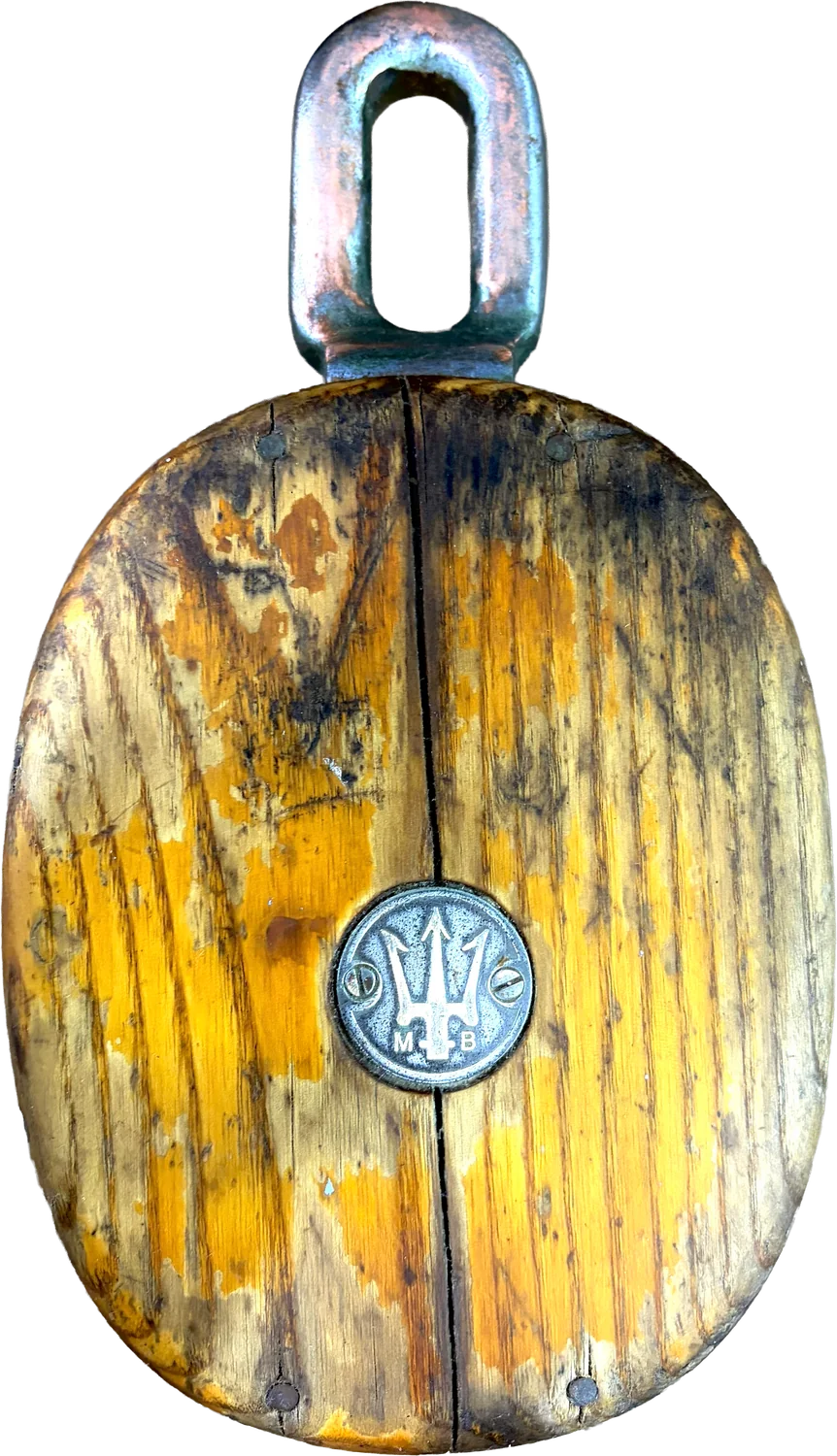
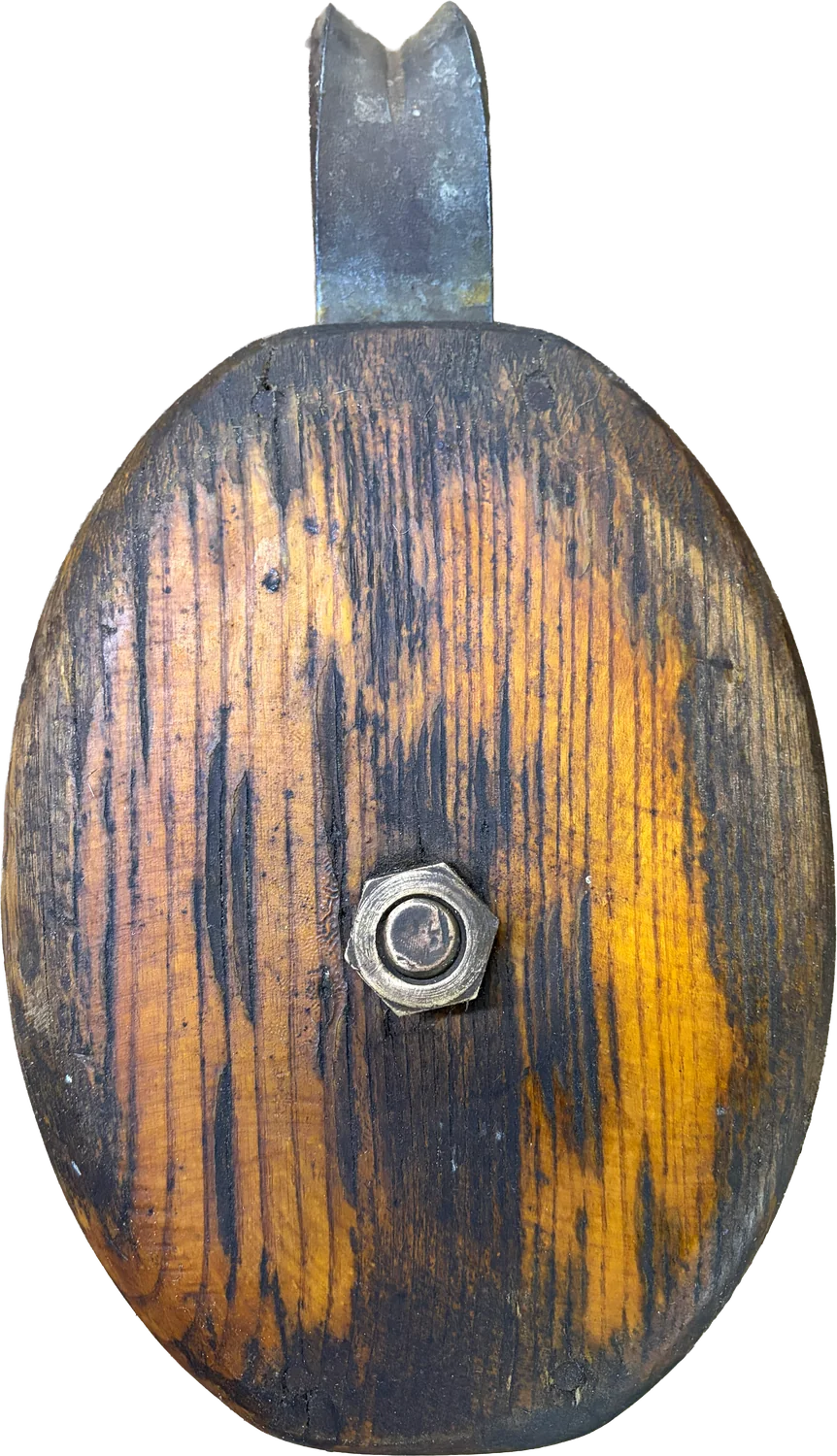
On the bench in this figure — the blocks a sheet runs through
ArtifactsOne of one

Two blocks, the same problem

Everything the plate above names in outline, somebody once had to make out of wood and iron. These two came off boats and through a bench — the Merriman Bros. block, and one nobody signed. Pick one up and what is known about it is set down beneath, including the one whose honest answer is that nothing is known at all.

Two things on the bench. Pick one up.

The rudder swings opposite your hand and deflects water sideways, and that push on the stern rotates the boat about a point near the centreboard, well forward of where you sit. You are behind the pivot, so your hand and the bow always go opposite ways.

3 · Water pushes the stern4 · Bow swings1 · Your hand2 · The rudderTAP THE BLADE TO RAISE ITPivot — she turns about hereRAISING AND LOWERING THE BLADEThe rudder blade pivots in its stock. Offthe mooring, haul the uphaul until theblade is clear of the bottom, and hold itthere on its cleat. In deep water let itdown and cleat it hard.Amidships
Tiller centred

Push the tiller toward the trouble. The bow goes the other way.

Drawing the plate…

Remarks on The Secret of the Sea


By Henry Wadsworth LongfellowFrom The Seaside and the Fireside, 1850

Ah! what pleasant visions haunt meAs I gaze upon the sea!All the old romantic legends,All my dreams, come back to me.

Inshore

When the wind blows a leaf, the leaf goes that way. A sail does not: the pull it makes is mostly sideways. The centreboard keeps the boat moving forward and stops her drifting off with the wind.

BOARDSail forceWater refusesWhat is leftHER TRACK OVER THE WATER — FROM ABOVEHEADINGSLIP 34°Board up
Slip 34° off her heading

She never stops slipping entirely. A well-sailed board boat gives away a few degrees, always, and a good helm sails as though it were not there.

Three things answer the wind: the sheet, the tiller, and you. When she leans you can let the sail out, come up towards the wind, or move your weight — usually a little of all three. Heel is not only uncomfortable, it is slow. A leaning sail shows less of itself to the wind, and the hull gives away more sideways for every foot it goes forward.

WATERLINEWINDUpright
LightToo much
Heel 0° · Crew centreline

Some heel is normal and even fast. Beginners over-correct in both directions — first by hanging on, then by sitting back down too soon.

She will not go straight at the wind, and she will not turn on a sixpence. Everything in this stack follows from those two facts: how to get her bow across the wind, how to get her stern across it, what happens when the turn fails, and how to stop.

Movement oneThe morning calm

Three turns on flat water, which is where you learn them. What none of them answers is the question the day actually poses: the mark is upwind, and no amount of turning gets you there unless the turns add up to something.

Movement twoThe long beat out

A standing lug daysailer under sail, one hand at the tiller
Feature 02 · Interactive

The Helm

The boat of Plate I, on a piece of water that means what it says — real wind, real stream, real soundings, and a crew that answers when called. No score. The sea does not keep one.

Take the tiller

Plate IStanding Lug Daysailer

The mark is astern and the light is going. What remains is the part every beginner dreads and every sailor does a thousand times: stopping a thing that has no brake, beside something solid, once.

Movement threeComing in, late light

PL. 04

Glencoe

Oil on canvas · print from the original

Closed — click to open

Coastal

PlatePassage chart

Plate II · The Passage, Planned

The water this bearing has been on, and the next passage across it. Wind as it blows now and for three days out, drawn where it blows. Lay down a course and the tacks are worked for the wind that will be there when you reach each leg. Turn on the shore and the chart marks the harbour, the chandlery, the sailmaker’s loft and the pub at the top of the dinghy dock. A chart is a plan and not a promise — read the tide and the seamarks for what the planner cannot see.

Unrolling the chart…
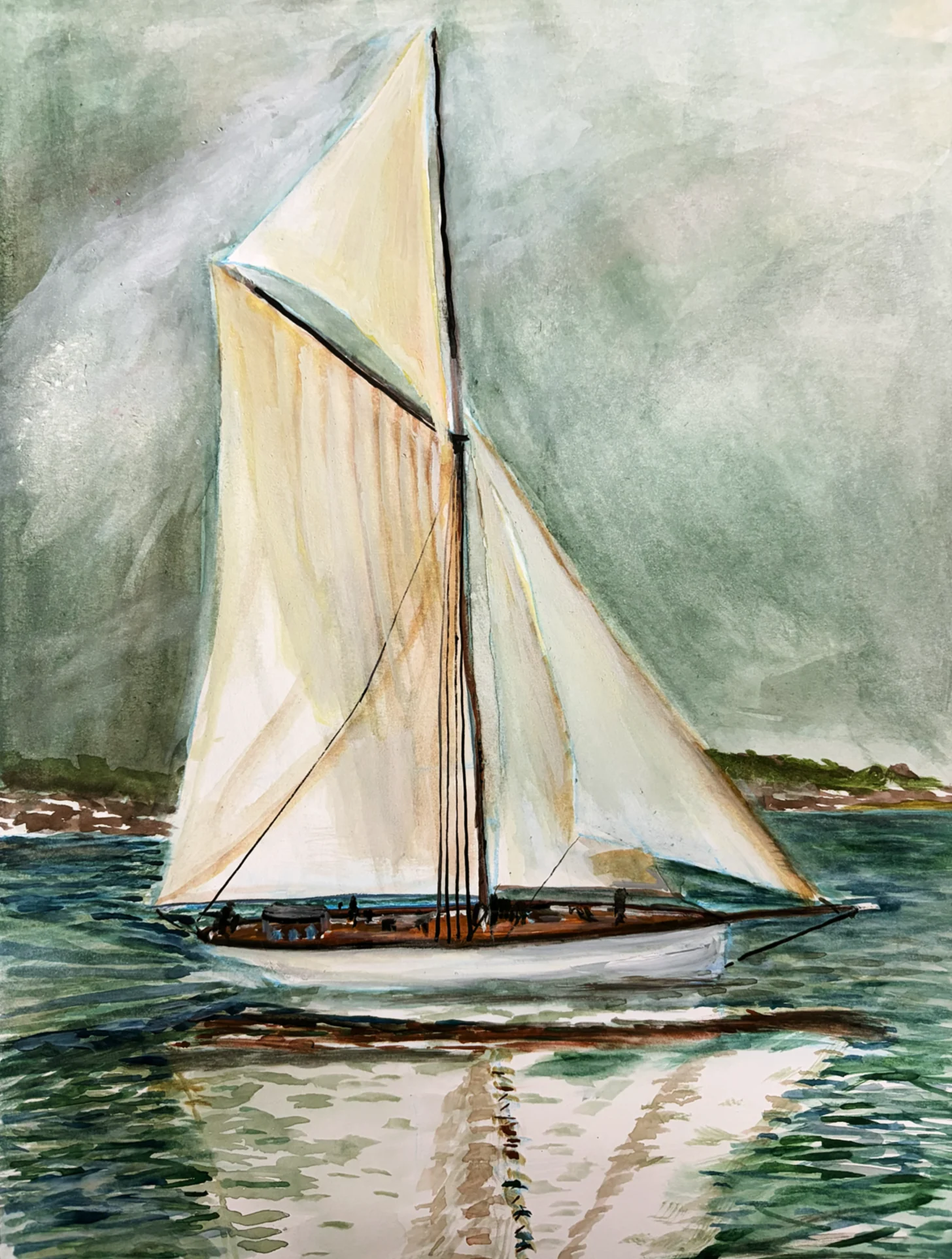
Cutter — a white-hulled gaff cutter under full sail, crew on deck, passing a low shore of trees and rock under a grey-green sky, her sails reflected in the green water; an original watercolor by Zach Barkin
CutterWatercolor on paper11 × 14 in
PL. 06

Close enough to the shore to name it, and too busy with the sails to look.

A new sail is a rare event.
A mended one is Tuesday.

From other hands

FromNantucket Current

Nor’Easter Uncovers Shipwreck On Nantucket’s South Shore

Our note

What the sea does to a hull nobody is mending. The timbers a nor’easter laid bare on the south shore are thought to be the Warren Sawyer’s, wrecked on that beach in December 1884 and buried in its sand since — one storm took her, and another has given a piece of her back.

Read it at nantucketcurrent.com (opens in a new tab)

Every reading on the bearing →

  1. 01

    Lay & mark

    The two cloths overlap by the width of the seam — a hand's breadth, marked once with the rubber's edge. Selvedge to selvedge, no guesswork.

  2. 02

    Crease

    Run the seam rubber the length of the fold until it lies flat and stays there. The cloth should hold the crease without being held.

  3. 03

    Dress the twine

    Draw the flax through the beeswax, three passes. It goes in dry and comes out stiff enough to steer.

  4. 04

    Stitch

    Needle up through both cloths, back down a needle's width along. Even spacing matters more than tightness — a tight seam puckers and the pucker is where it tears.

  5. 05

    Rub down

    Work the rubber back along the finished seam. Whip the ends. The seam is done when it disappears into the sail.

Plate
PL. 03
Medium
Oil on panel · print from the original
Size
Print · 8 × 8 in
Made
Beverly, MA
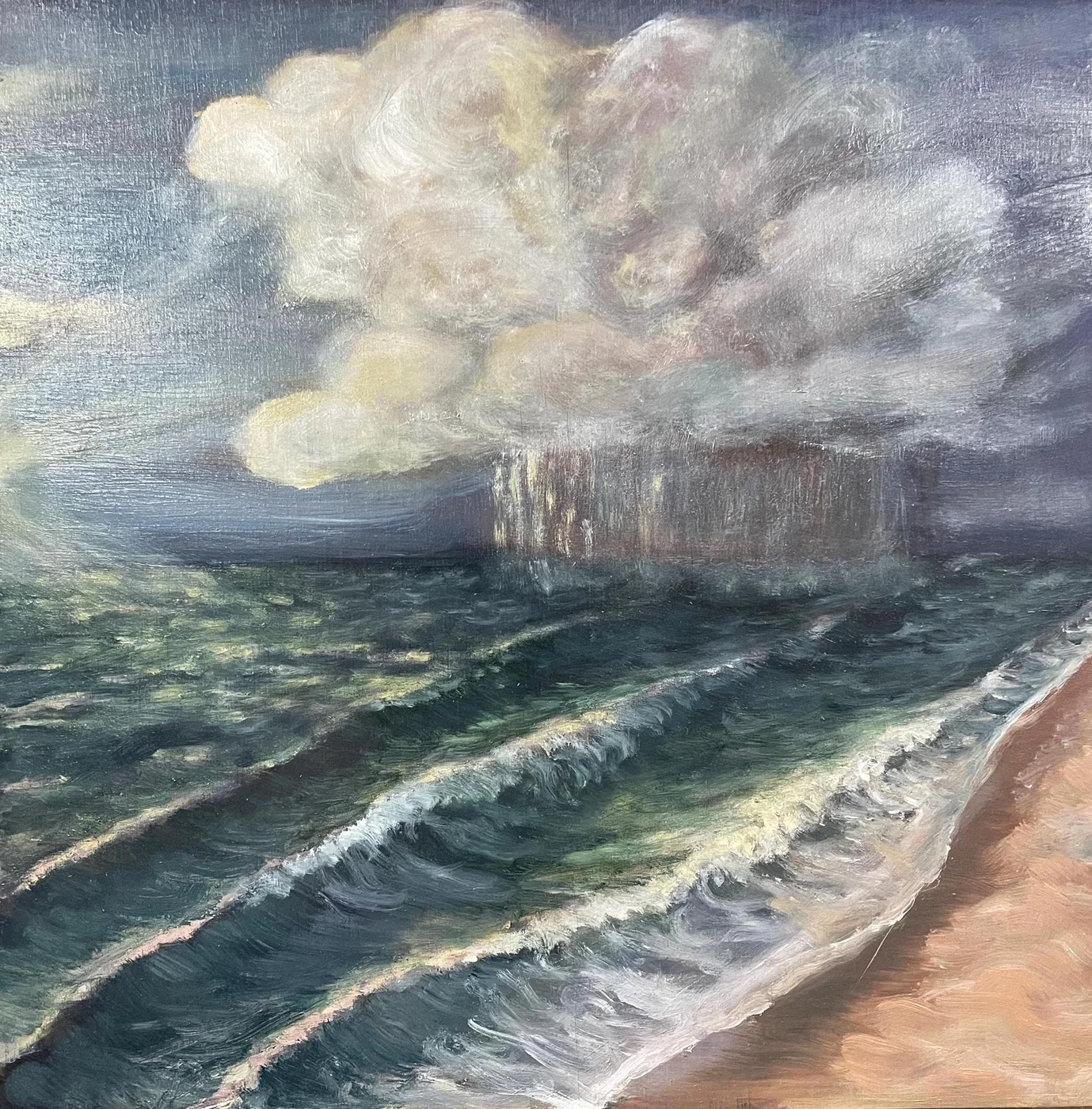
Crane Beach, Cloud — an original oil painting by Zach Barkin

The weather did the composition; the hand only kept up.

PL. 02

Crane Beach — Blue

Oil on wood panel · print from the original

Closed — a deadlight. Nothing to see until you open it

Offshore

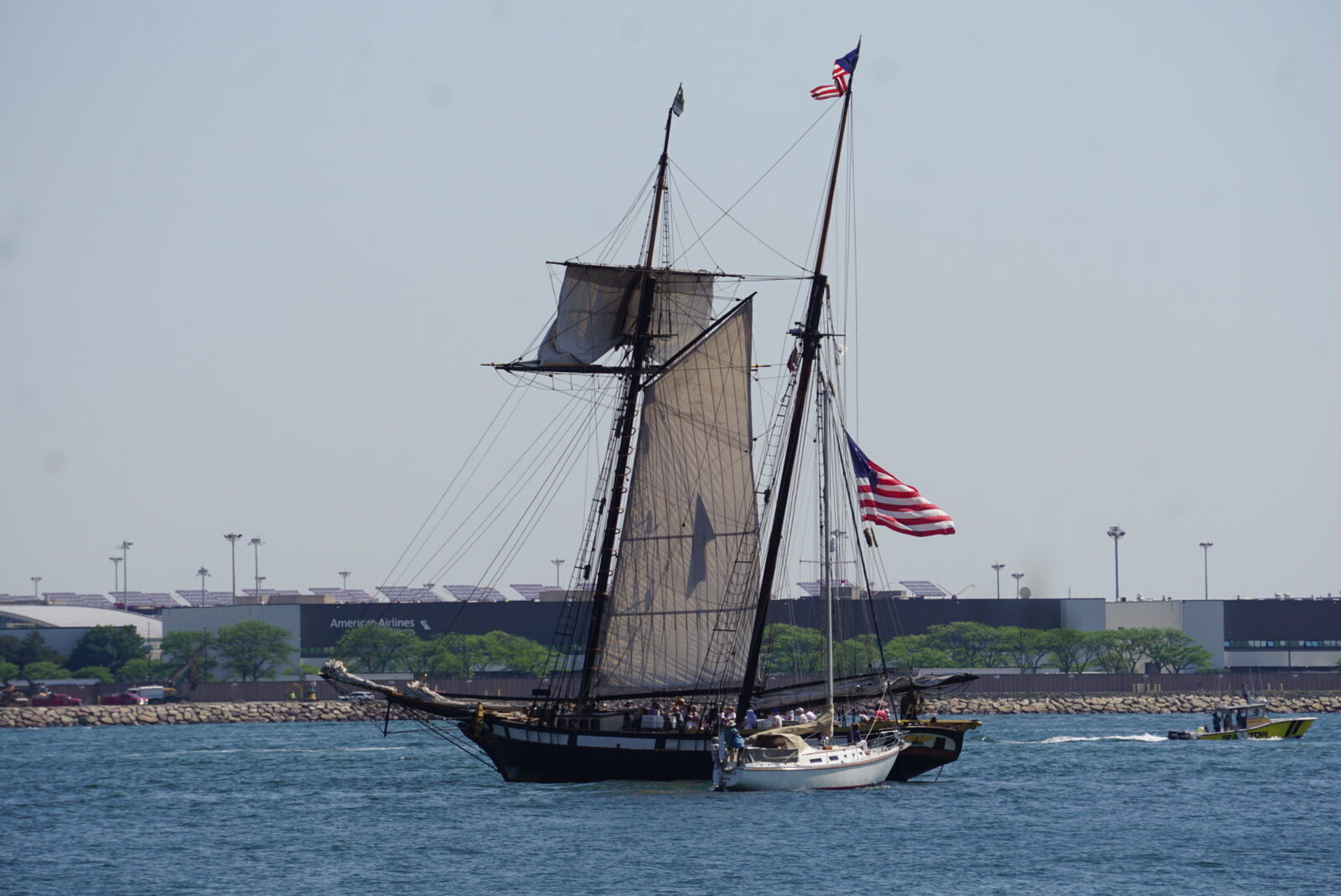
PL. 05 · Schooner

What makes her a schooner?

Two masts or more, every sail set fore and aft, and a foremast no taller than the mast behind it. That last is what separates her from a ketch, which carries its taller mast forward.

Here the foremast is the one nearer the bowsprit, and the mainmast behind it stands higher. The rungs up the shrouds are ratlines, for climbing aloft.

The instant the sail fills and craft becomes motion instead of theory.

From other hands

FromSaltWire

An American schooner in Lunenburg, put up for sale on Facebook Marketplace

Our note

The Sailmaker’s schooner is drawn, and will never need a buyer. This one is real, lying in Lunenburg — the harbour that built the Bluenose — and somebody has to take on her upkeep, or she goes the way wooden schooners go.

Read it at saltwire.com (opens in a new tab)

Every reading on the bearing →

Bluewater

A schooner heeling under working sail in Boston Harbor

Textures of the Tall Ships

Read them seam by seam →
282

Remarks on the calm after a long passage


The sail remembers every wind it has caught. Each thread bears the tension of storms weathered and calms endured. The sailmaker does not create first; the sailmaker listens, and the canvas answers.

Lat 42° 31′ NLong 70° 53′ WBar 29.9— Logbook, Sailmaker bearing
See them in Mercantile Port

Pelagic

The passage

A bearing is a season, not a sitting. What you cut, trimmed, and undid between the first depth and this one is the part worth keeping — and it is the part that disappears first.

Arctelia holds the whole descent as one passage: an orbit for the bearing, an entry each time you came back, and the open questions carried between them. Free while you keep the record yourself; a studio account adds guidance that has read the passage, a preparation canvas, and the tide and wind of every session you logged.

Pléōπλέω — “I sail”

The Odyssey guarantees its hero survives, so its danger has to be recovered rather than felt. The black ships are where you recover it — pitch on a hull is a material fact, and it is also the colour the poem reaches for when something is about to be lost.

Read the essay →

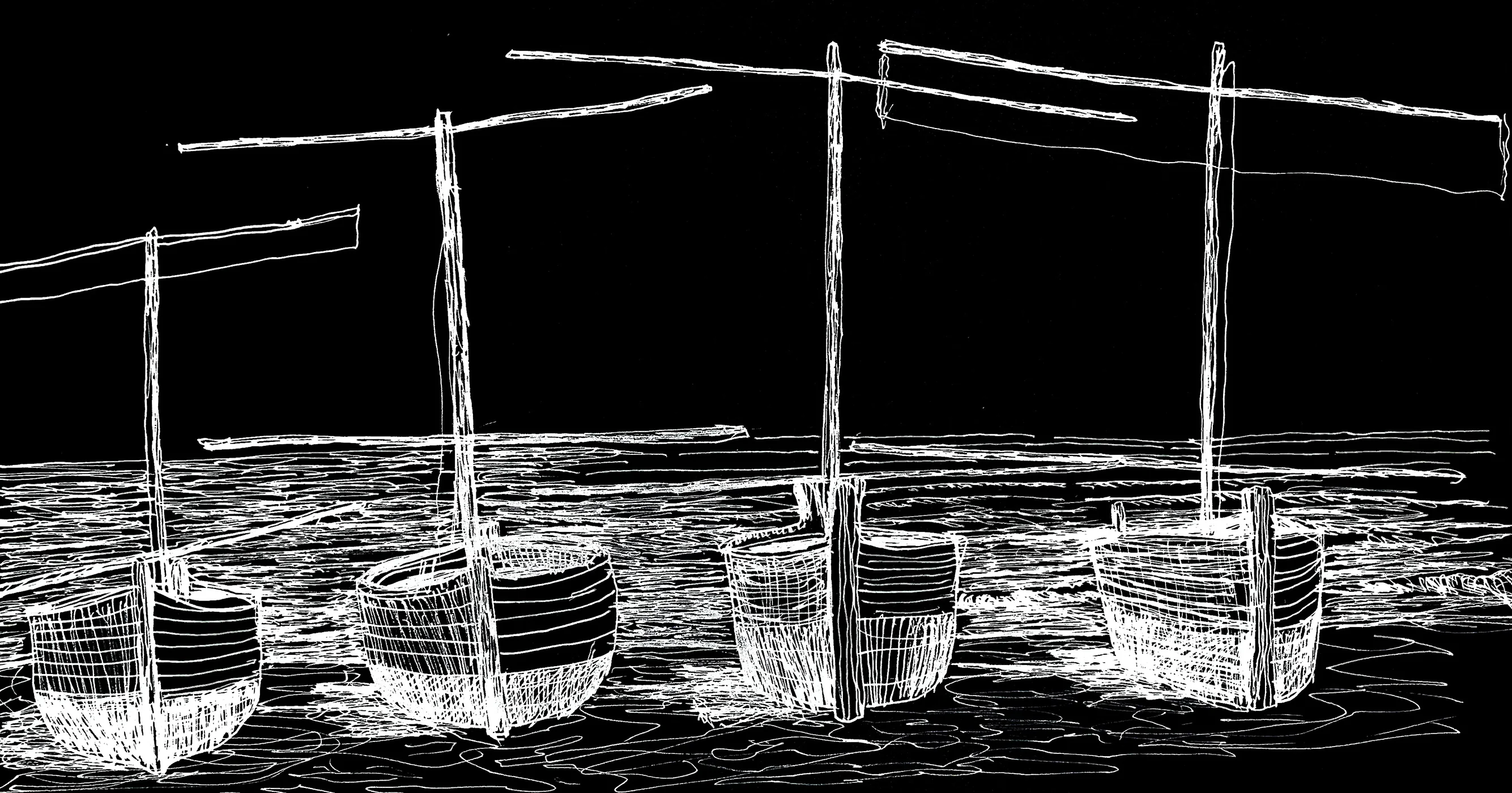
White line drawing on black: four hulls at anchor, masts and yards against an open sea
Plate IV · The Hull at Sea · ink on black