 GlaukasBack to The Sailmaker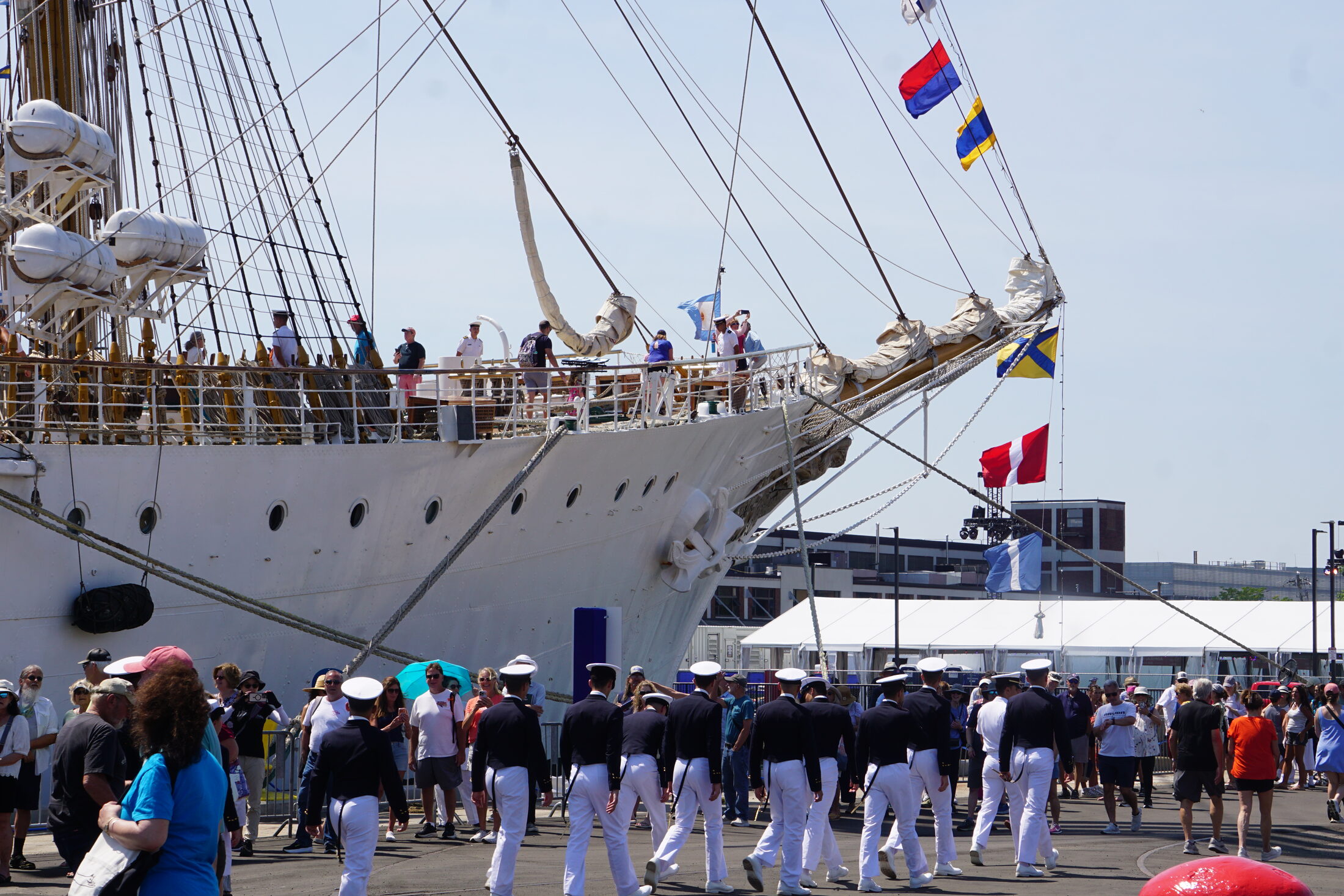
Textures of the Tall Ships
Tall ships at Boston, read part by part, seam by seam — an exploration of texture, anatomy, and the hands that keep them.
◐ Boston, Massachusetts · Parade of Sail · shot on the pier, one bright afternoonIf you have ever visited the Boston waterfront, it is hard not to imagine it as it was from the time of the Revolution to just over a century ago — a great city of the age of sail. In July of 2026, we were fortunate enough to get a taste of what that must have felt like. Over fifty tall ships docked in Boston, and if you made the trip you were treated to the sight of wood and canvas all along the harborfront: sails aloft, and a temporary restoration of the boom and bustle of a working waterfront. The scale of these ships, powered by wind alone, is truly impressive; but even more so are the details and intricacies of the craftsmanship, and of the crews who keep it. Sailors toured the city’s sites and mingled with one another, trading talk of home. The ships themselves were actively and diligently maintained by their crews — scrubbing hulls, practicing their ropework. It was a glimpse into another time.
Enjoy this photo essay of my tour of Sail Boston.
Down the Pier
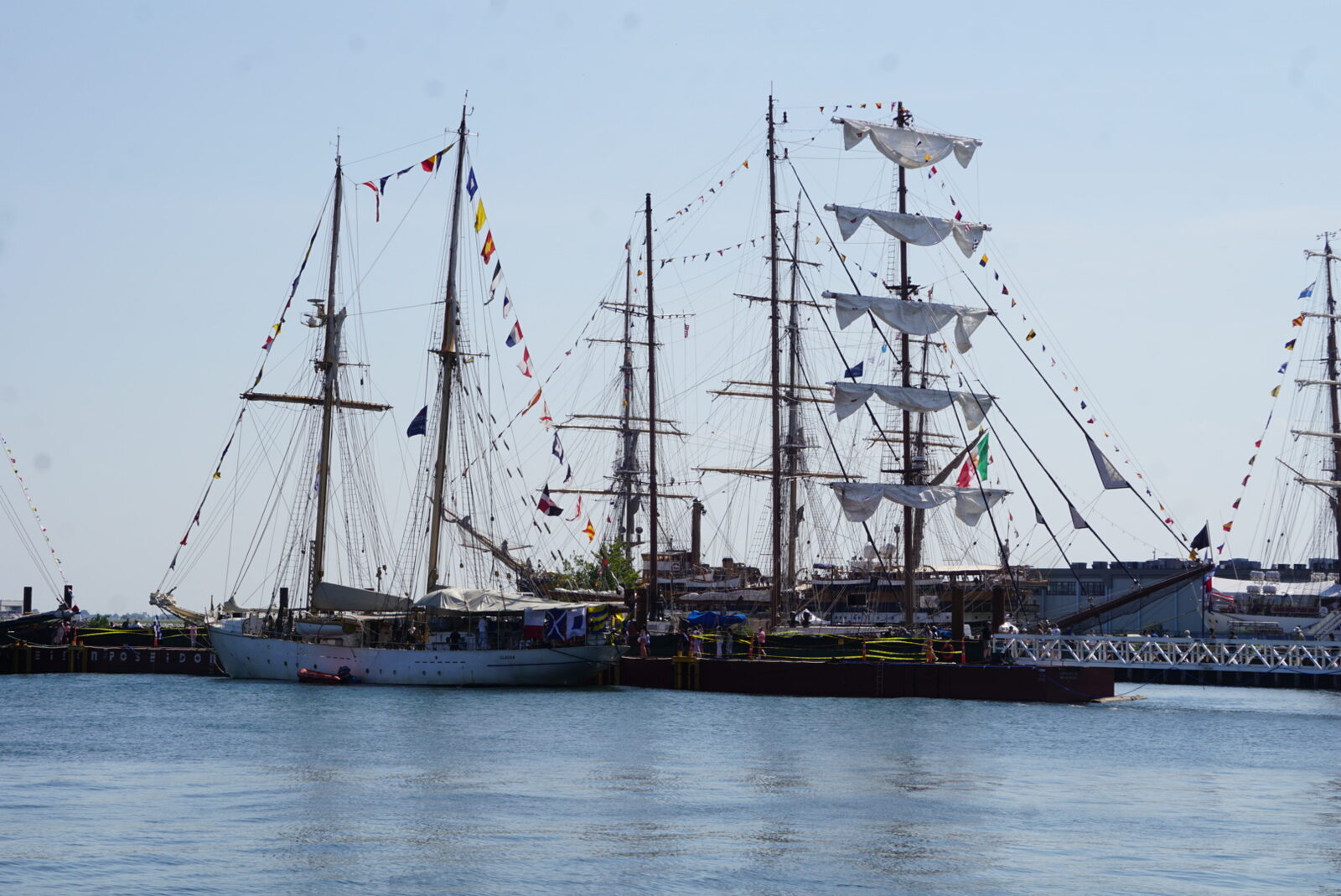
The waterfront is alive. There is activity all down the shoreline. It is unlike anything I have experienced in the decade that I have lived and worked in Massachusetts. Near Blue Hills Pavilion there is a festival; a Ferris wheel gives the patrons a view from above of the over fifty vessels docked down the waterfront. Explore several of these vessels and work down the pier. holding court at the deep berth, gleaming white beside her, , and somewhere in the crowd of spars.
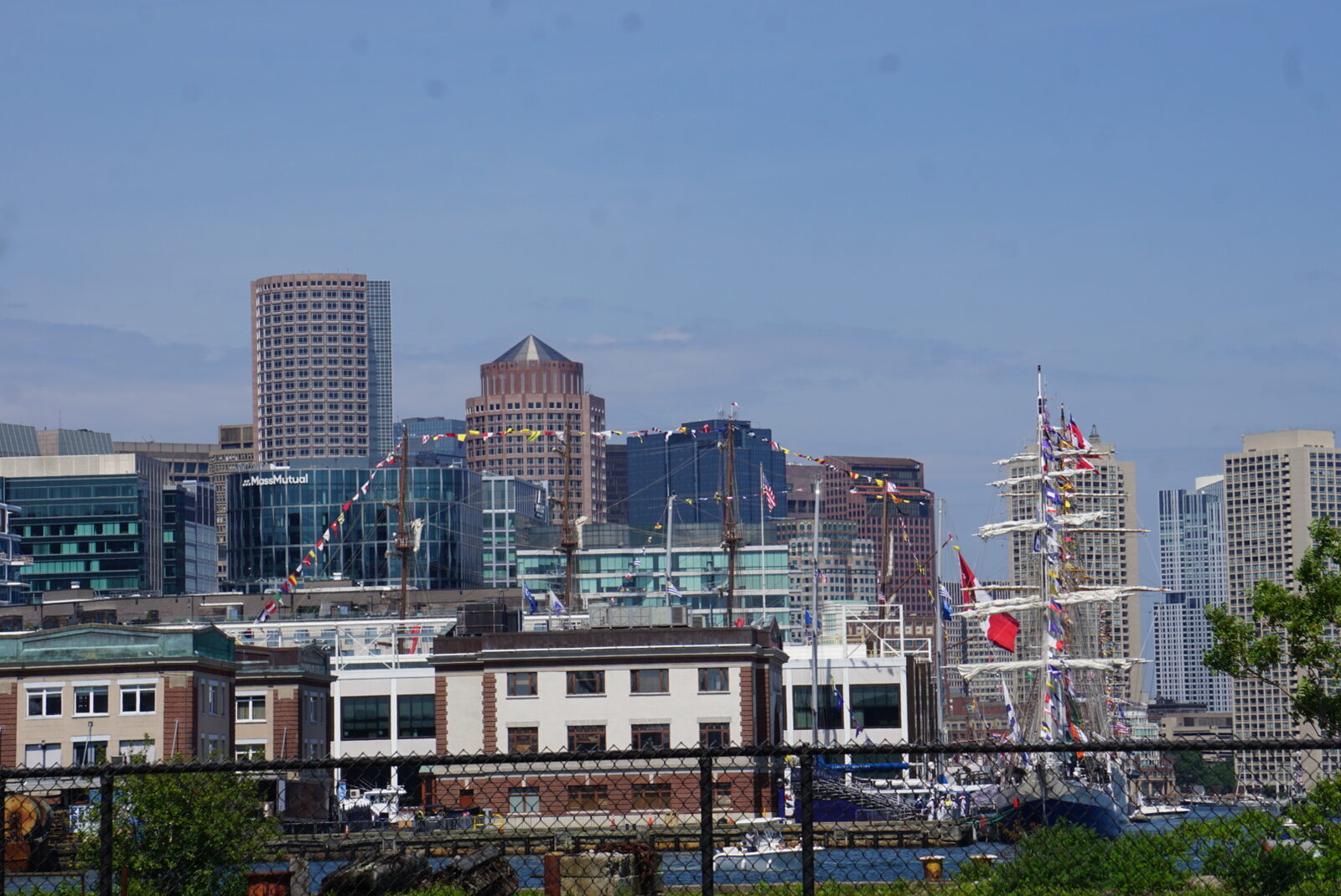
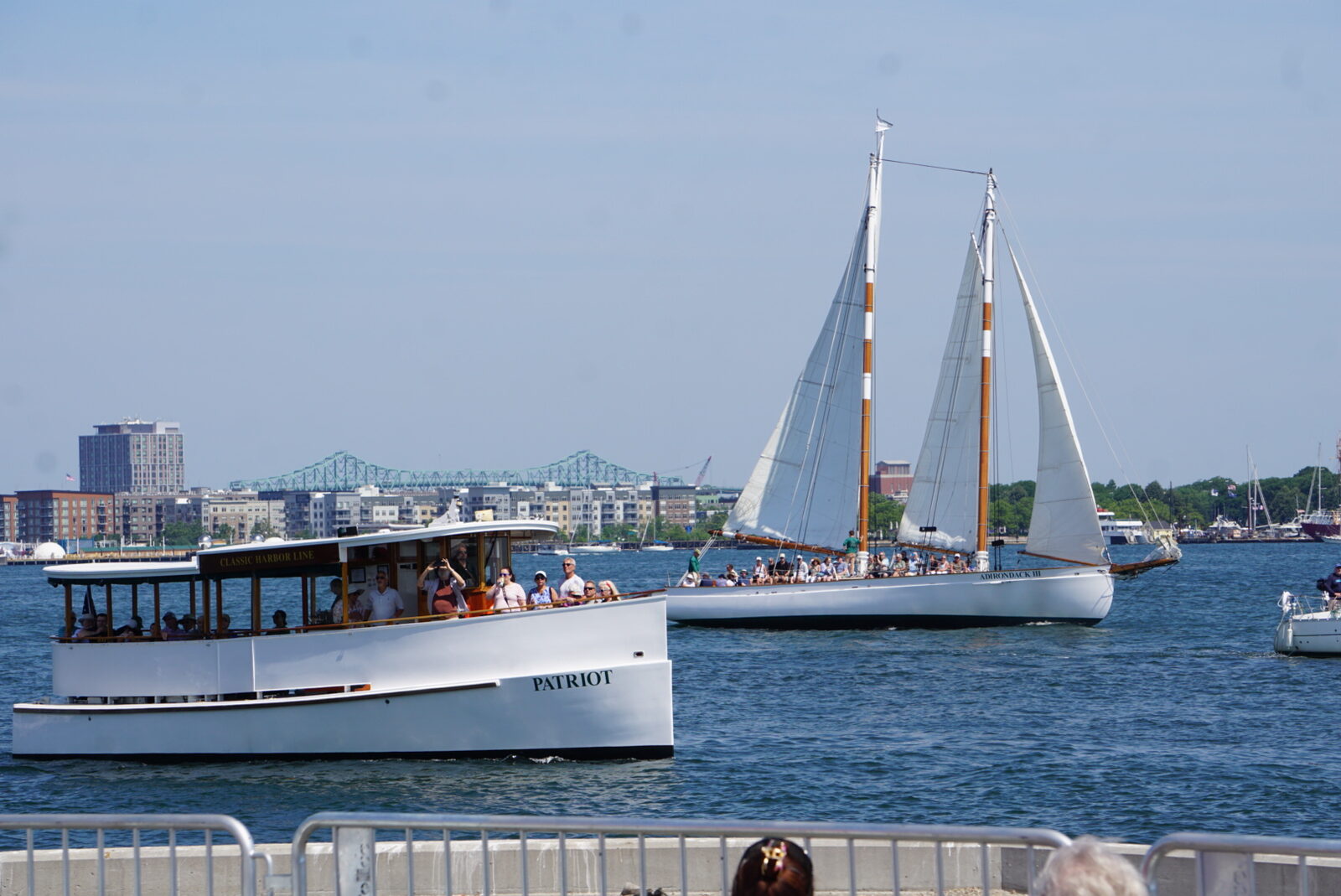
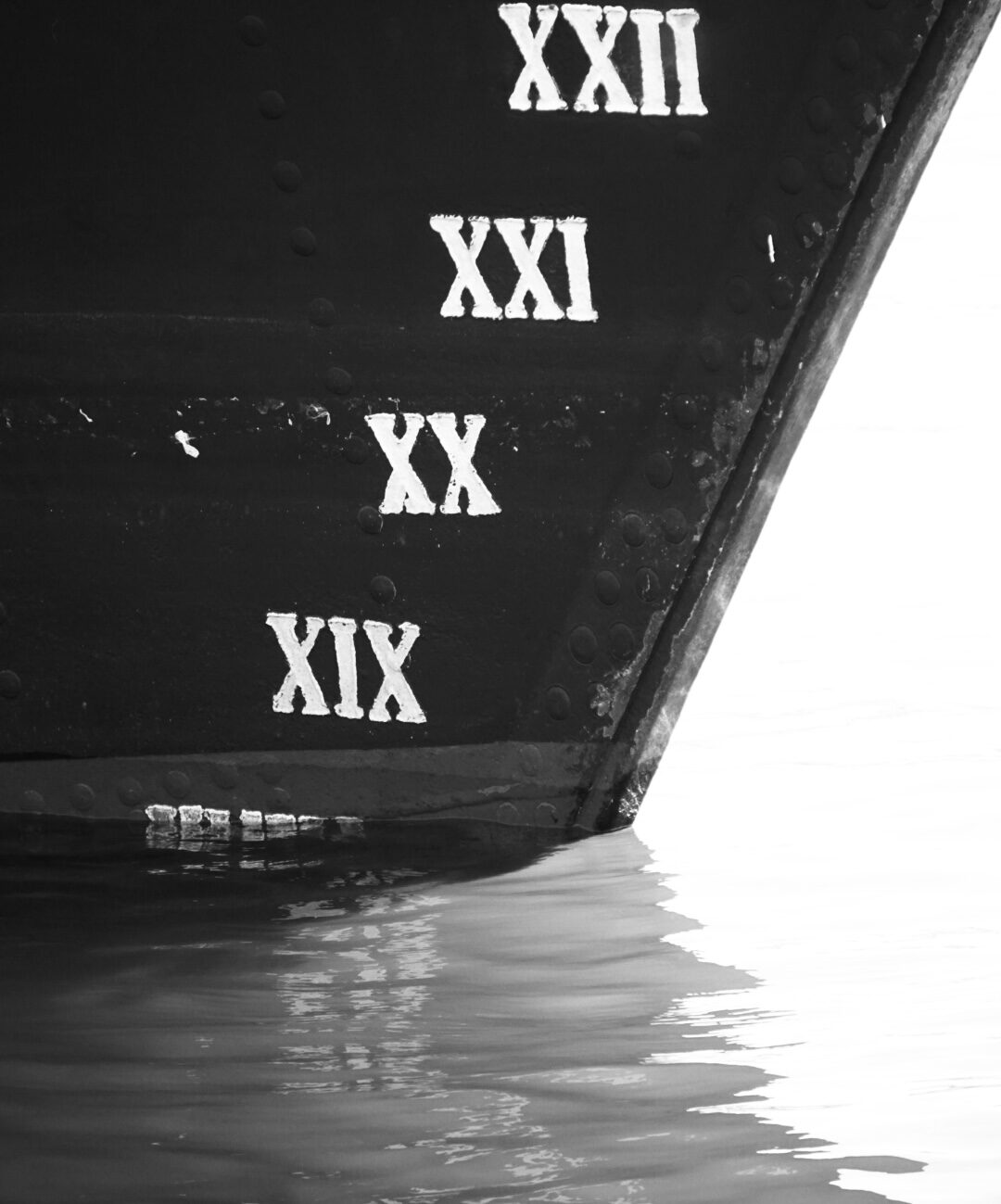
Though the decadence and ornament of the ships garner much of the attention, the boats’ hulls are striking leviathans along the docks. Upon closer inspection, each boat’s shape is unique. Vespucci’s wide deck looks capable of hosting a ball on the bay. , the fastest of the ships present, was designed to slice through water and waves.
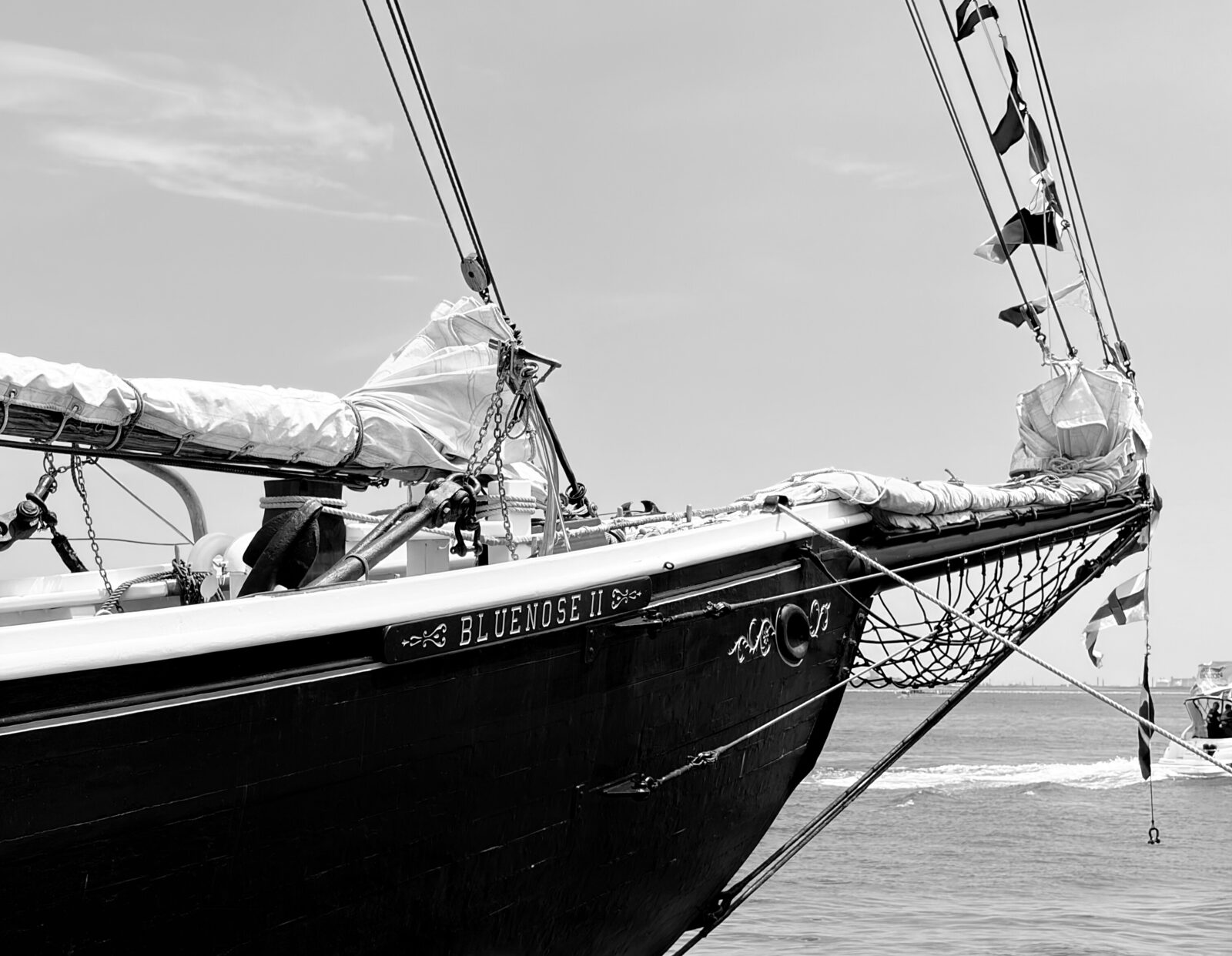
The larger training ships’ hulls are largely riveted steel plate. Vespucci in particular disguises this well, with its wood struck over the rivets. Some of the smaller boats have true wood-plank hulls, like , built in 1963 at the Smith and Rhuland shipyard, whose hull design brought the original racing fame. Her rebuild used tropical wood, a departure from the Canadian hardwood of the original.
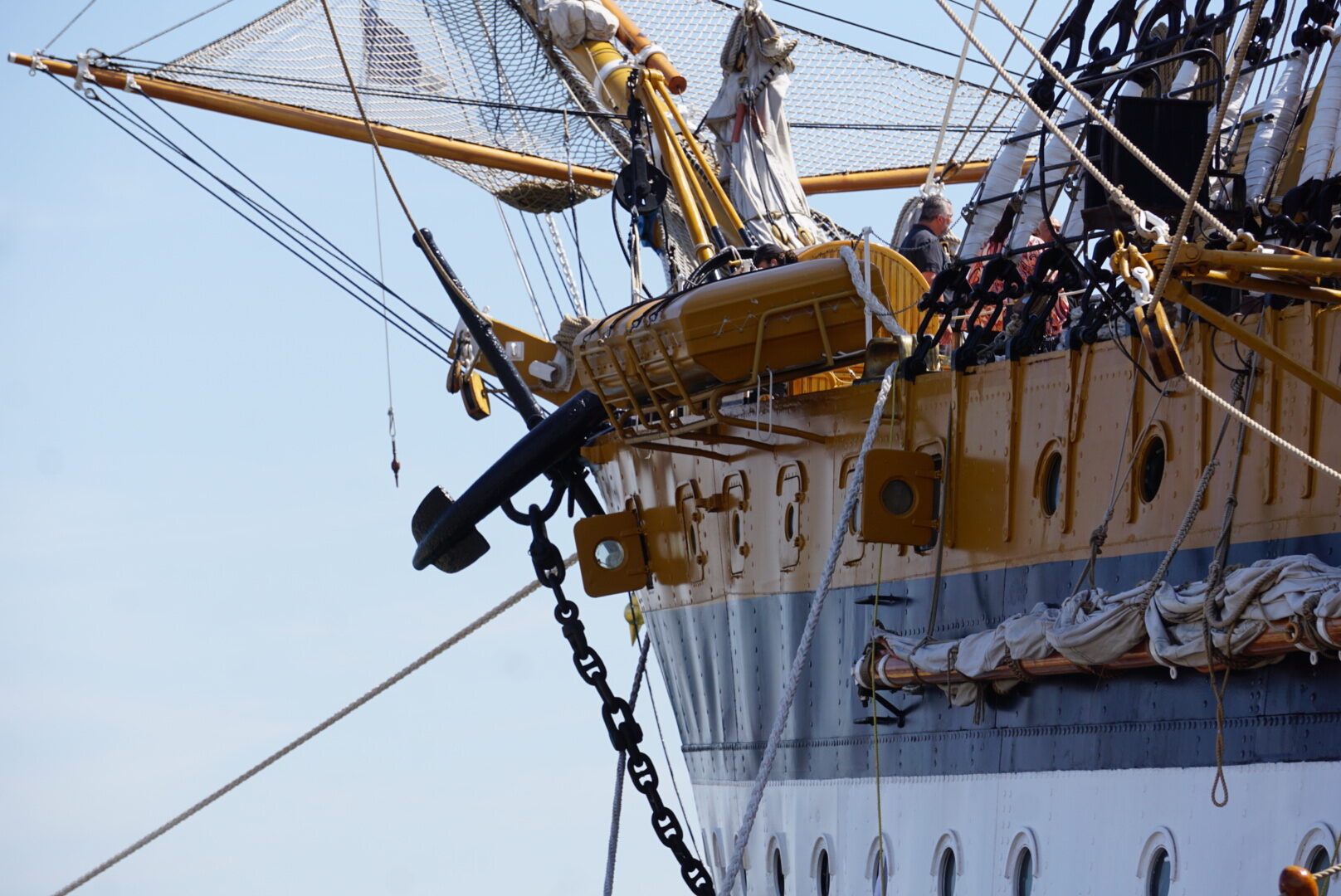
Amerigo Vespucci — the head: catheads, bower anchor, crew on the fo'c'sle, the bowsprit worked as a fourth mast.
Bow & Figurehead
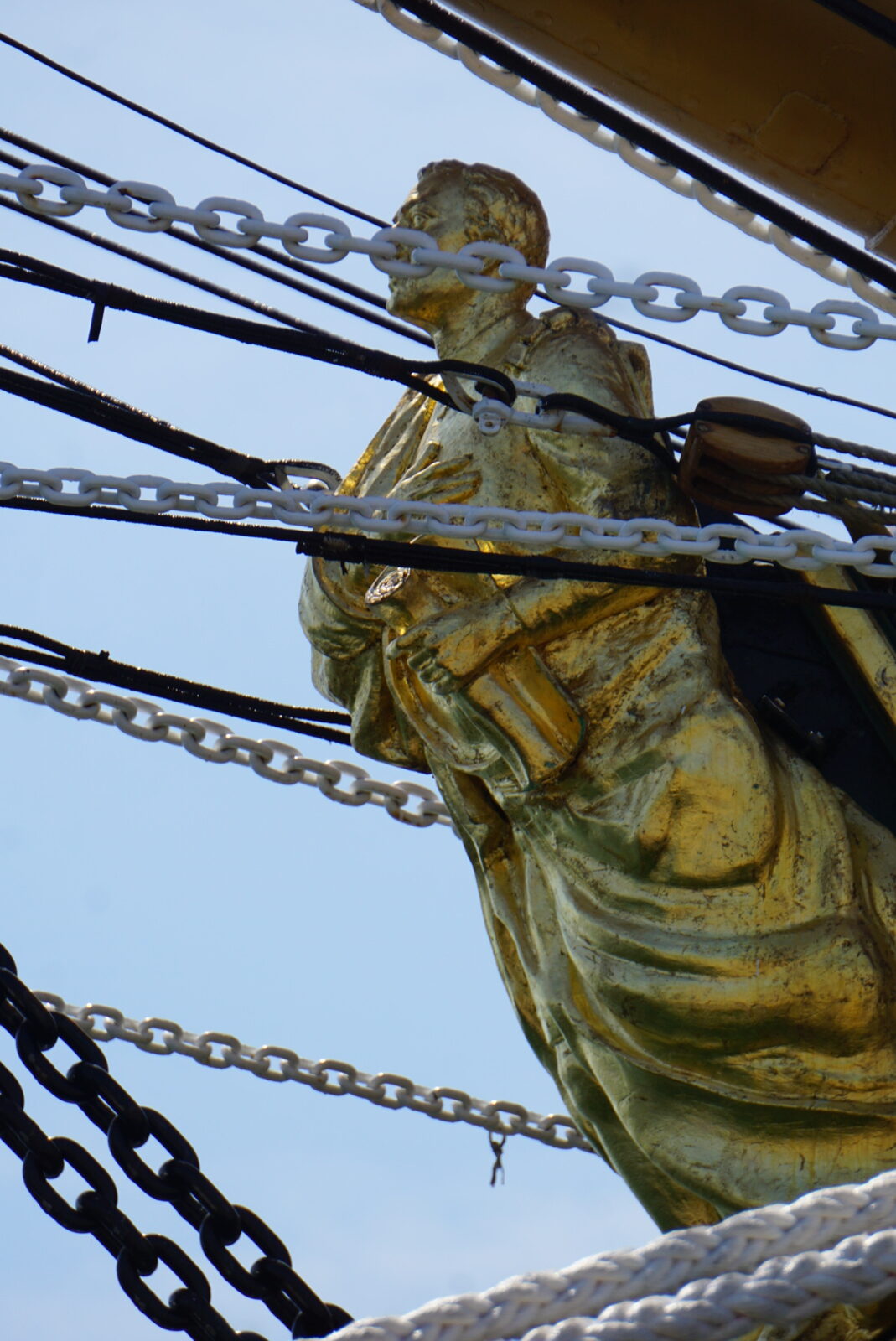
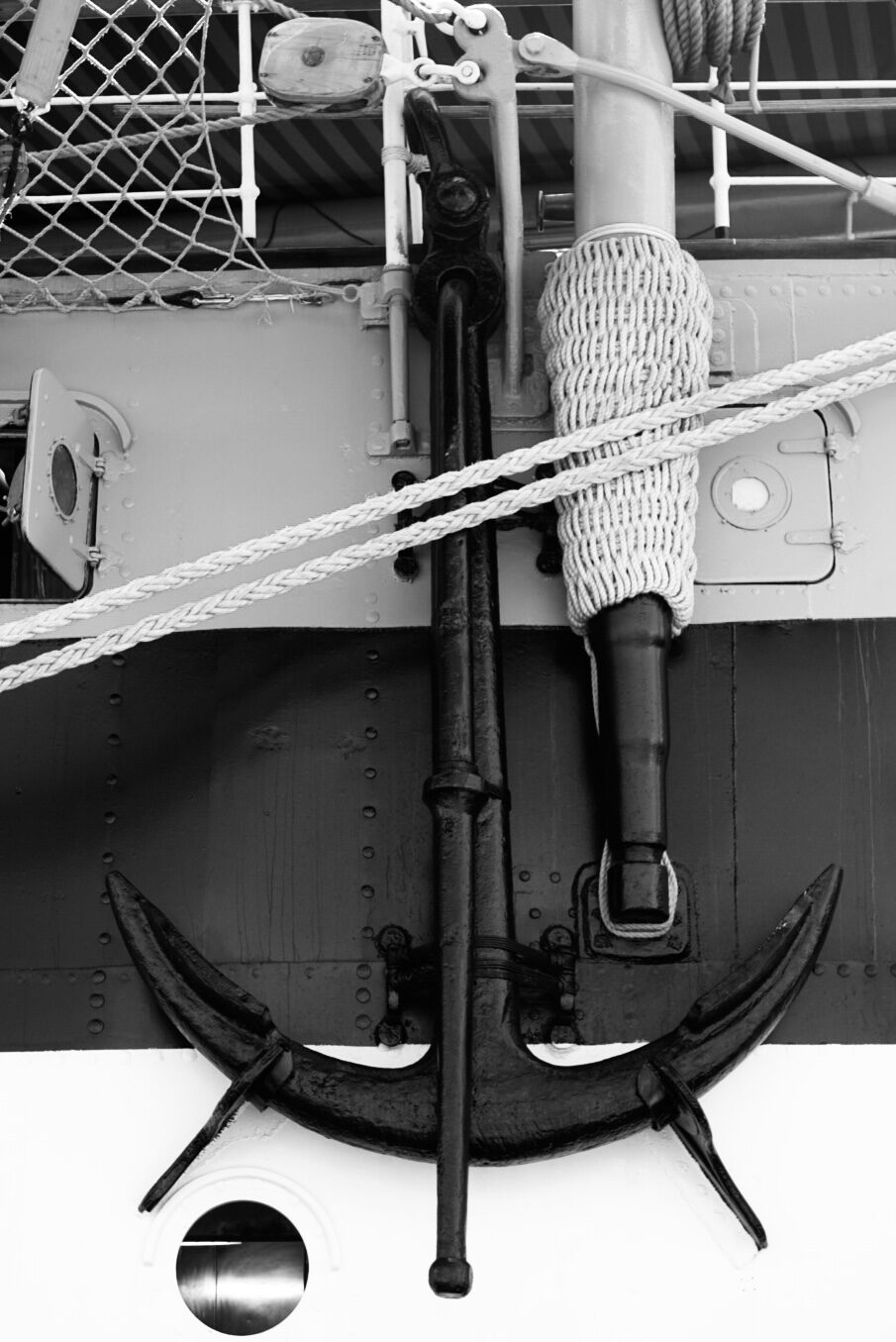
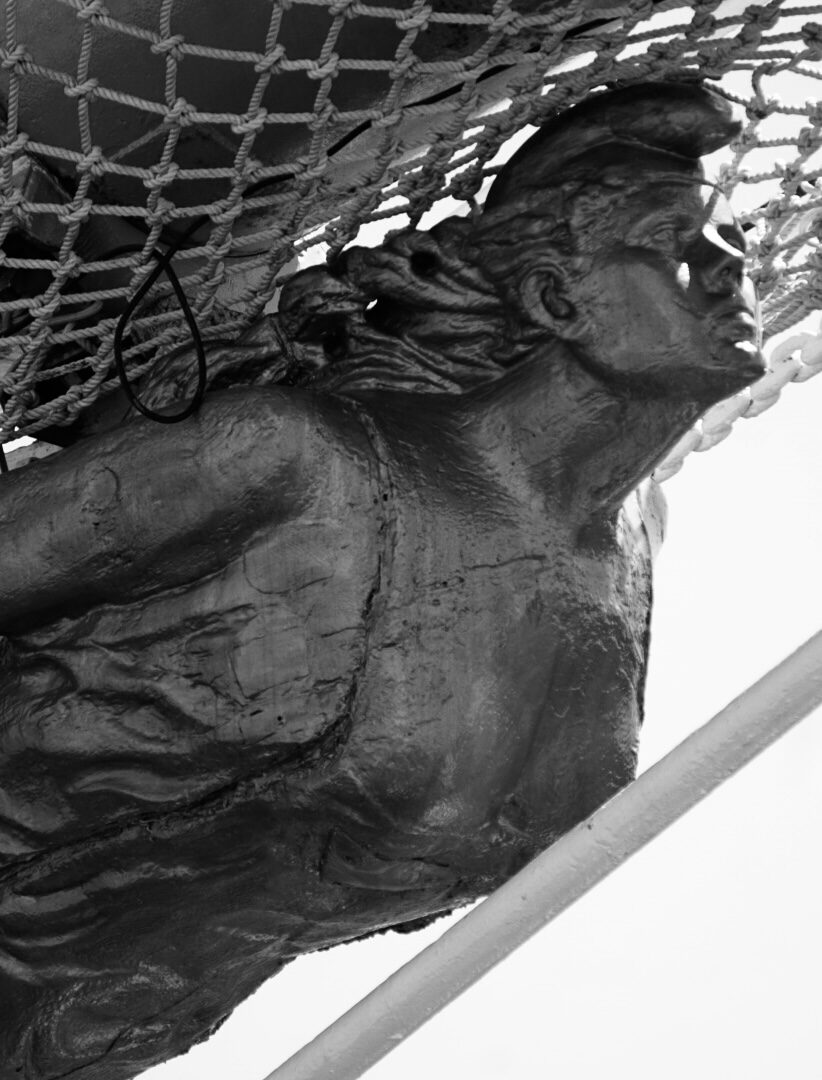
The first thing your eye is drawn to on these ships is the bow. The most beautiful are adorned with gilded figureheads, shepherding vessel, cargo and crew through the unknown. It is here that these ships still speak an ancient language, where the symbolism and superstition of the sea are most apparent. On one, a gilded navigator rides under the bowsprit — forged anchors served against chafe, a sea-creature cast into the topside. Each one carved, a museum-worthy masterpiece, each carrying its own story — some forgotten, some remembered. ’s figurehead was still unfinished when she first sailed in 1963. ’s carver is said to have lashed a young volunteer to the bow as his model. Other stories are lost to history. But regardless of who, or how, they remain the embodied spirit of the ship as it puts to sea.
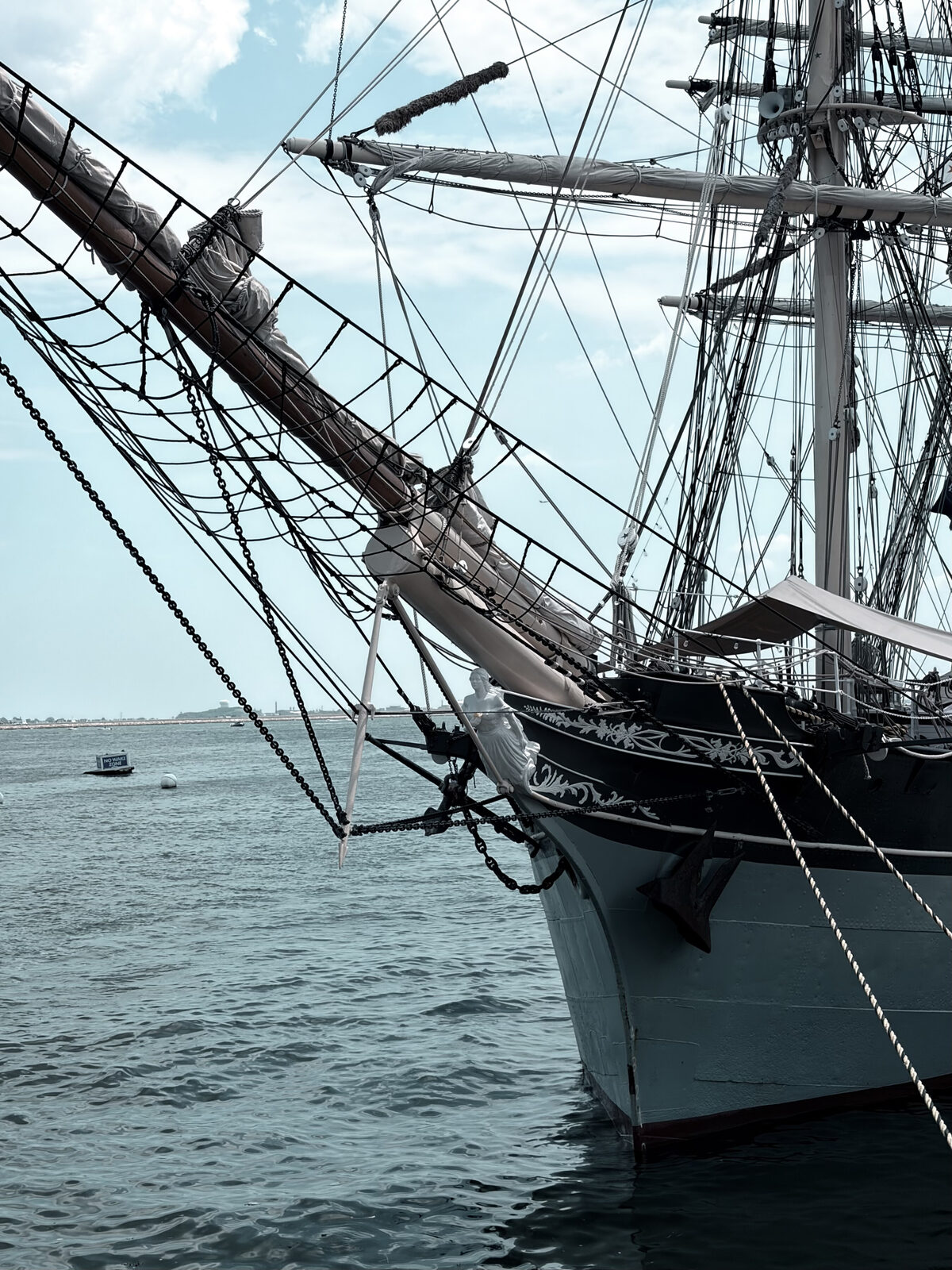
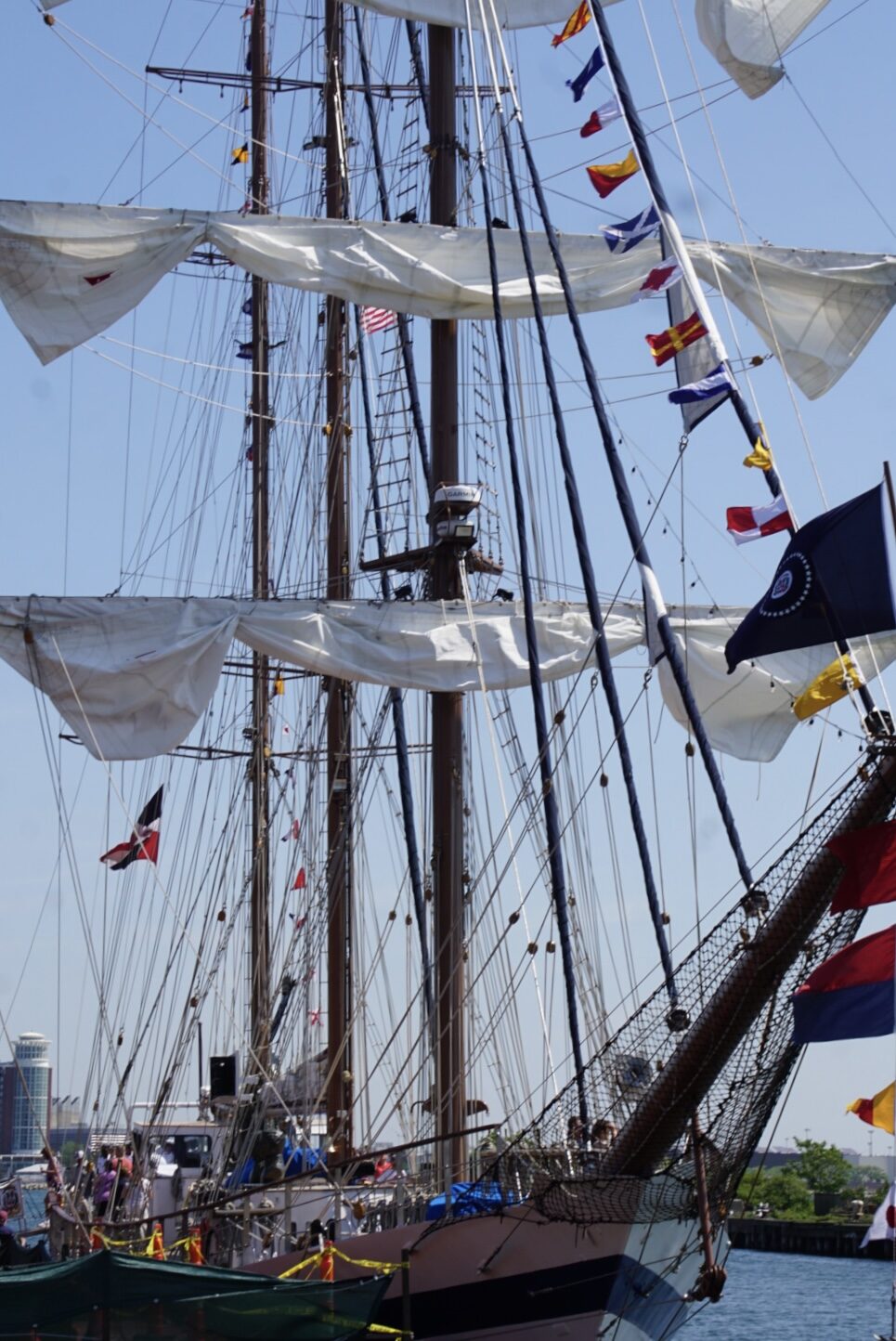
The masts are the most striking aspect when you first see this gathering of ships. They line the entire quay, and the verticality is more striking than the flat glass behind them. The main mast of the is 56.2 m. Five yards to every mast on a full-rigger, the fighting top ringed with blocks. The geometry of the rig — how much timber and tube it takes to hang the canvas, and how the eye gets lost in it.
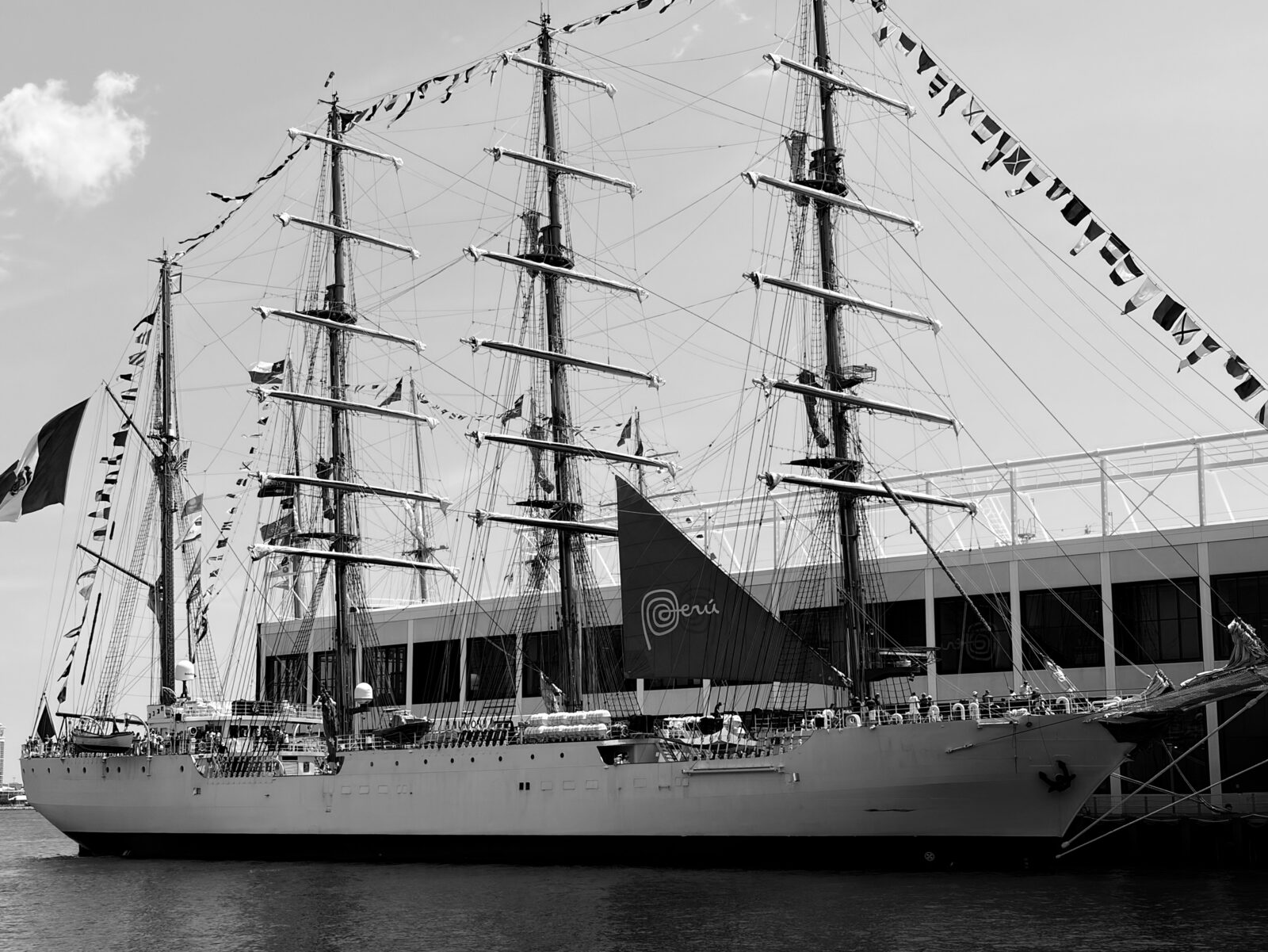
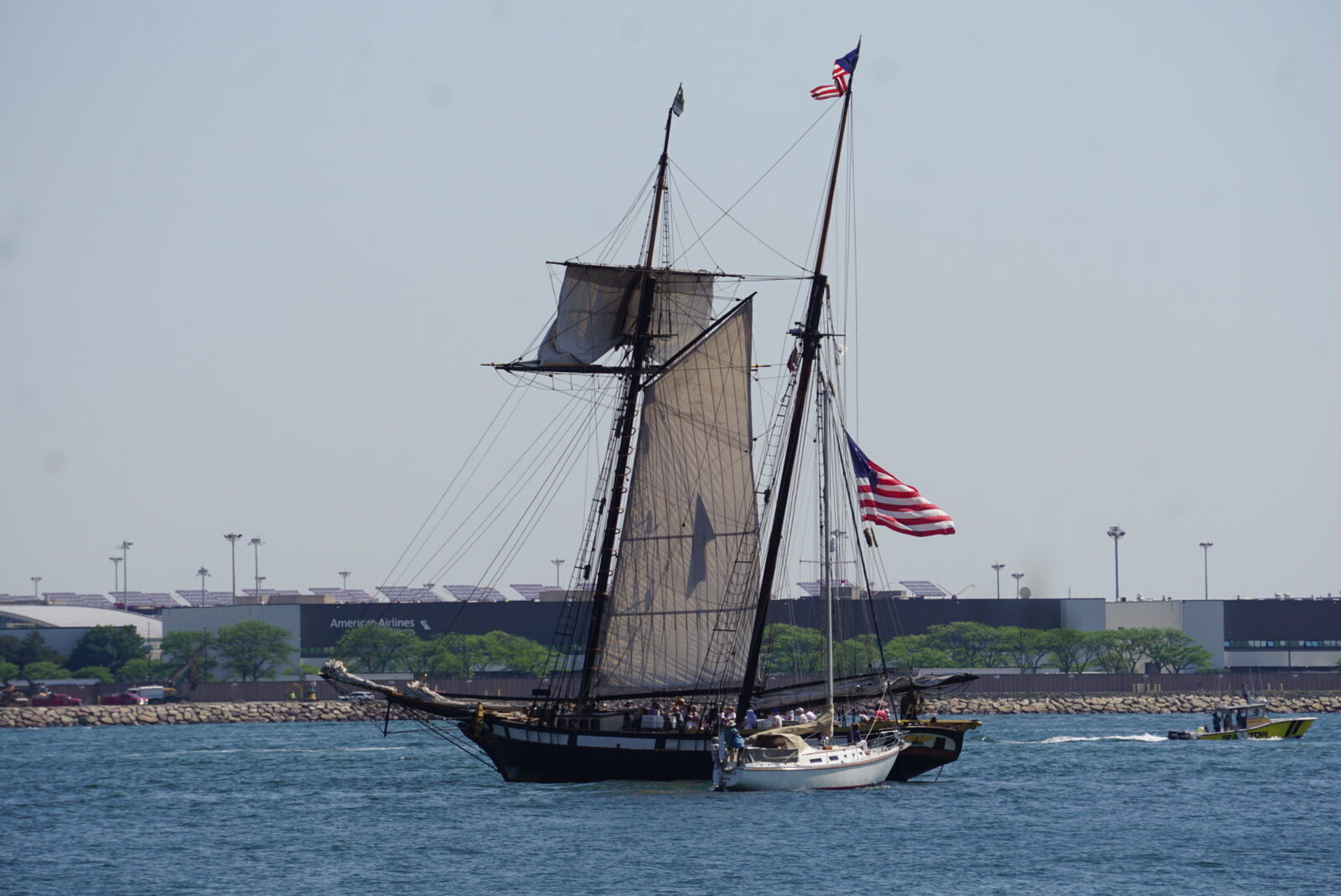
Like the hulls, the material varies — some steel, some wood. The is a hybrid, with steel transitioning to fir halfway up, once again blending stability with decadence. The rigs range from the two-masted racing schooners like to the three-masted Spirit of Bermuda and the full four-masted B.A.P. Unión.
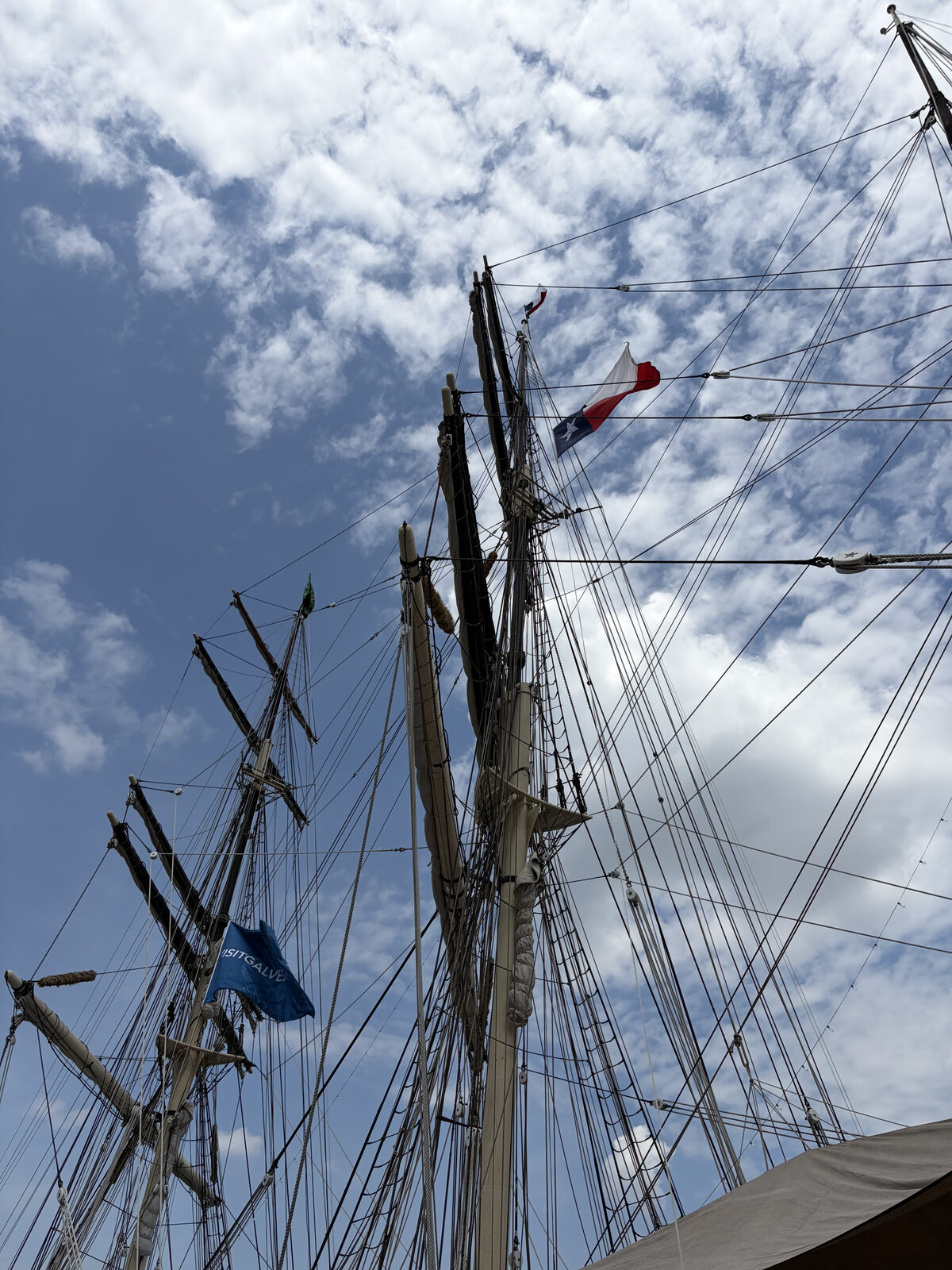
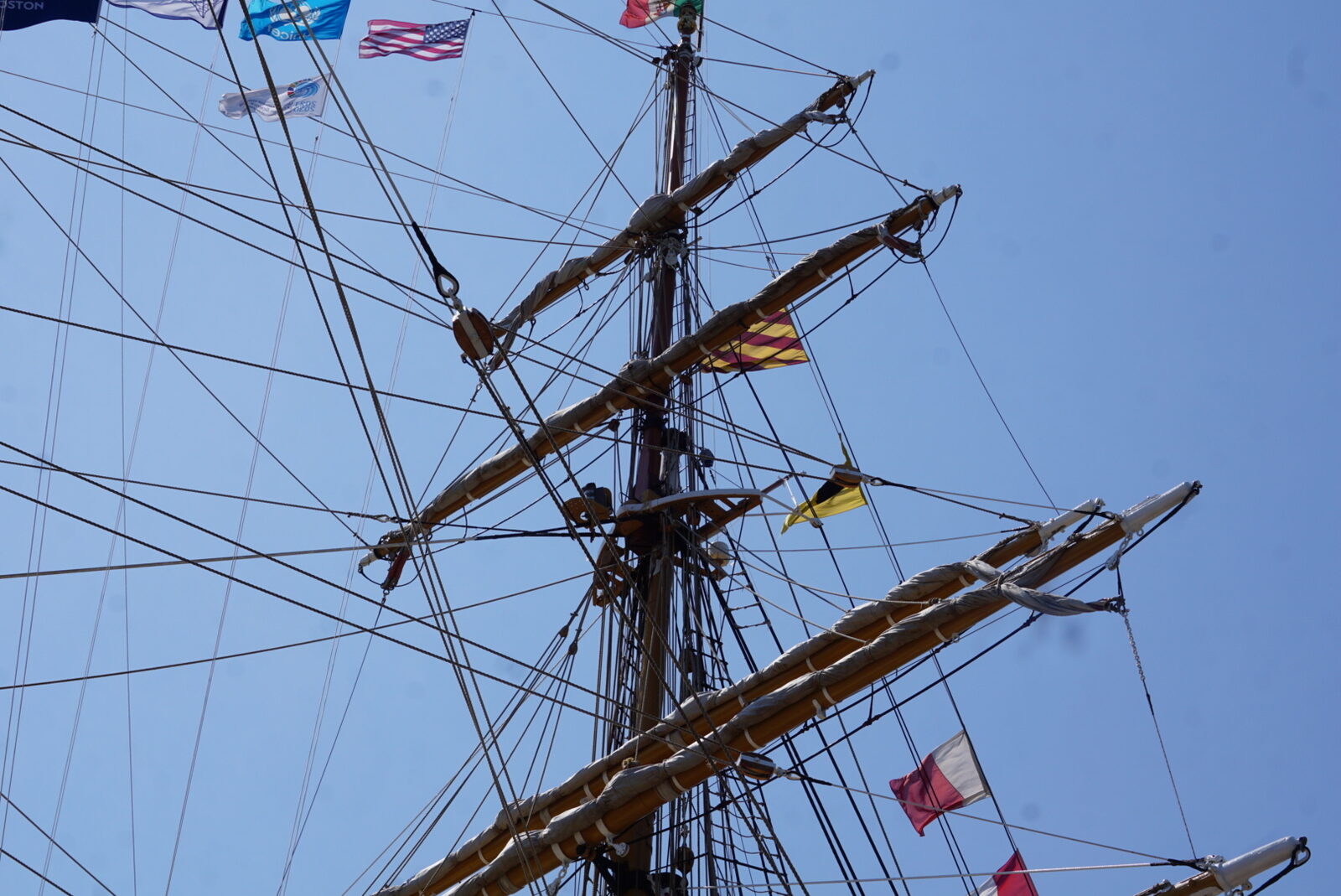
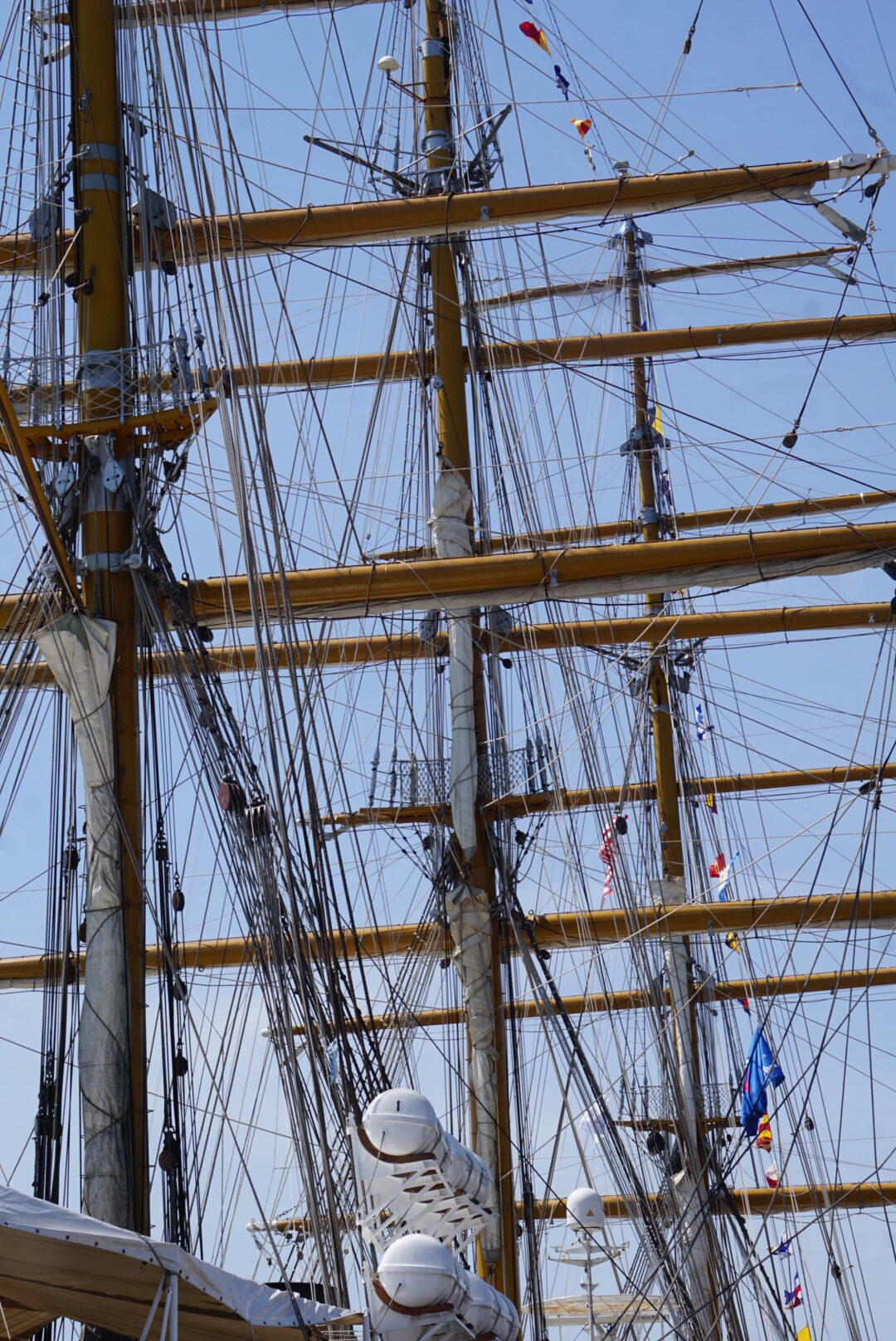
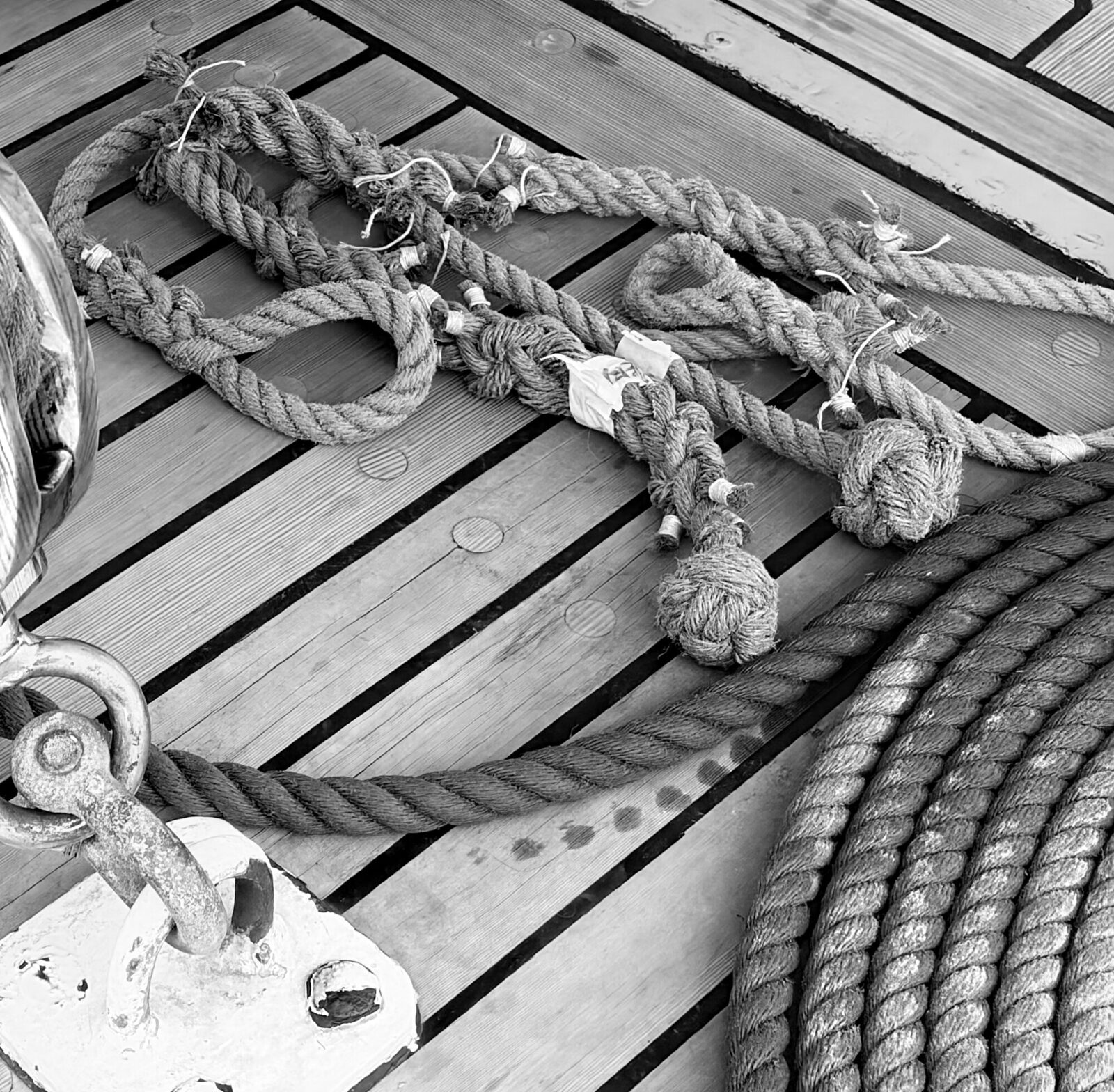
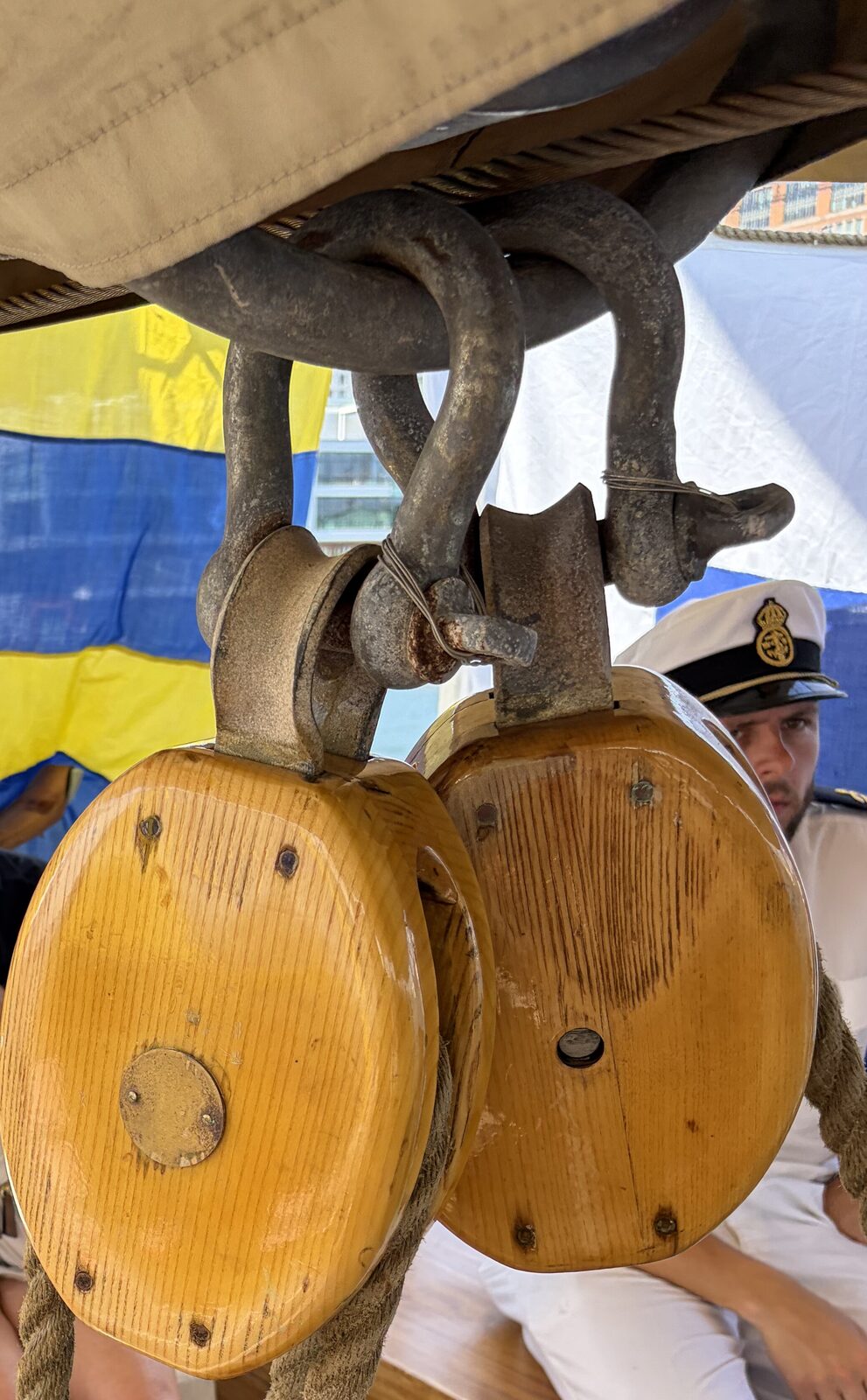
The heart of the sailmaker's world: rope. carries some thirty kilometres of it, still natural hemp, flaked and coiled on the pin rails where each line has its place. Belaying pin, block, sheave, seizing — and what it means that a modern navy keeps a ship rigged in fibre you could grow.
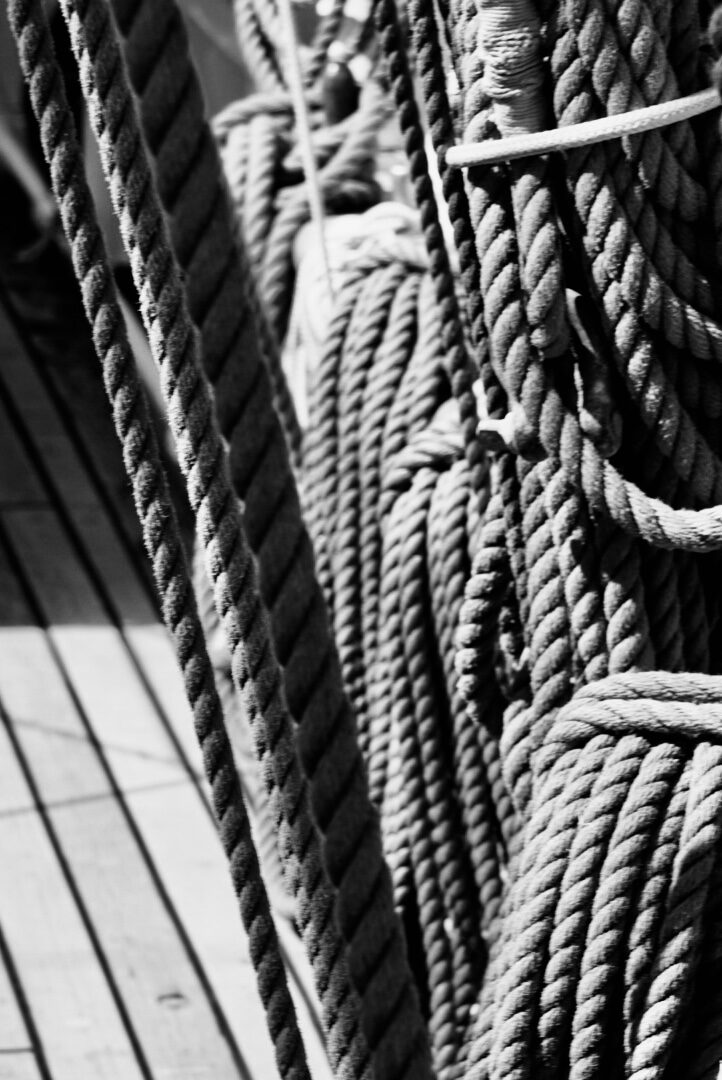
Running rigging flaked down on the pin rail — traditional hemp, every line to its pin.
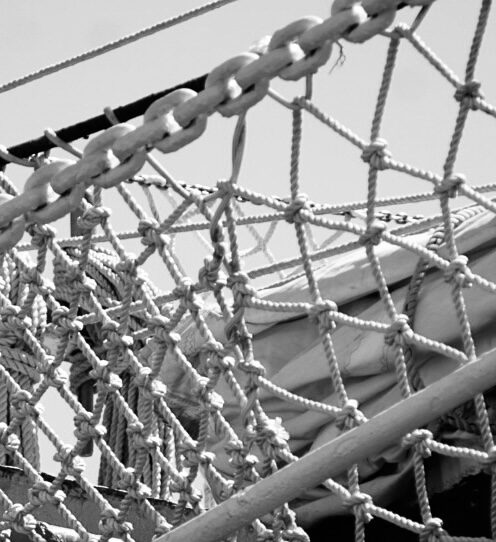
The reason the bearing exists. Vespucci's sails are still cut and hand-stitched from tela olona — hemp-and-linen cloth built up from sewn strips called ferzi — while most of the fleet has moved to Dacron that keeps the look and loses the hand. Weigh tradition against durability; let the numbers talk.
"A full suit runs to some 15,880 metres of hand-stitched seam and 79,200 metres of waxed thread — the sails come off the loft weighing a little over five tonnes."On a replacement suit of tela olona · figures to verify against the loft
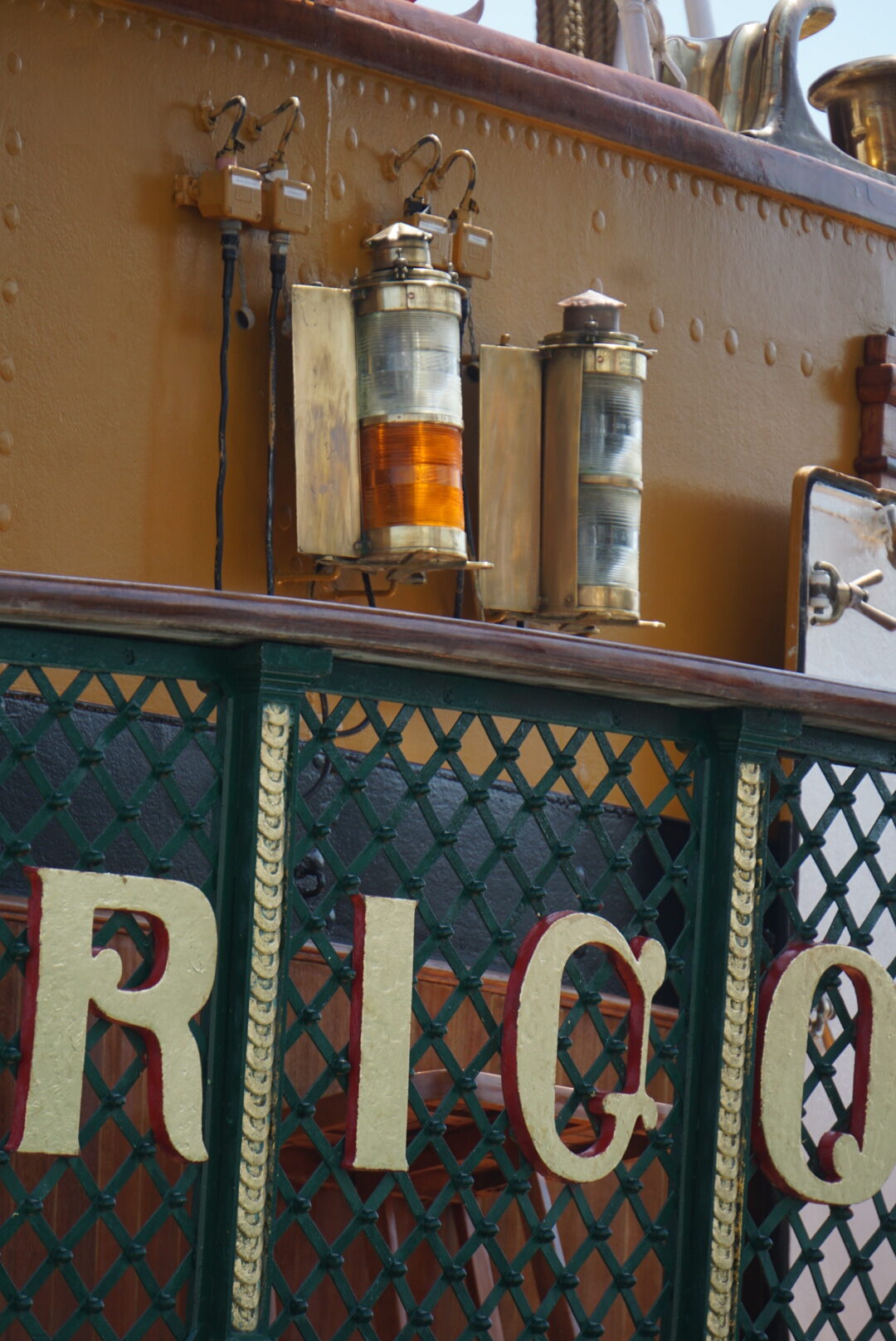
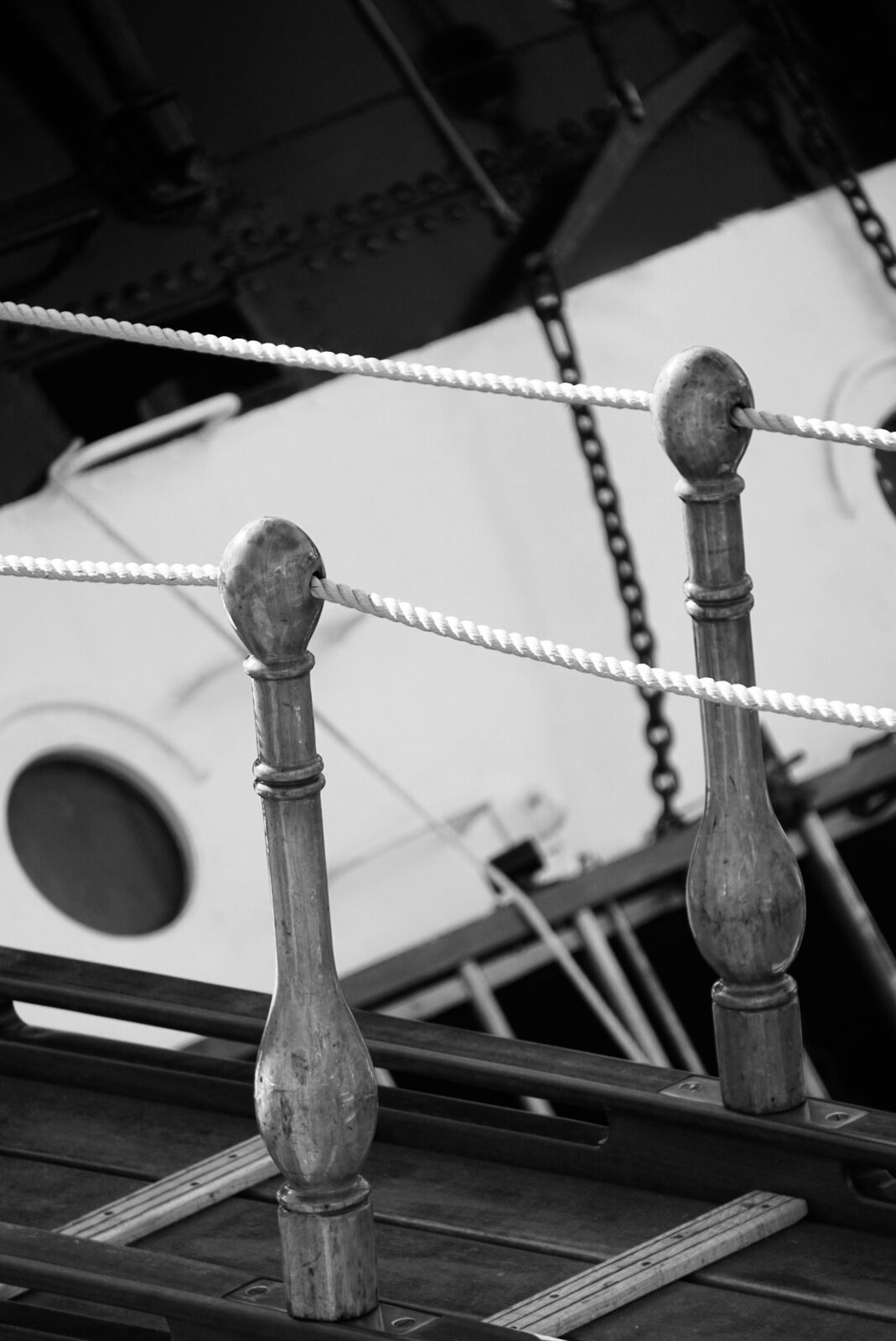
The small, struck, turned and polished things: oil-lamp navigation lights in brass and copper, hardwood stanchions worn smooth by hands. The register drops from the whole ship to the object — the scale at which a sailor actually lives.
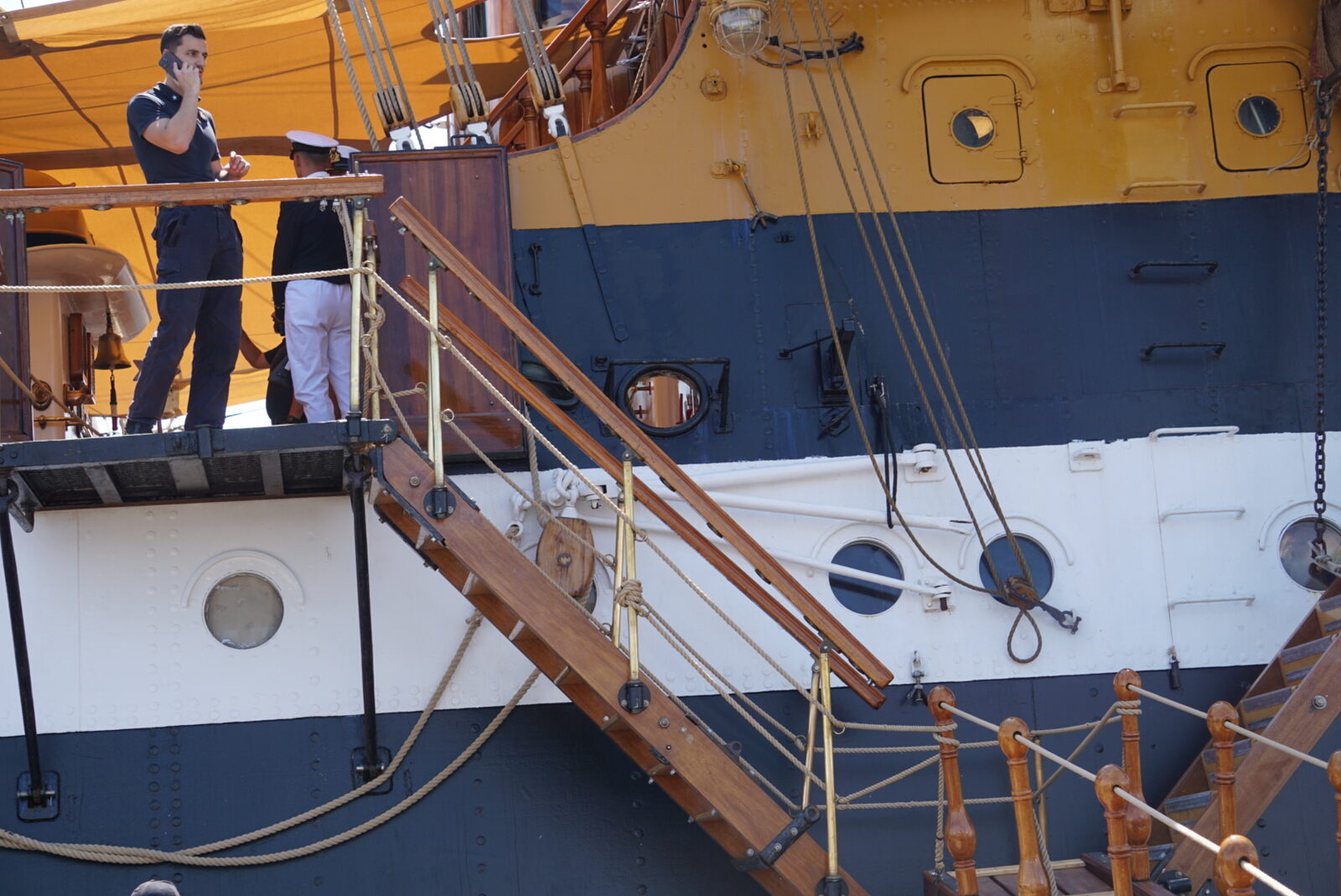
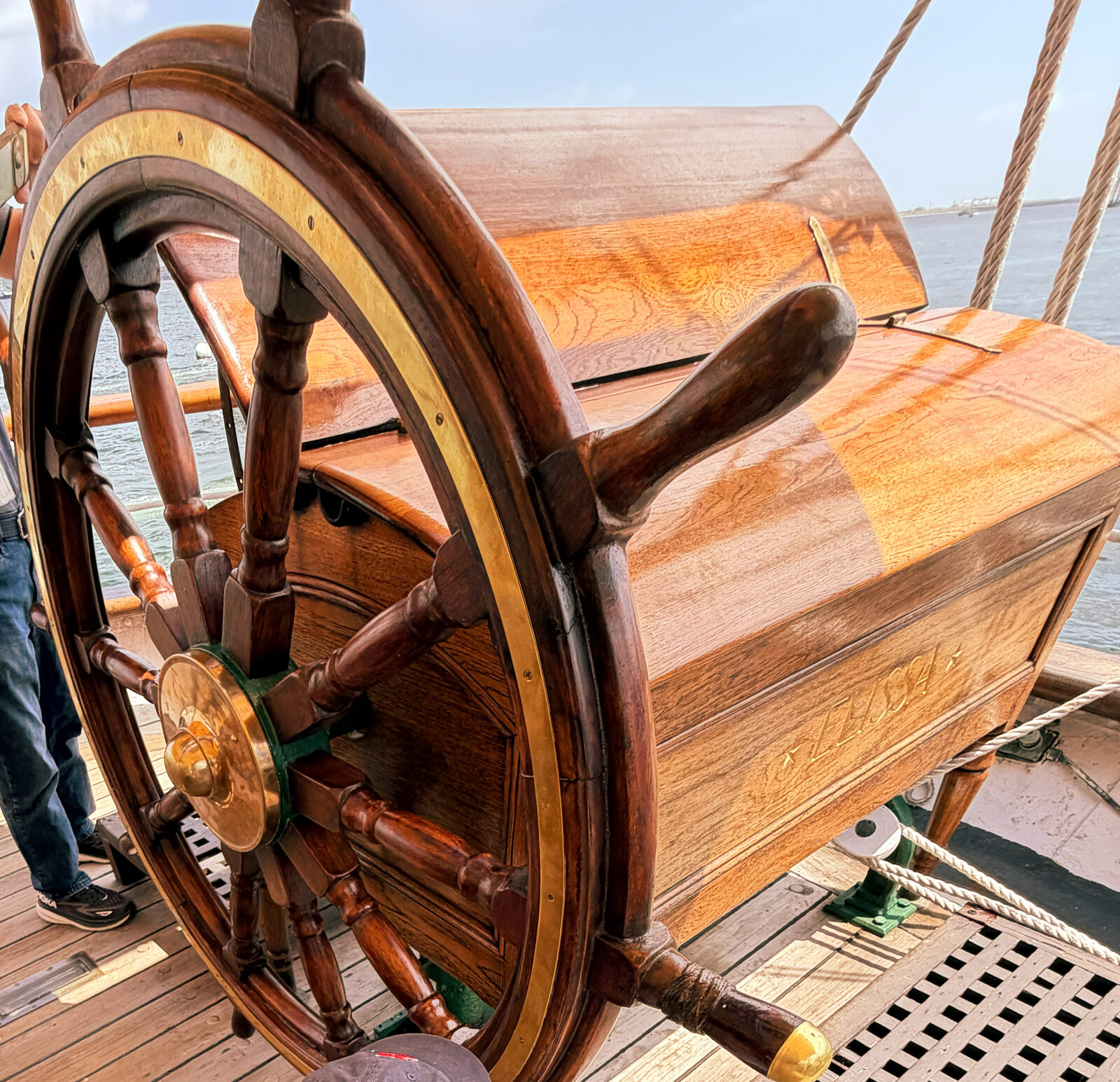
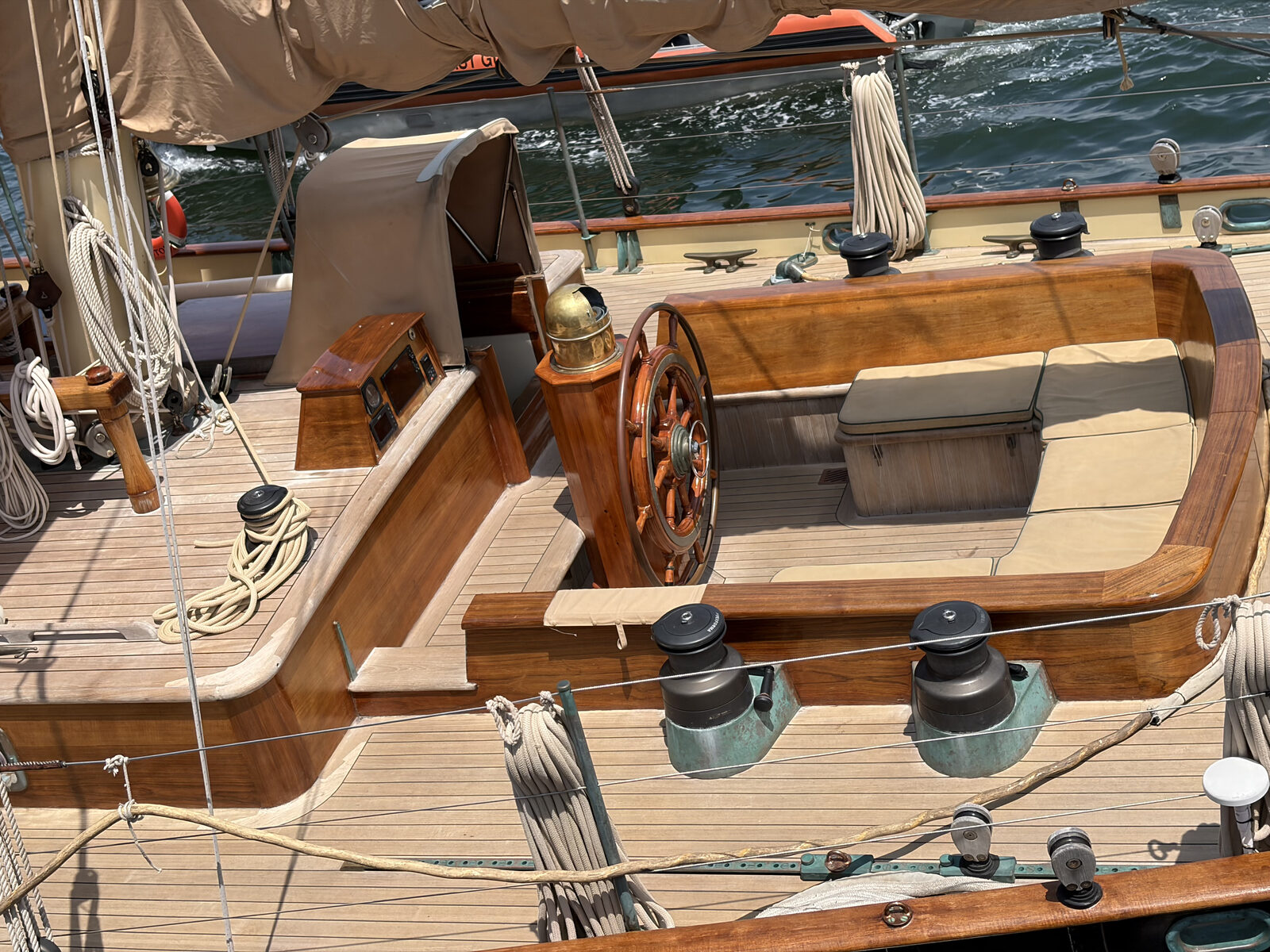
The material under all of it. Decks of teak laid and caulked, spars of Oregon fir, blocks of iron-hard lignum vitae, rails of oak kept bright under coat after coat of varnish. Timber is chosen for the load it will carry and the weather it will take — and then it is worked by hand until the grain itself becomes the finish. This is the section for the wood as a living material: where it grows, why each species sits where it does, and the endless labour of keeping it.
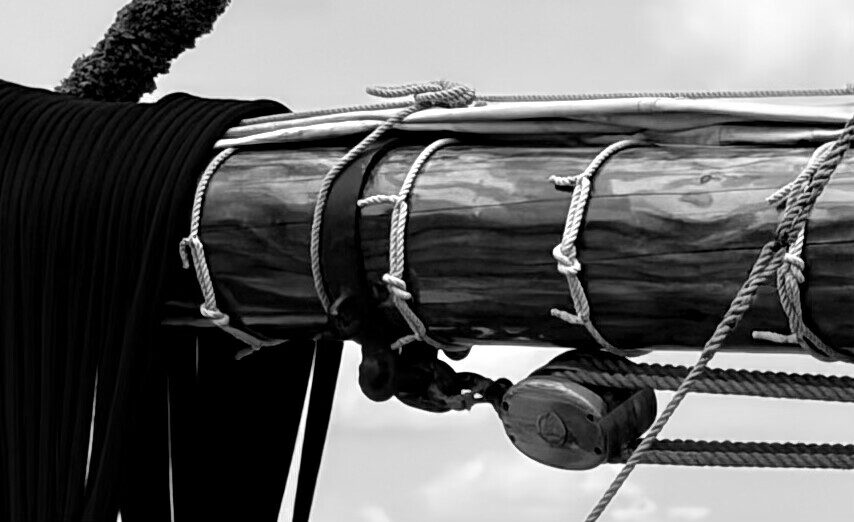
A bright-varnished spar, the canvas lashed along it in white line — brightwork kept up daily against salt and sun.
Ship's Boats
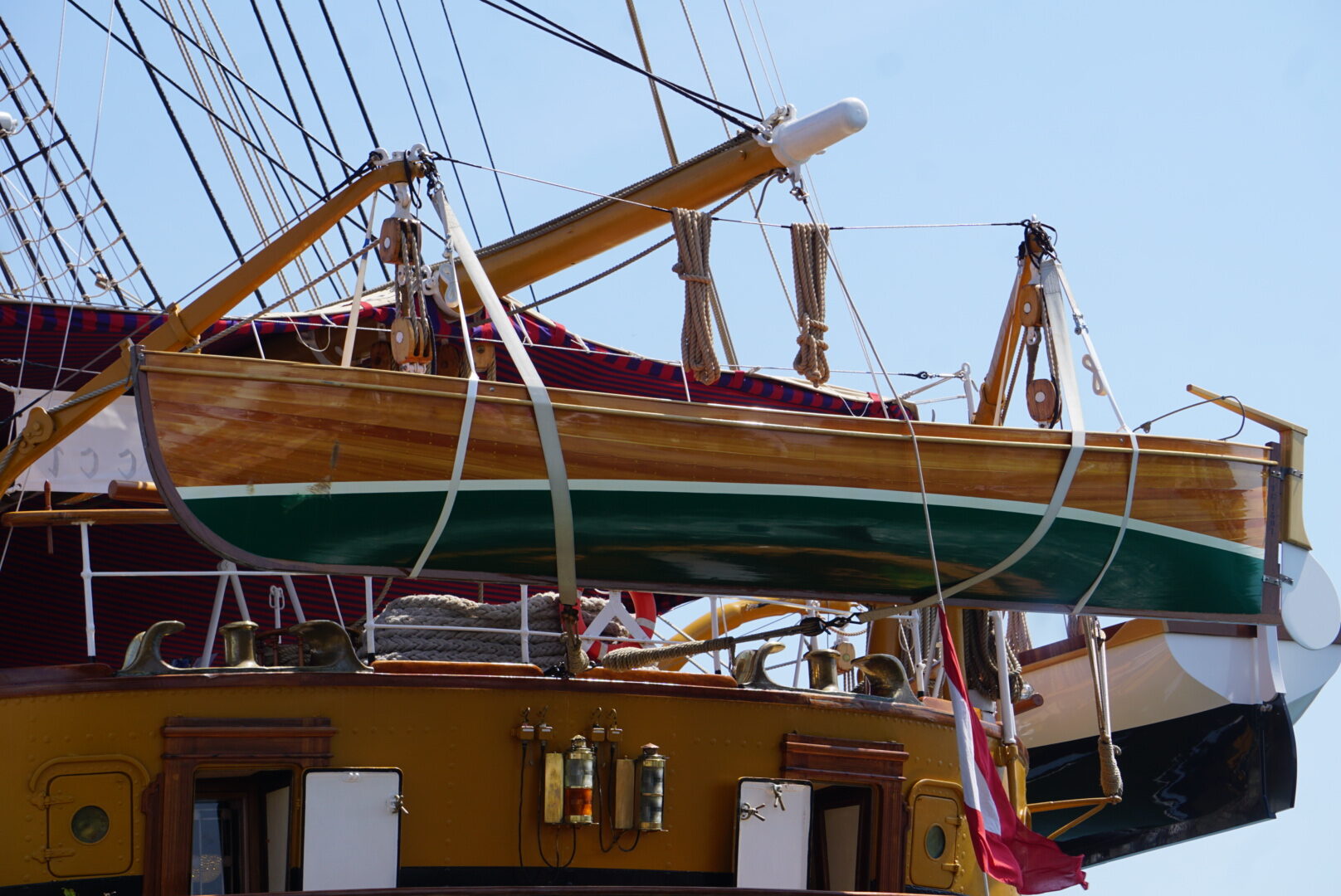
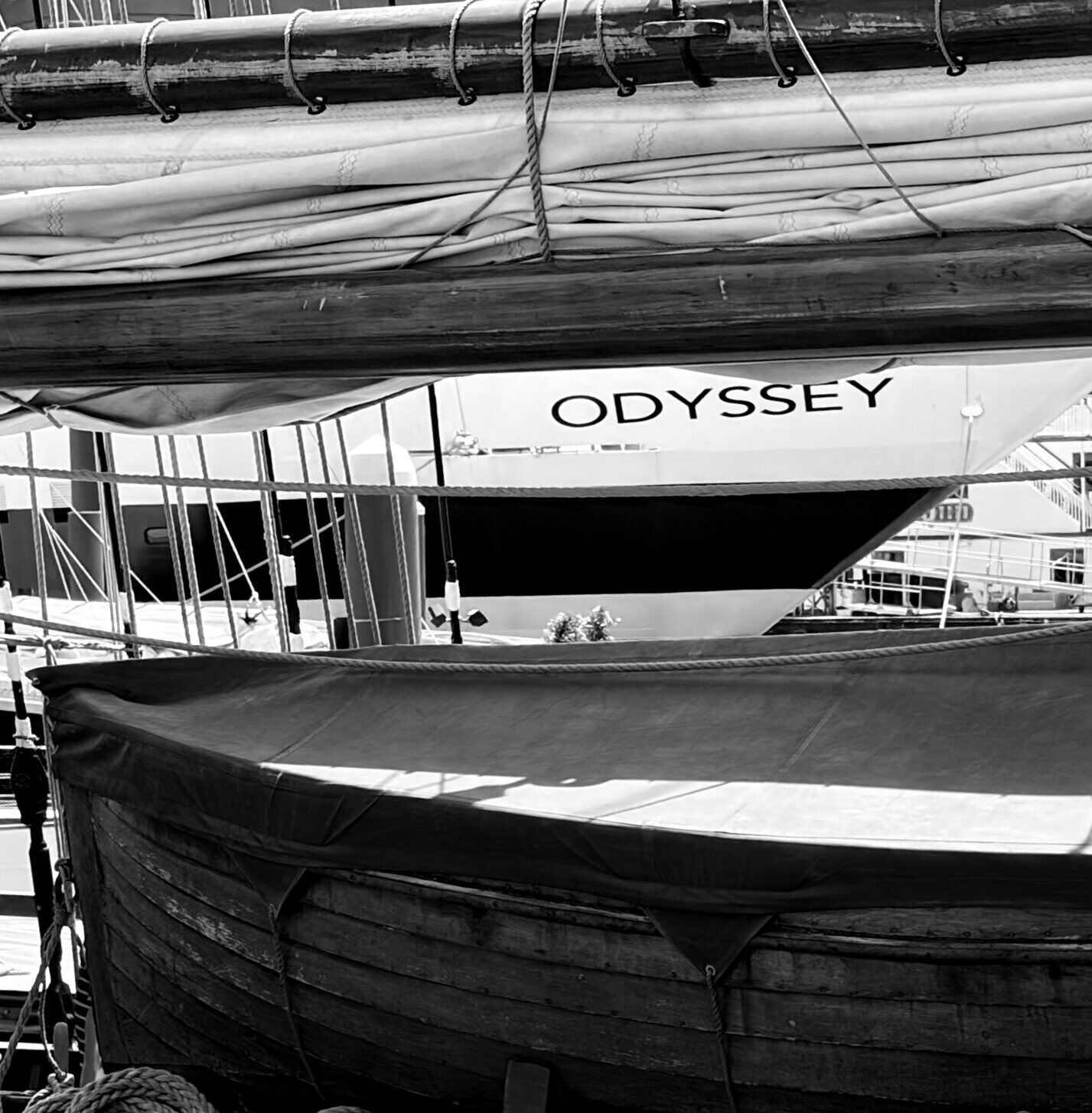
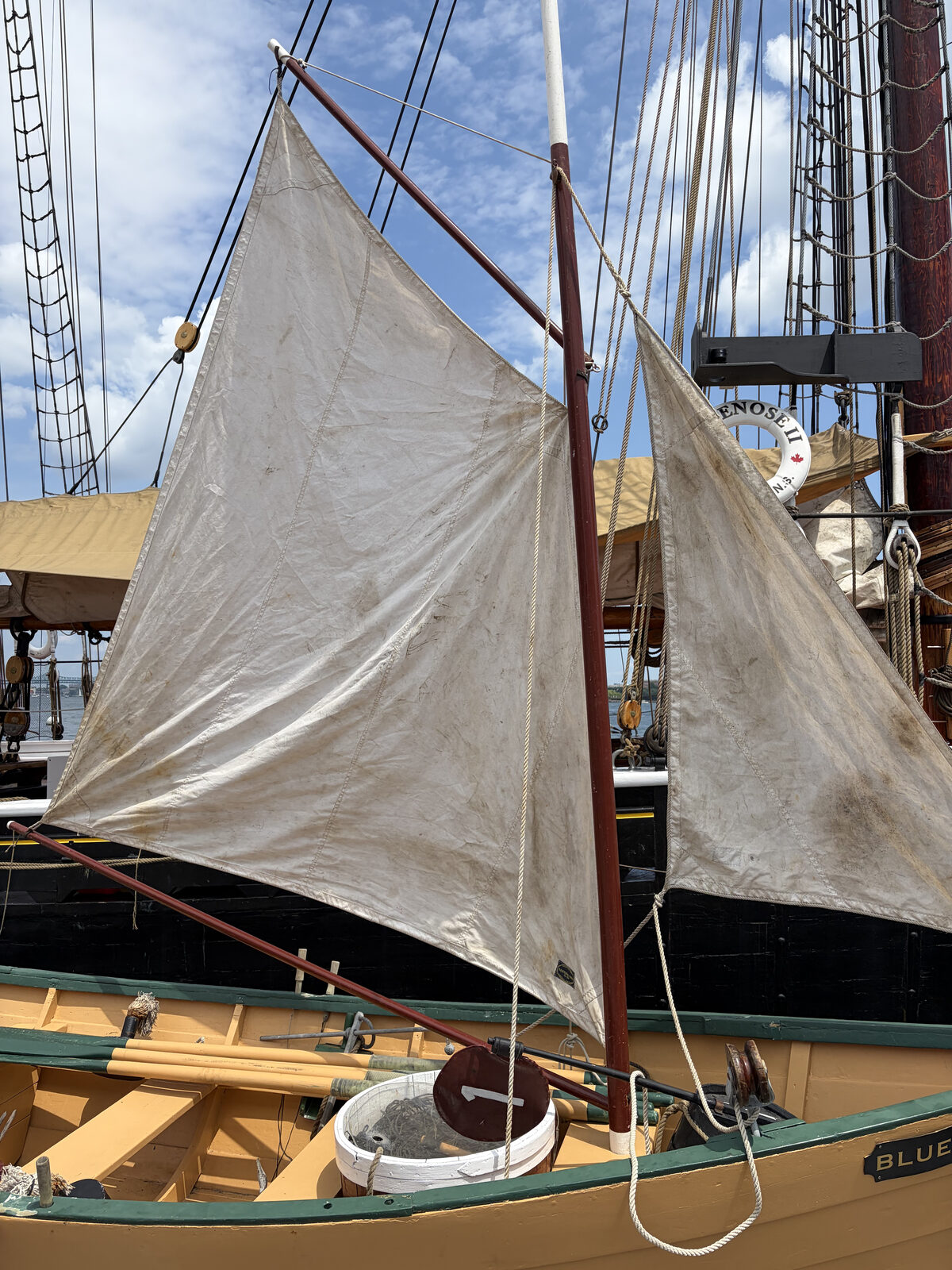
The children reflect the parent. A ship carries smaller boats the way a workshop carries its finest tools — strip-planked, varnished bright, a single green stripe along the sheer, cradled outboard on radial davits. A short meditation on the boat within the ship.
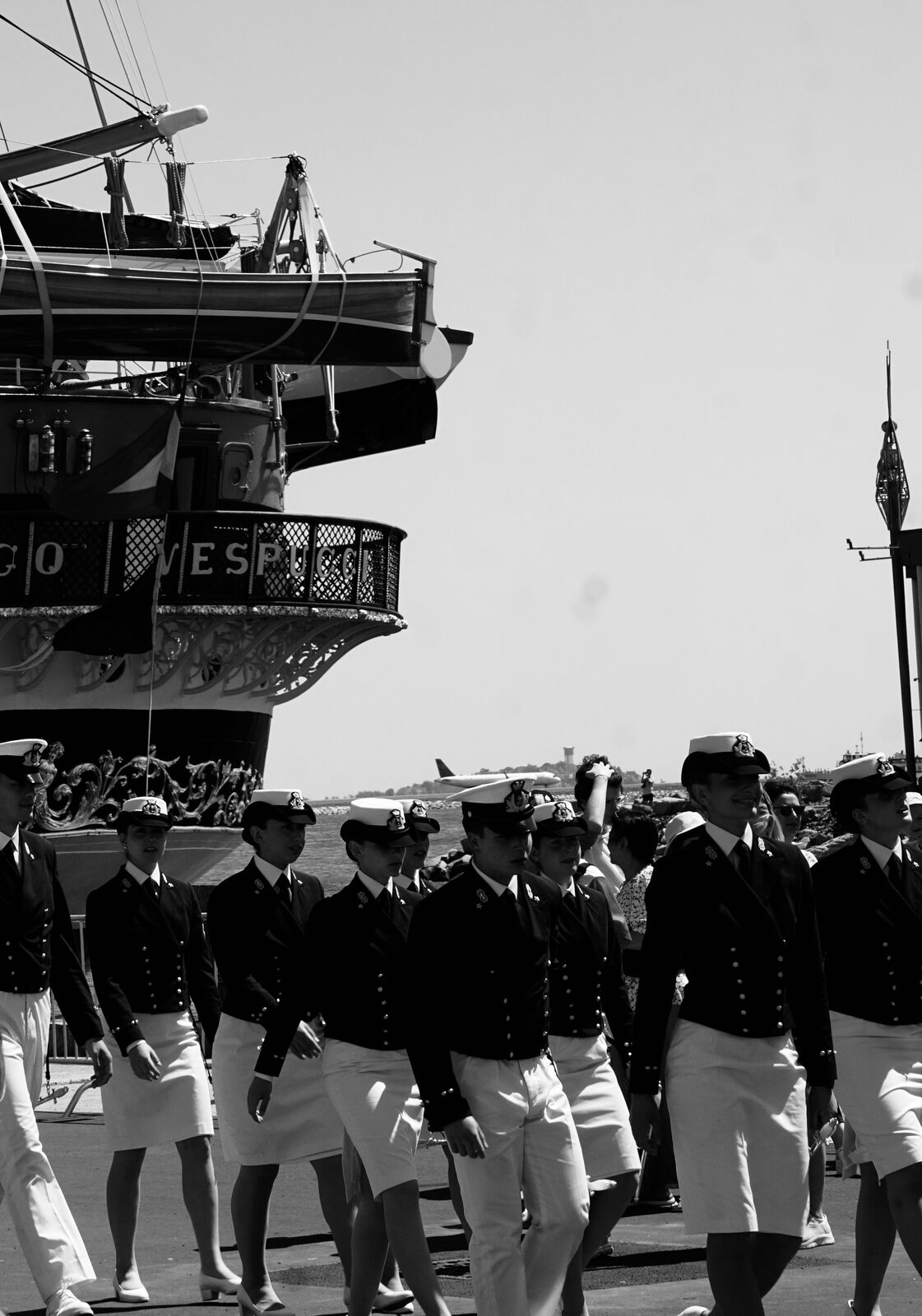
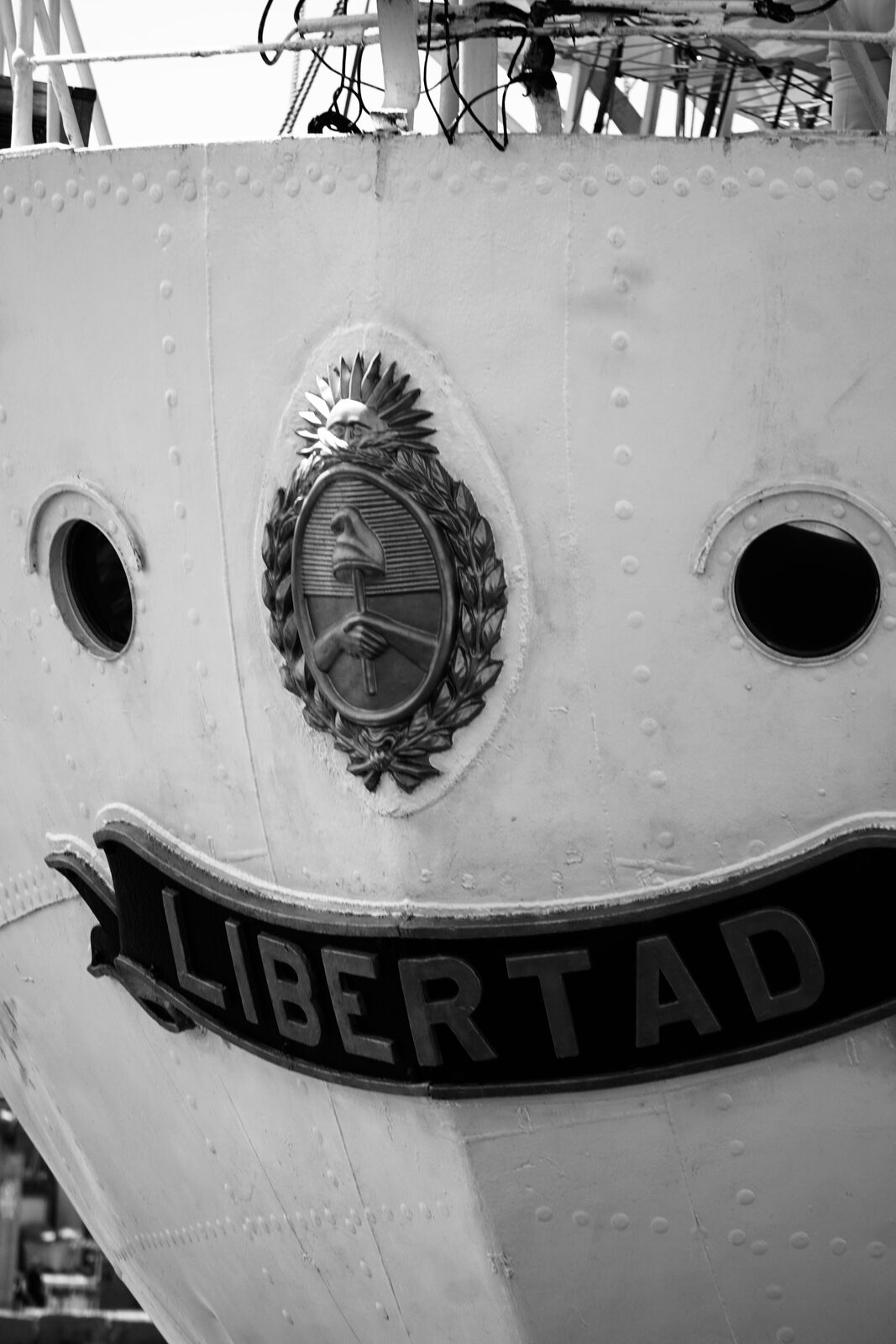
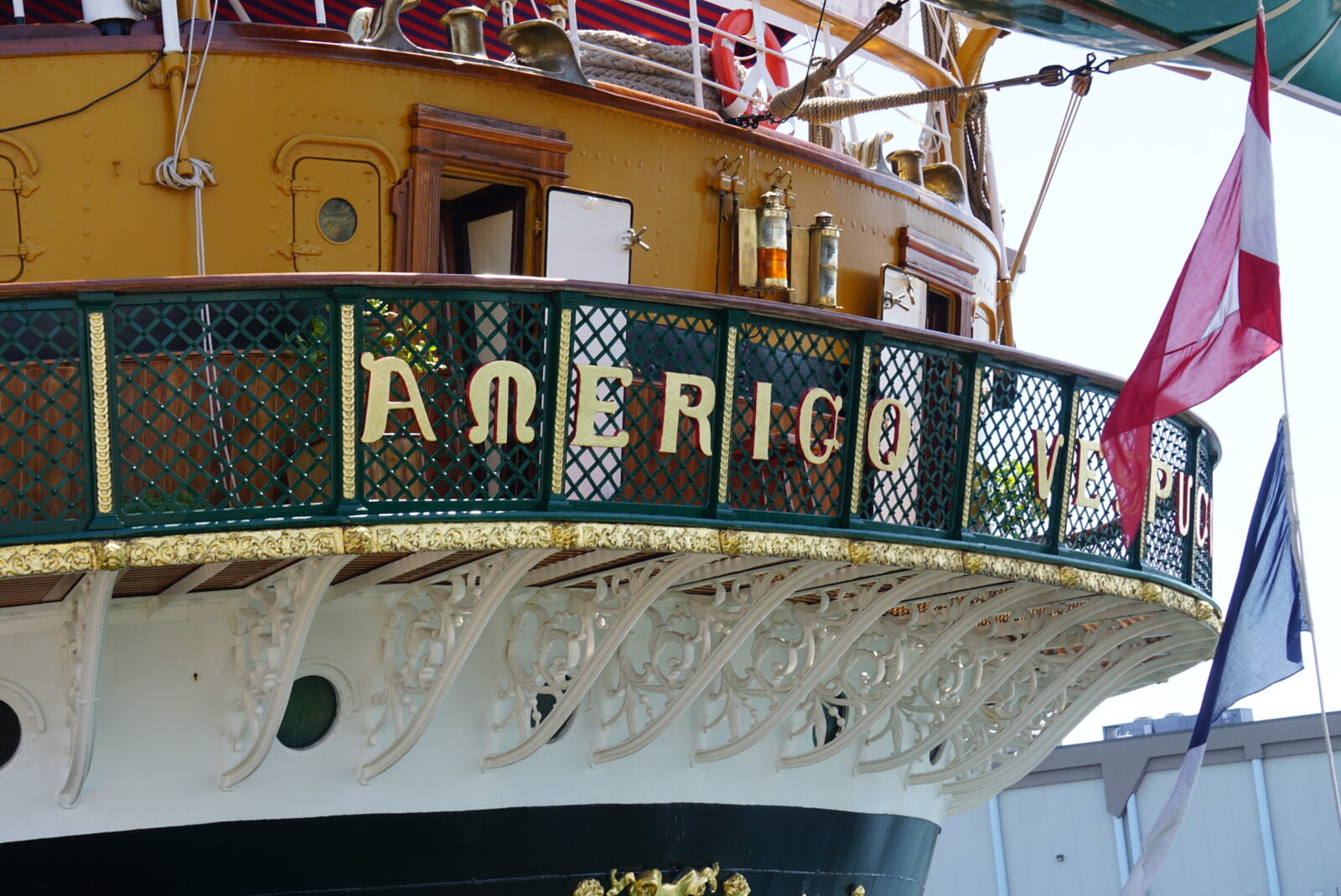
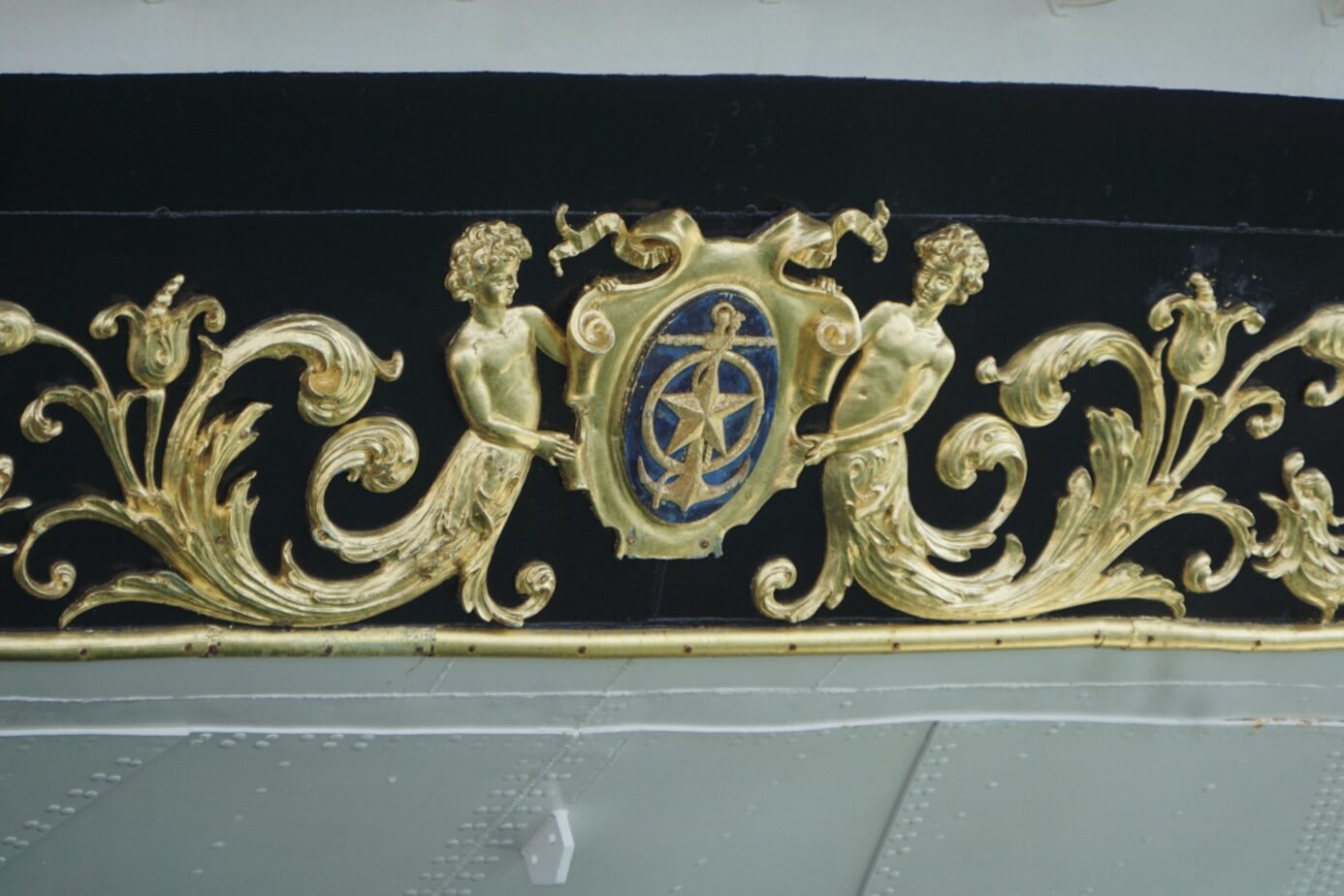
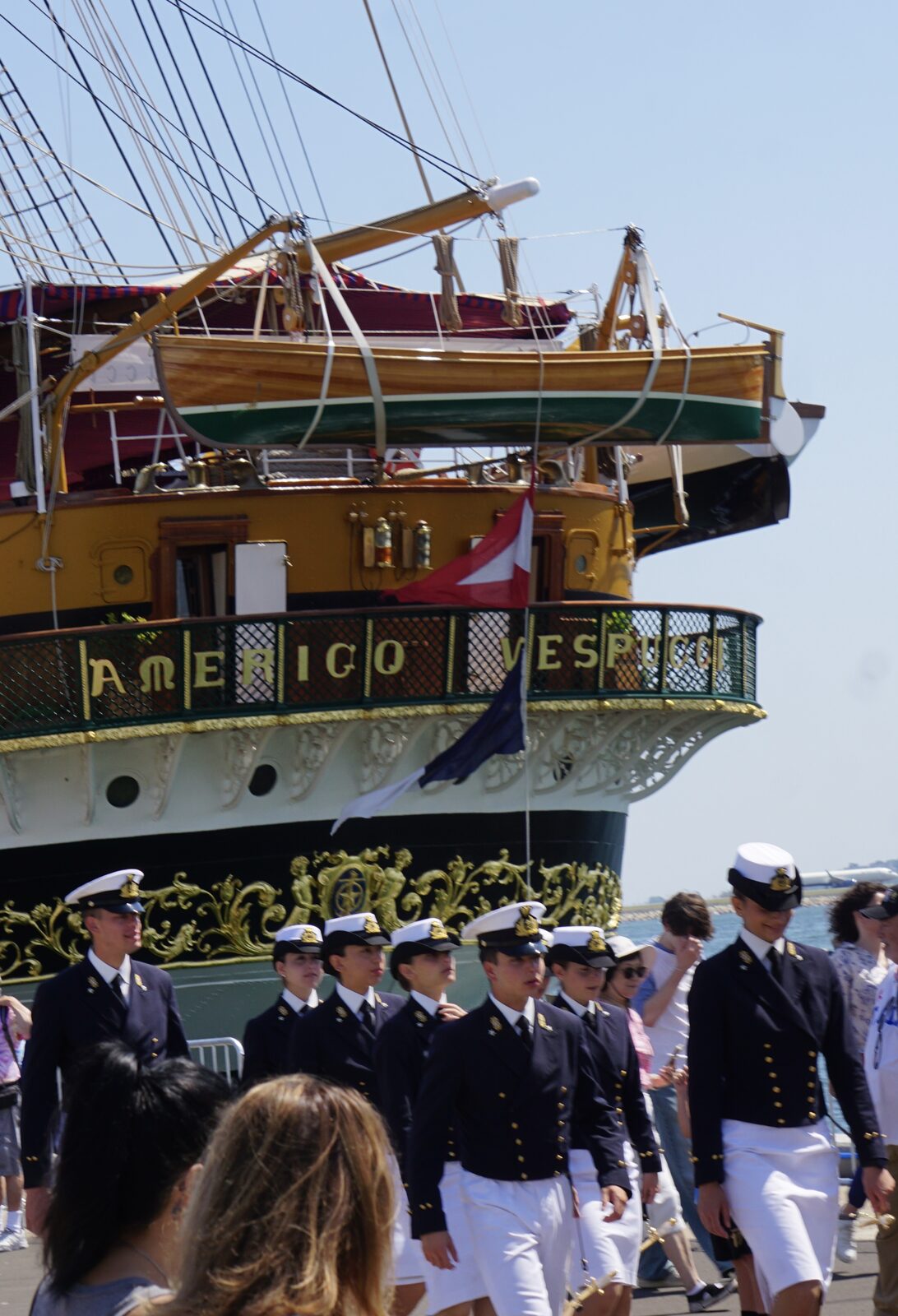
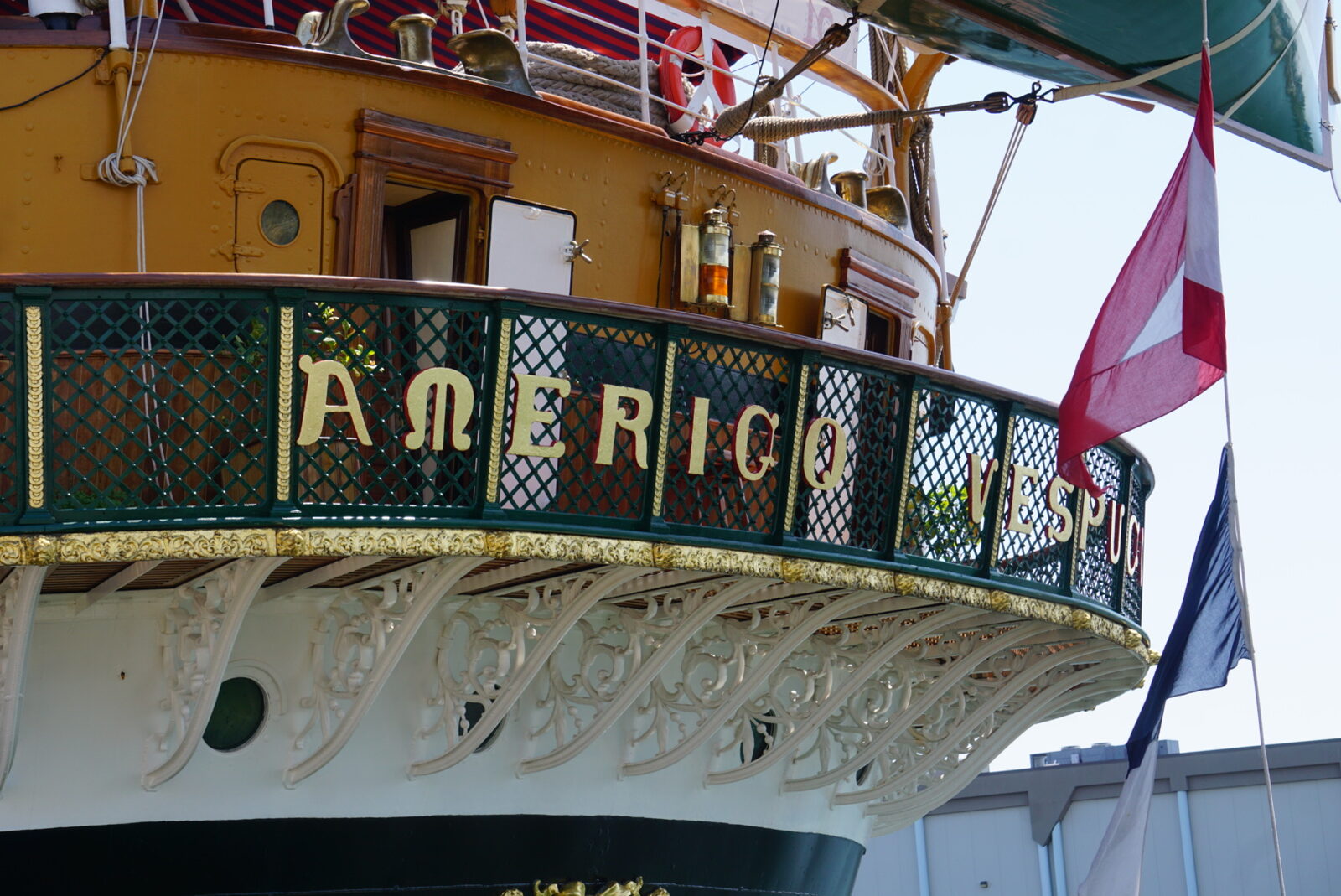
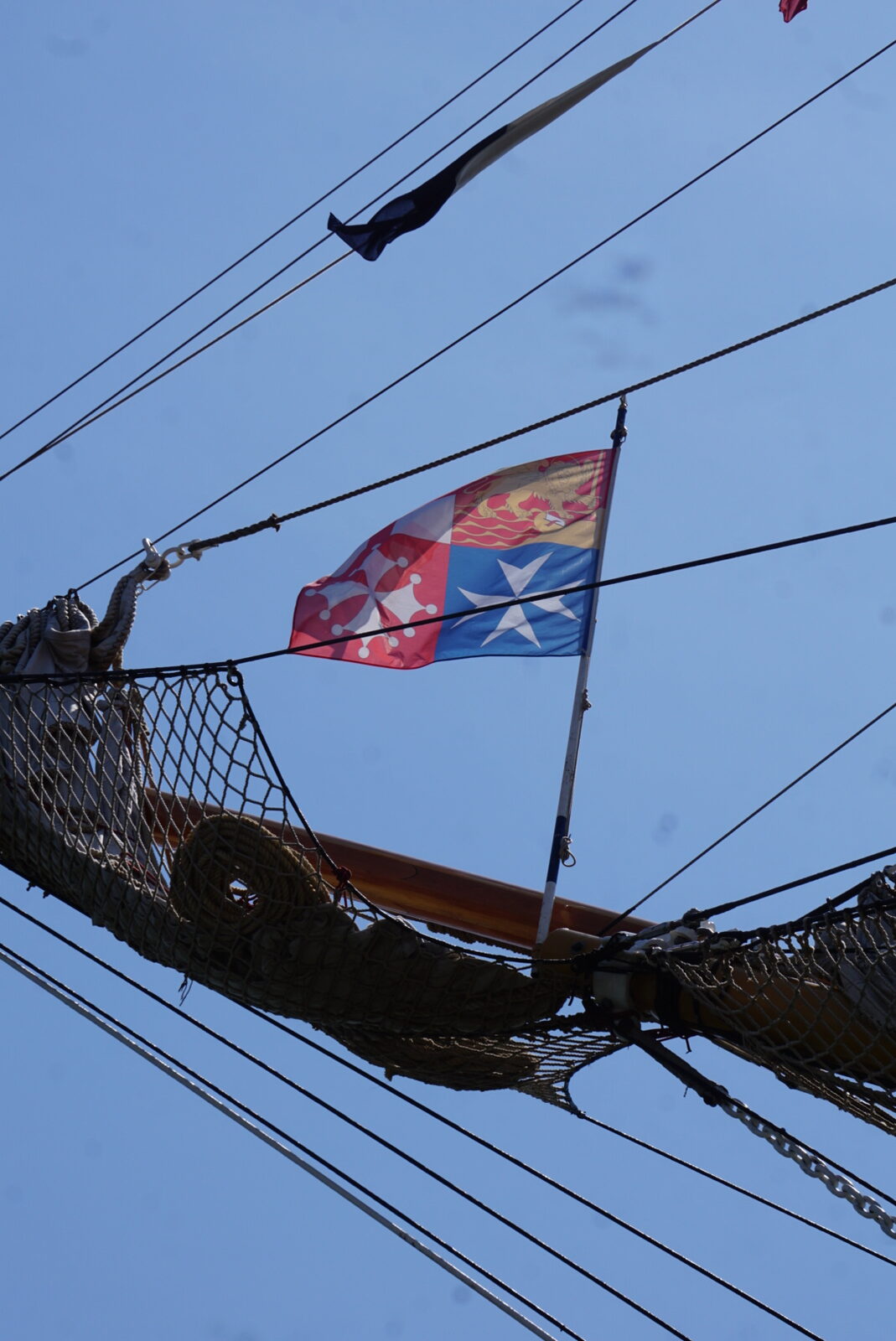
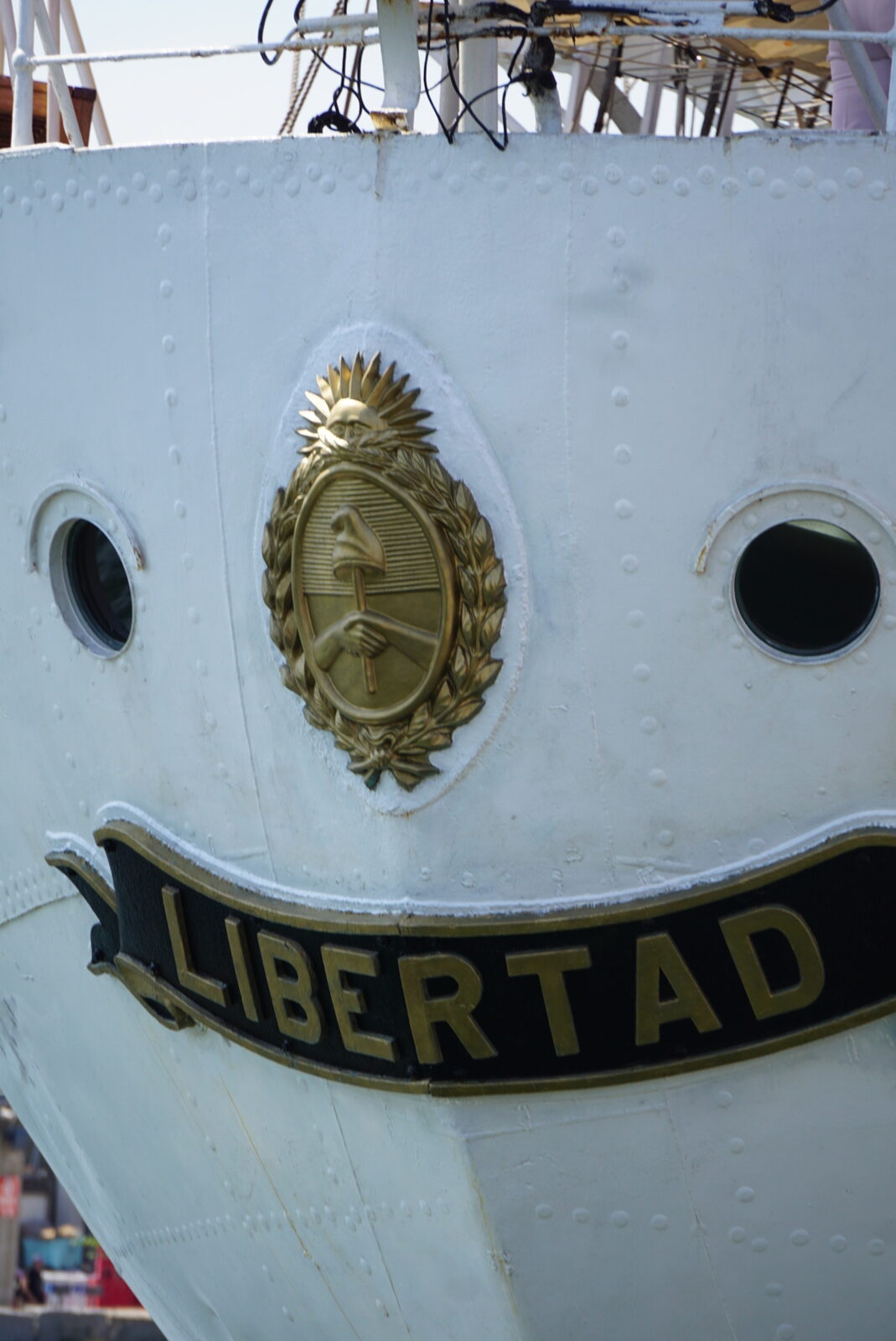
Where a ship signs its work: gilded letters across a lattice stern gallery, cherubs and crest under pure gold leaf, a cast-bronze coat of arms above a scrolled nameplate. Close with the heraldry — and the crews who march beneath it.
The Ships in These Frames
Five vessels, five dossiers — open any of them from here or from their names in the text. Each carries the ship herself, in a bottle: turn her, and press a numbered pin to zoom to the part.